First it was unwanted Tories who had massacred the UK with their psycho policies.
Now Reform UK briefed that a significant Labour figure was about to defect; the implication was unmistakable: the dam was cracking. Senior insiders, still central to power, were supposedly preparing to walk away from a party they believed had lost its way. It was framed as the beginning of a realignment.
What emerged instead was a reminder of how elastic the word “major” can be in modern politics.
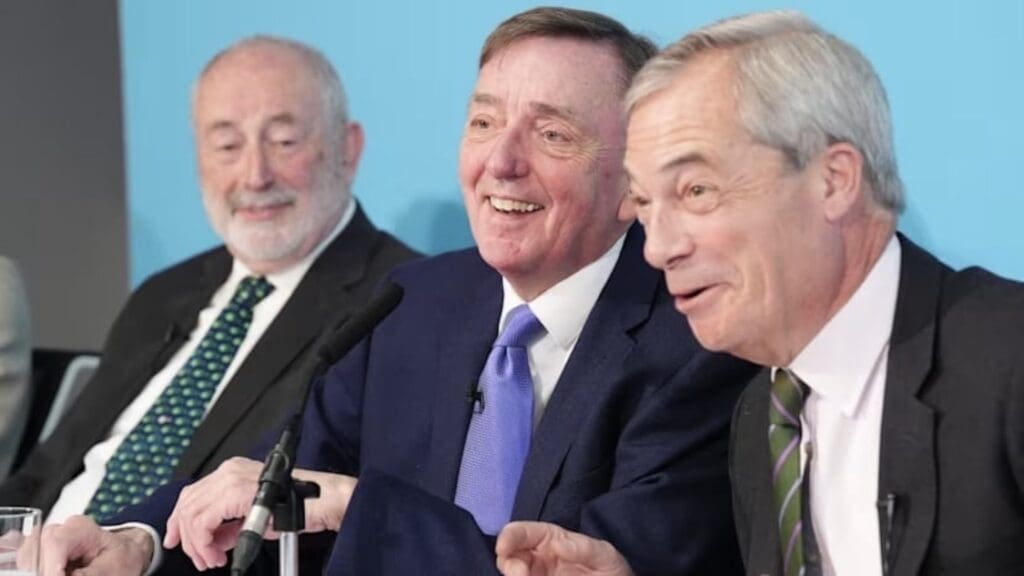
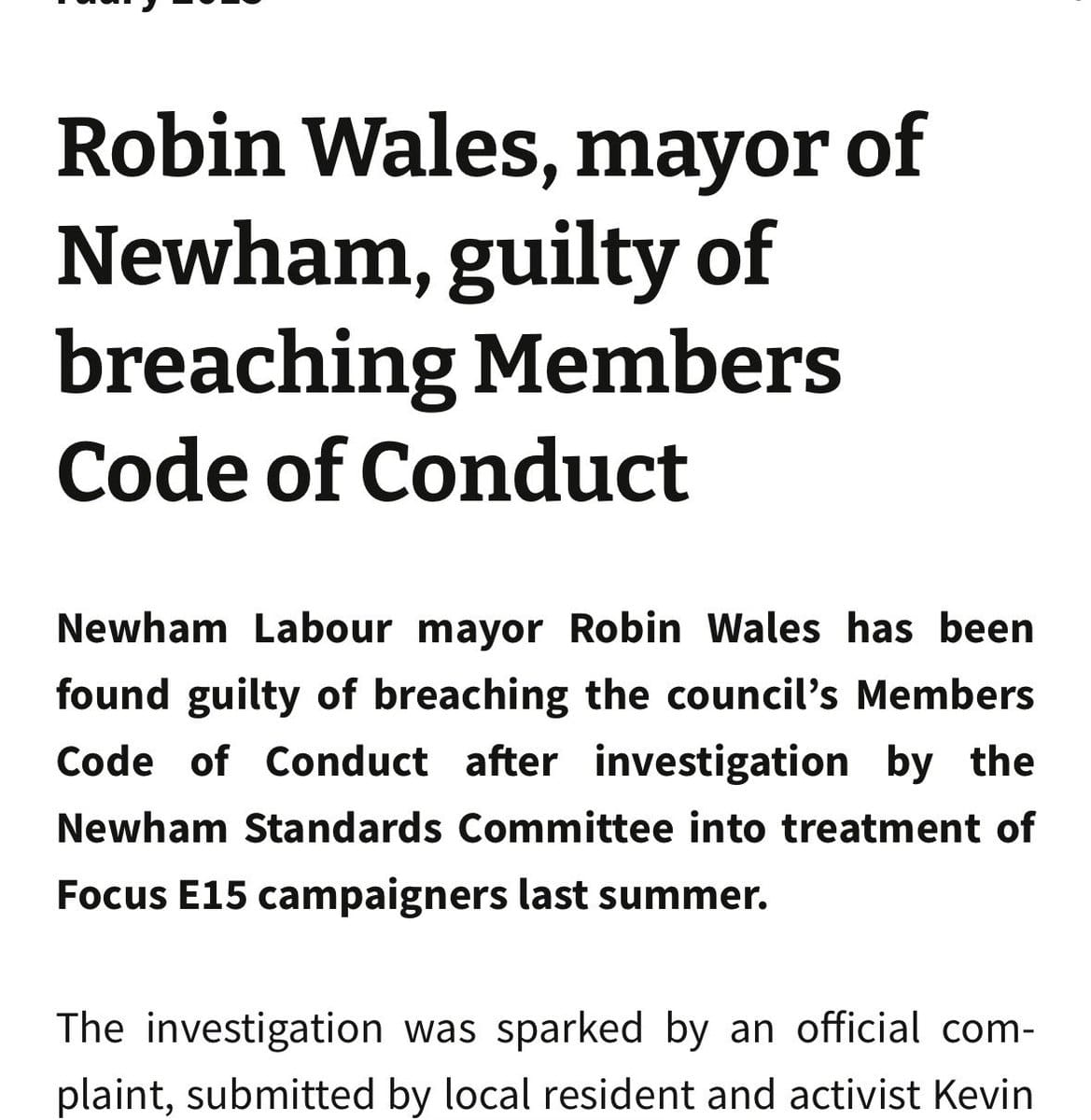
The headline recruit was Robin Wales, once the directly elected mayor of Newham, who held office from 2002 until 2018. A man who in 2015 was found guilty of breaching the code of conduct of the council. Alongside him came former councillor Clive Furness. Both men have history in Labour. Neither has recent clout within it. Wales was deselected by local members eight years ago. Furness has not been part of Labour’s inner machinery for some time.
This is not a case of sitting MPs crossing the floor. It is not even a serving councillor rebellion. It is the political equivalent of rummaging in the archive and presenting it as a scoop.
That does not mean Wales lacks a record. His tenure coincided with one of East London’s most dramatic transformations: the regeneration surrounding the 2012 Olympics. He sat on the London Organising Committee and the Olympic Park Legacy Company, championing local employment and investment. For years he was a fixture of borough politics.
But history cuts both ways. His removal as Labour’s candidate in 2018 was not a minor internal shuffle. It reflected sustained dissatisfaction among members about his leadership. To present his defection now as evidence of Labour’s contemporary collapse requires a selective memory.
Still, for Nigel Farage, optics matter more than timelines. The strategy is obvious: show that dissatisfaction with Labour is so profound that even lifelong insiders are fleeing. Wales has been appointed Reform’s London director of local government; Furness will stand as its candidate for mayor of Newham. The message is that Reform can attract experience, not just outrage.
Yet the gap between hype and reality is telling. Weeks earlier, Farage had hinted at talks with individuals who had held “senior positions” in Labour. The theatrical pause implied current relevance. What materialised were figures whose peak influence belongs to another political chapter.
Reform argues that Labour has failed London, citing crime, services and governance under Sadiq Khan. SIR Robin Wales accused the party of abandoning its working-class roots. Furness warned of the “Balkanisation of Britain,” suggesting that voters increasingly align along ethnic and religious lines. Both men insisted Reform is not racist, challenging critics to prove otherwise.
But London is not a tabula rasa. It is one of the most multicultural cities in the world. Sweeping claims about fragmentation may resonate with segments of the electorate, yet they also risk reinforcing the very criticisms Reform struggles to shake. The party’s brand remains controversial in the capital, and no press conference can magic that away.
Recent polling underlines the problem. An ITV survey found Farage to be as unpopular among young voters as Keir Starmer. In a city whose demographics skew young and diverse, that is not a trivial detail. Reform’s challenge is not simply to harvest protest votes; it is to build a coalition broad enough to win executive office in an urban stronghold.
Against that backdrop, the Wales-Furness announcement feels less like a breakthrough than a holding operation. It creates a headline. It allows Reform to claim momentum. It does not, on its own, demonstrate a structural shift in London politics.
Labour, for its part, dismissed the move as barrel-scraping. The line is sharp but grounded in chronology: neither man has been central to Labour’s current project. The party insists it is focused on delivery, housing, cost-of-living relief, public services, rather than theatrical defections.
The deeper question is what Reform’s recruitment drive says about its organisational depth. If the party were teeming with emerging local talent ready to govern major boroughs, it would not need to lean so heavily on figures from a previous era. Recycling disaffected veterans may provide experience, but it also exposes the difficulty of cultivating a new generation of candidates in London.
There is a broader pattern here. Modern insurgent parties thrive on anticipation — the sense that something big is always about to happen. A “major announcement” becomes a tool in itself, stretching media attention and energising supporters. But anticipation is a diminishing resource. Each reveal that fails to match the build-up erodes credibility.
None of this is to deny Wales’s decades of service or Furness’s local experience. Nor is it to suggest that voters cannot legitimately reconsider political allegiances. People move; parties evolve. But context matters. A defection from the margins is not the same as a rupture at the core.
Reform wants to signal that Labour’s London fortress is cracking. What it has shown so far is that former insiders with unresolved grievances are willing to wear new colours. That may generate headlines. It does not yet amount to an exodus.
If more current, high-profile Labour figures follow, the narrative could change quickly. For now, the gulf between suggestion and substance remains wide. Reform promised a tremor in London politics. What it delivered was a footnote — loudly advertised as an earthquake.