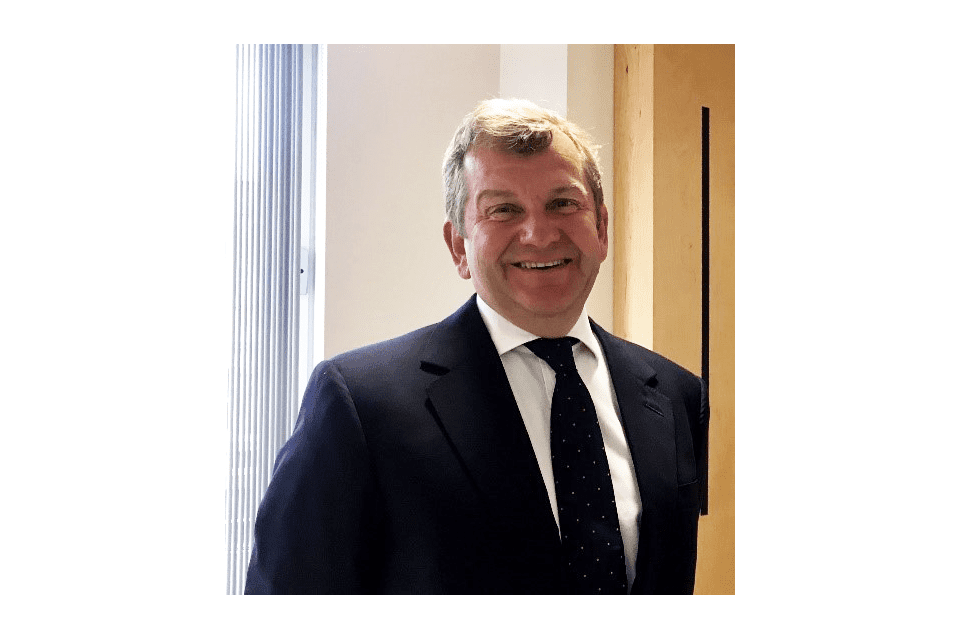
Update:
Reform’s newly appointed housing spokesman, Simon Dudley, has been sacked following widespread outrage over his remarks about the victims of the Grenfell Tower fire. Dudley had described the deaths of 72 people as a “tragedy and a failure” before adding that “everyone dies in the end”, comments that prompted immediate condemnation from survivors, bereaved families, and opposition politicians. Prime Minister Keir Starmer, along with other parties, called on Nigel Farage to remove him from the role. On Thursday morning, Farage confirmed the dismissal, stating simply that Dudley was “no longer a spokesman for the party”.
Grenfell United, representing survivors and families of those who died, condemned the remarks as “deeply dehumanising”, stressing that their loved ones did not “simply die” but were failed by years of ignored safety warnings and political neglect. The public inquiry into the 2017 disaster concluded that the fire and the deaths were entirely preventable. After the backlash, Dudley attempted to clarify his comments, calling Grenfell “an utter tragedy” and apologising if his words had not been sufficiently clear, insisting he had not intended to belittle the scale of the disaster. Nonetheless, the political pressure and public anger proved overwhelming, leading to his swift removal from the post.
However, it must be remembered that Farage is an opportunist. This does not mean he disagrees; it only means he is worried about votes with the local elections in May.
There are moments in politics when the mask slips so completely that no amount of spin, apology, or strategic ambiguity can put it back in place. Simon Dudley’s grotesque remark about Grenfell — “everyone dies in the end” — is one of those moments.
Not a gaffe.
Not a slip of the tongue.
A revelation.
Because what those words expose is not merely one man’s insensitivity, but the moral emptiness at the heart of Reform’s politics.
Seventy-two people did not simply “die in the end”. They were killed by a system that failed them at every level: by deregulation, by indifference, by cost-cutting, by ignored warnings, and by politicians and officials who treated working-class lives as expendable. The official inquiry found those deaths were preventable, avoidable, and the result of years, indeed decades, of institutional failure.
To reduce that horror to some glib, pub-philosophy shrug about mortality is not merely offensive. It is dehumanising in precisely the way Grenfell survivors and bereaved families have said.
And yet, in a sense, Dudley’s comment is perfectly on brand.
Because Reform has made a habit of weaponising callousness, dressing contempt up as “common sense”, and recasting empathy as weakness. Time and again, its representatives have reached for language that strips human suffering of its context and responsibility.
That is the deeper scandal here.
Grenfell was not fate. It was politics.
It was what happens when the ideology of deregulation is pushed to its logical conclusion: when rules designed to protect ordinary people are derided as “red tape”, when profit and expediency are elevated above human life, and when warnings from residents are dismissed because those residents lack wealth, power, or influence.
For Dudley then to use Grenfell as an argument against safety regulation is morally obscene. It takes one of the starkest examples of regulatory failure in modern British history and turns it into a case for less scrutiny.
That inversion tells you everything about Reform.
This is a party that thrives on grievance, outrage, and theatrical simplification. Every complex social problem is boiled down into a slogan, every tragedy repurposed into an ideological cudgel. Housing shortages? Blame regulations. Public services under strain? Blame migrants. Economic stagnation? Blame “the establishment”.
The common thread is always the same: identify a convenient target, erase nuance, and channel public anger away from systemic causes.
It is politics as scapegoating.
What makes the Grenfell remark so particularly grotesque is that it follows years of rhetoric from Reform figures and aligned voices that has repeatedly tested the boundaries of decency. Whether on immigration, asylum seekers, public institutions, or minority communities, the pattern is depressingly familiar: provoke outrage, deny responsibility, then claim victimhood when challenged.
The formula never changes.
Say something inflammatory.
Wait for backlash.
Insist critics are overreacting.
Claim the real scandal is “political correctness”.
But this time the subject is Grenfell.
And Grenfell is sacred ground.
Those 72 deaths remain one of the defining indictments of modern Britain: an indictment of class inequality, of neglected social housing, and of a political culture that too often values property portfolios above human beings.
For a senior spokesman to respond to that with a line better suited to a nihilist after too many drinks is beyond disgraceful.
It is revealing.
Because beneath the populist slogans and anti-establishment branding, Reform’s politics often rests on a brutal hierarchy of whose lives are worth protecting.
The lives of those in luxury developments? Protected.
The profits of developers? Protected.
The lives of social housing residents in a tower block wrapped in flammable cladding? Apparently negotiable.
That is why Dudley’s attempt to frame post-Grenfell regulation as an overreaction is so dangerous.
Rules introduced after Grenfell were not bureaucratic whims. They were the belated minimum response to mass death.
To suggest the pendulum has “swung too far” is to imply the previous balance, the one that ended in flames, smoke, and 72 funerals, was somehow preferable.
It is a staggering position for any public figure, let alone someone tasked with housing policy.
Nigel Farage and Reform now face a test of credibility.
If they keep Dudley in post, they endorse not merely his words but the worldview behind them: one that sees preventable death as an unfortunate but essentially inevitable by-product of economic priorities.
If they sack him, they admit their judgement in appointing him was catastrophically poor.
Either way, the damage is done.
Because Dudley has articulated something many critics have long argued about Reform: that beneath its insurgent pose lies a politics of profound indifference to the vulnerable.
This is not about one remark in isolation.
It is about a pattern.
A party that claims to speak for “ordinary people” has once again shown how little regard it has for the ordinary people most failed by Britain’s institutions.
Grenfell families are right to call the comment dehumanising.
What happened at Grenfell was not simply how people “go in the end”.
It was how people are failed when those in power stop seeing them as fully human.
Reform reveal how putrid they are time and again. They are leading the UK further into the abyss.