

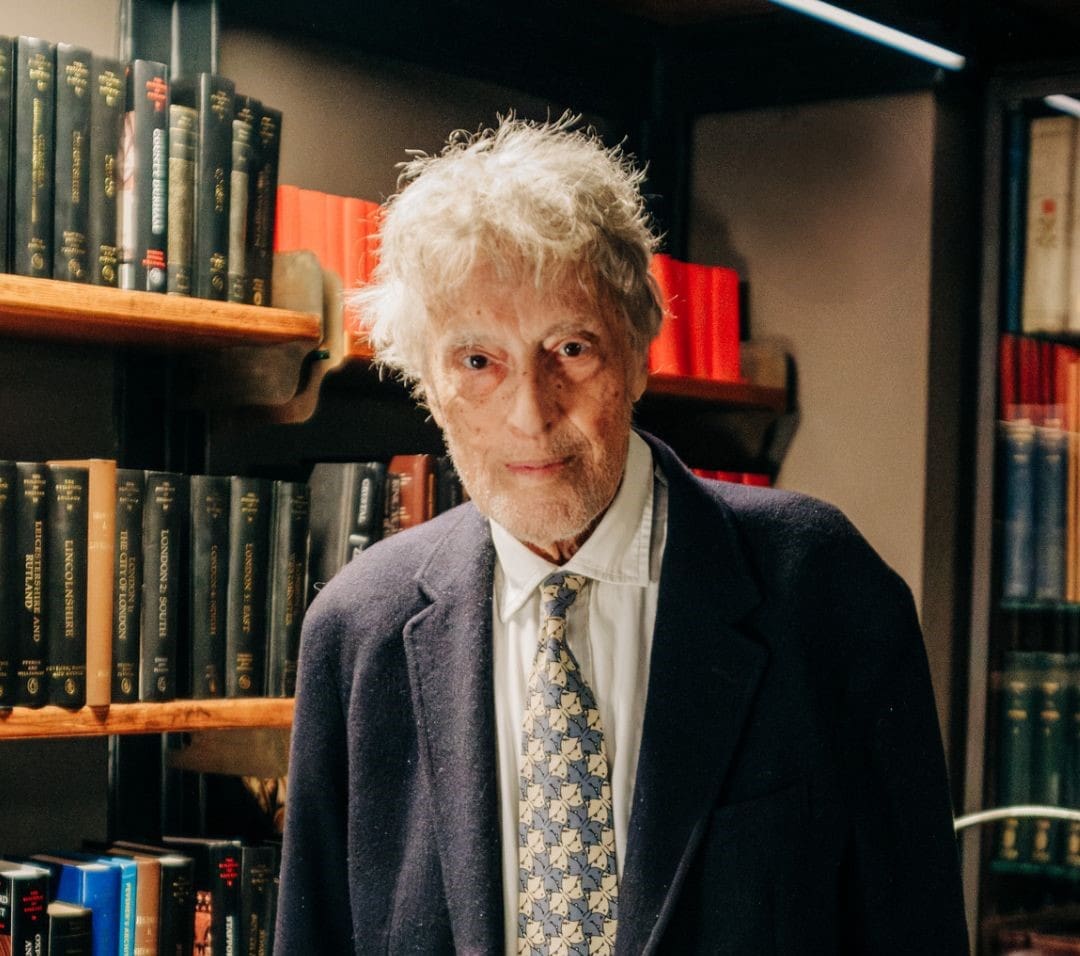
Sir Tom Stoppard, the Czech-born playwright whose voice became one of the most distinctive in British theater, has died aged 88.
Born as Tomáš Straussler in Zlín, Czechoslovakia in 1937, his early childhood was shaped by the turmoil of war. As a toddler, his family fled the Nazis — a harbinger of the upheaval to come. During the Japanese advance in Asia, his parents separated: his father, a doctor, stayed behind and later died; his mother and two boys found refuge first in Singapore, then India. After the war his mother married a British Army major, Kenneth Stoppard, and the family relocated to England — adopting his stepfather’s name.
Stoppard’s education in England was formal but far from scholarly — he boarded at schools in Nottinghamshire and Yorkshire, then exited school at 17. He threw himself into journalism, first in Bristol at the Western Daily Press before moving into feature writing and play criticism — a pathway that ultimately led him to theatre.
A Theatrical Career: From “Rosencrantz” to “Leopoldstadt”
Despite a modest beginning, Stoppard’s talent soon found its breakthrough. His early stage work led to his breakthrough play Rosencrantz and Guildenstern Are Dead — which premiered at the Edinburgh Festival in 1966 and swiftly became a British-theatre classic. Over the following decades he produced a formidable body of work: radio plays, stage plays, television and film screenplays — spanning from absurdist comedy to profound historical and philosophical drama.
Some of his best-loved works include Arcadia (1993), fusing Romanticism and chaos theory; The Real Thing (1982), a meditation on art and fidelity; and in later years Leopoldstadt (2020), a deeply personal drama that wrestles with identity, memory and the Holocaust — reflecting Stoppard’s rediscovery of his Jewish heritage.
Beyond theatre, he also made his mark on film — co-writing the screenplay for Shakespeare in Love (1998), for which he earned an Academy Award, among many other screenwriting credits.
Dorset: Home, Retreat, Reflection
In his later life, Stoppard settled in the south of England. For many years he lived in an 18th-century rectory near Blandford in Dorset with his third wife, Sabrina Guinness, whom he married in 2014. It was here in Dorset — away from the glamour and bustle of theatre London — that Stoppard found the space to contemplate identity, memory, loss and history. Notably, in the 1990s he learned for the first time that all four of his grandparents had perished in Nazi death camps. It was a discovery that haunted him. Only later did he turn those revelations into art.
When he died, he was at his home, and according to media reports, he died peacefully surrounded by family.
Legacy: The “Stoppardian” Imprint
Tom Stoppard leaves behind a legacy few playwrights match. His works — witty, erudite, structurally inventive — reshaped what drama could do. Critics coined the adjective “Stoppardian” to evoke his brand of intellectual theatricality: the collision of ideas, memory, history and humanity all wrapped in wit and wordplay.
But perhaps his greatest legacy lies in bridging the personal and the universal: a refugee turned quintessentially English dramatist, whose lifelong ambivalence about identity became the source of some of theatre’s richest meditations on dislocation, belonging and the passage of time.







