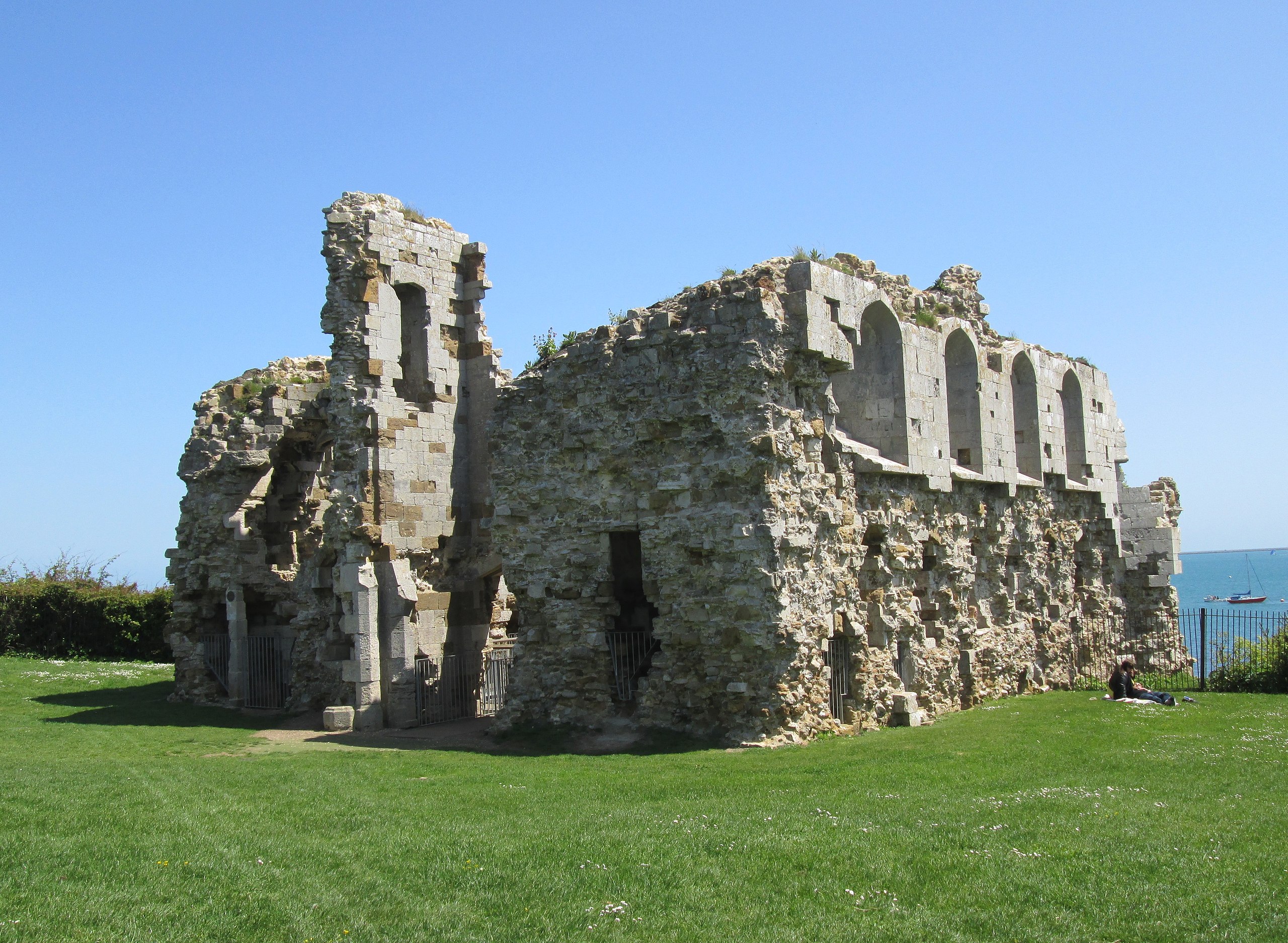
Overlooking the waters of Portland Harbour on the western edge of Weymouth stands the ruined remains of Sandsfoot Castle, one of Dorset’s most striking historic landmarks. Although now a crumbling ruin perched on fragile cliffs, the castle once formed an important part of England’s coastal defences. Its story stretches back nearly five centuries and reflects the political tensions, military threats and natural forces that have shaped Britain’s coastline.
Tudor origins and the threat of invasion
Sandsfoot Castle was built during the reign of Henry VIII in the early 1540s. The king ordered the construction of a chain of coastal fortifications known as the “Device Forts” following a major diplomatic crisis with Catholic Europe. After Henry broke from the Roman Catholic Church and dissolved England’s monasteries, he faced the real possibility of invasion by France and the Holy Roman Empire. In response, he issued instructions in 1539 for the “defence of the realm”, resulting in numerous forts along England’s south coast.
Sandsfoot Castle was constructed on cliffs overlooking Weymouth Bay to guard the anchorage and shipping routes around Portland Harbour. Positioned directly across the water from Portland Castle, the two forts worked together to control access to the harbour and defend against hostile fleets.
Built primarily from Portland stone, the castle consisted of a residential blockhouse attached to an octagonal gun platform designed to hold heavy artillery. The structure included living quarters for the garrison, storage areas and defensive walls. The fort was completed by around 1541–1542 at a cost of roughly £3,887, a considerable sum for the time.
Life inside the castle
The castle was not a grand medieval fortress but rather a functional artillery fort designed for the age of gunpowder. Its main purpose was to mount cannons capable of destroying enemy ships before they could enter the harbour.
Historical records from the early seventeenth century reveal that Sandsfoot Castle was equipped with ten guns of various types, including culverins and sakers. The garrison was small but professional, typically consisting of a captain, several gunners and a handful of soldiers.
The fort required periodic repairs because of its exposed location. By the late sixteenth century parts of the structure were already showing signs of deterioration as the cliffs beneath it were gradually eroded by the sea.
Sandsfoot Castle in the English Civil War
Like many strategic sites in England, Sandsfoot Castle became involved in the turmoil of the English Civil War in the 1640s. During this conflict between supporters of Charles I and Parliament, control of ports and coastal defences was crucial.
Weymouth itself largely supported Parliament, but the surrounding region changed hands several times. In 1643 Royalist forces entered Dorset and captured the town, taking control of Sandsfoot Castle. The Royalist occupation lasted until June 1644, when Parliamentary forces regained control of the area.
Despite its involvement in the war, the castle’s military importance gradually declined. Advances in artillery and changing strategic priorities meant that smaller coastal forts such as Sandsfoot were becoming outdated.
Decline and abandonment
The castle was officially withdrawn from military use in 1665 following the restoration of Charles II to the throne. Without a clear defensive role, the building quickly fell into neglect.
Nature soon proved to be the castle’s greatest enemy. The cliffs on which it was built consist largely of unstable clay that is easily eroded by wind and waves. Over time sections of the gun platform began to collapse into the sea.
By the early eighteenth century the structure was already a ruin, and much of its stonework was removed for use in local building projects. Some of the material from the castle was reportedly reused in nearby structures, including parts of Weymouth’s Town Bridge.
Although the castle was deteriorating, it remained a notable landmark. Artists in the eighteenth and nineteenth centuries frequently sketched or painted the ruins, capturing their dramatic position above the harbour.
From ruin to heritage site
In 1902 the ruins were purchased by Weymouth Corporation for £150, bringing the site into public ownership.
During the Second World War, the castle briefly regained a military role when anti-aircraft defences were installed nearby to protect Portland Harbour from German air attacks. However, the structure itself continued to deteriorate due to ongoing erosion.
By 1930 the ruins were considered unsafe and closed to the public. The remaining gun platform finally collapsed in the 1950s, leaving only parts of the original blockhouse standing.
In 1951 the surrounding land was landscaped to create Sandsfoot Gardens, a public park that offers spectacular views across Portland Harbour and the Jurassic Coast. The gardens helped preserve the setting of the castle and transformed the area into a popular local attraction.
Restoration efforts and modern challenges
In the early twenty-first century concerns grew that the castle could be lost entirely if conservation work was not undertaken. Funding from the Heritage Lottery Fund allowed surveys and repairs between 2009 and 2012. A steel and oak walkway was installed inside the ruin so visitors could safely explore the site, and detailed laser scans were carried out to record the structure.
The restoration allowed Sandsfoot Castle to reopen to visitors in 2012 and it was subsequently removed from Historic England’s “Heritage at Risk” register. Today the castle is protected as both a scheduled monument and a Grade II* listed building, recognising its national historical importance.
Unfortunately, the same natural forces that have threatened the castle for centuries continue to cause problems. In 2021 widening cracks in the remaining walls forced the site to close once again for safety reasons, and fencing now surrounds the ruins while authorities consider long-term preservation solutions.
A symbol of Weymouth’s past
Despite its ruined condition, Sandsfoot Castle remains one of Weymouth’s most recognisable historical landmarks. It stands as a reminder of Tudor fears of invasion, the upheavals of the Civil War and the relentless power of the sea.
For locals and visitors alike, the castle offers more than just a glimpse of military history. Its dramatic position above Portland Harbour and the surrounding gardens make it one of the most photographed locations in the town. Even in ruin, Sandsfoot Castle continues to tell the story of Weymouth’s long relationship with the sea, defence and the shifting coastline of Dorset.
Don’t let it disappear.