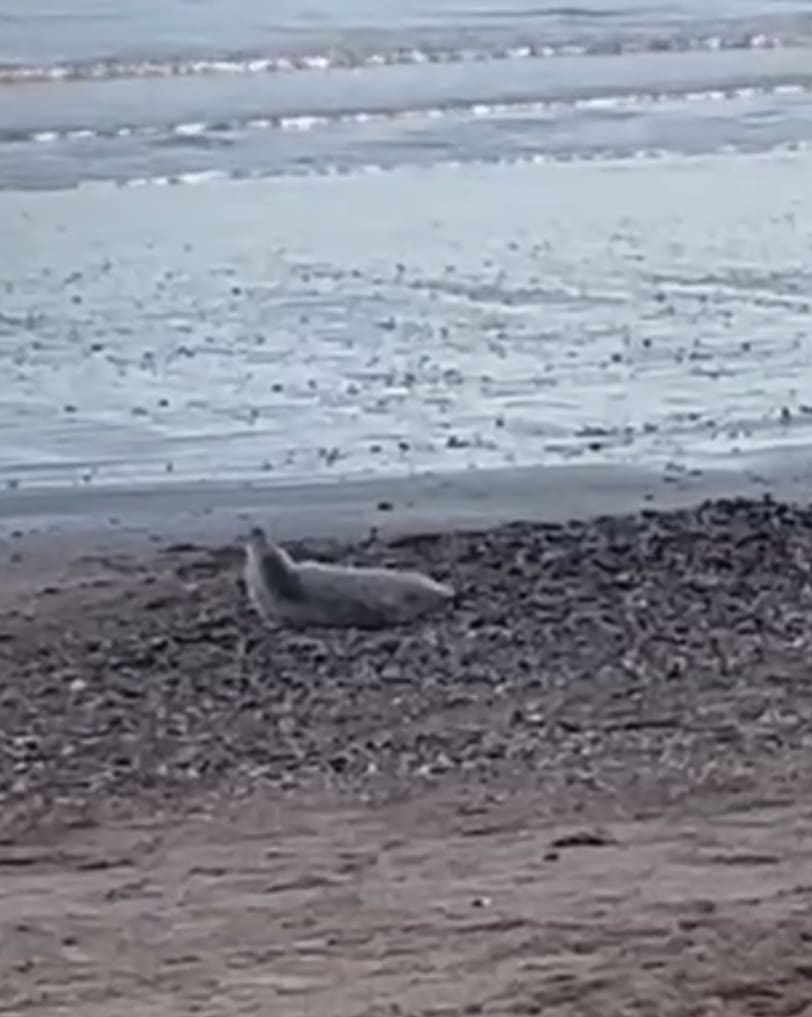
A seal was first spotted near the shoreline at around 12.30pm on Wednesday. In response, a cordon was swiftly established from the Pier Bandstand as Weymouth Town Council’s Resort Team worked alongside partner agencies to monitor the situation and ensure the seal’s safety.
Members of the public were urged to keep their distance and avoid attempting to approach or touch the animal. The council emphasised that maintaining space was vital not only for the welfare of the seal but also for public safety.
Local residents noted that the sighting was reminiscent of Sammy the Seal, the much-loved marine visitor who became something of a celebrity along Weymouth Beach in 2020.
The incident served as yet another reminder of the area’s ongoing relationship with its occasional non-human coastal visitors.
Ten facts about seals:
Seals are marine mammals that belong to the pinniped family, which also includes sea lions and walruses.
They have a thick layer of blubber that helps them stay warm in cold ocean waters.
Most seals are excellent divers and can hold their breath for more than half an hour.
Grey seals and common (harbour) seals are the two species most commonly found around the UK coastline.
Seals use their sensitive whiskers to detect vibrations and locate prey in murky water.
They feed mainly on fish, squid, and crustaceans.
Although seals are agile swimmers, they move awkwardly on land, often wriggling or “galumphing” across beaches.
Pups are usually born on land or ice and are often covered in a fluffy white coat called lanugo.
Seals communicate using barks, grunts, growls, and other vocalisations, especially during breeding season.
Many seal species face threats from pollution, entanglement in fishing gear, habitat loss, and climate change.