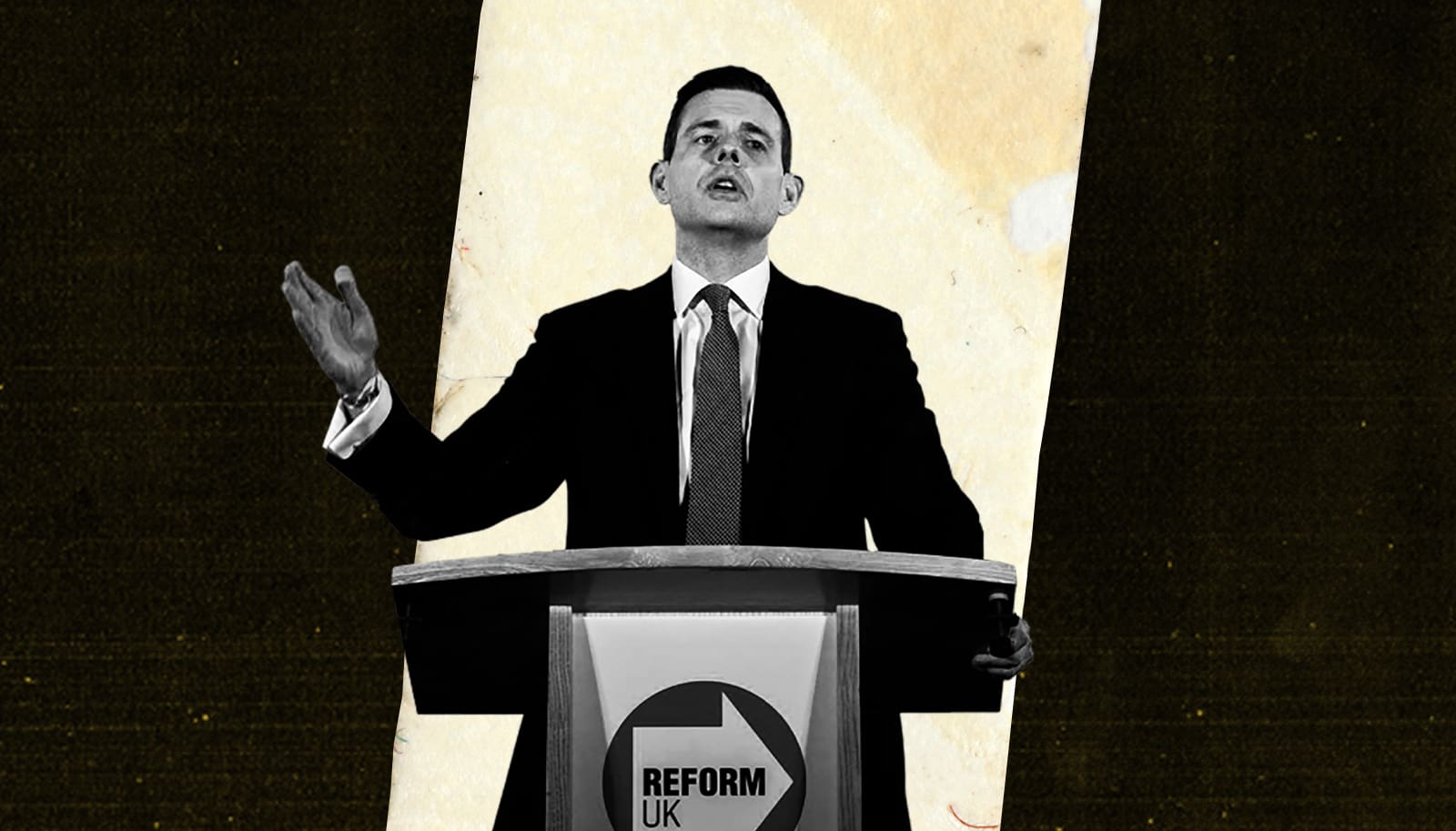
Sexual harassment allegation is rumoured to be the tip of the iceberg.
BREAKING: Sources within Reform tell me that they are that worried about the by-election next week that Matt Goodwin might stand down BEFORE Thurs
— Jim Cognito (@JimCognito2016) February 20, 2026
Reform figures desperately trying to talk him round, Farage involved
They think something damaging about to come out in the press
Reform UK’s reflex response to controversy is now so predictable it has become a political strategy in its own right: deny, diminish, and denounce the messenger. The handling of a sexual misconduct complaint reported in the Guardian involving Matt Goodwin is simply the latest and most revealing example.
In 2025, a young employee at GB News lodged a complaint alleging that Goodwin had made inappropriate verbal remarks to her, including a comment about her appearance. Sources say she was deeply upset by the incident and that colleagues were disturbed by her distress. An internal inquiry followed. No formal disciplinary action was taken. Goodwin apologised once the complaint was raised. His lawyer has dismissed the matter as a “minor workplace issue” rooted in miscommunication.
But the political question is not whether a tribunal was convened or whether HR ticked the correct boxes. It is why, having been informed of the grievance, Nigel Farage pressed ahead with Goodwin’s candidacy regardless.
Farage, leader of Reform UK, was reportedly told of the complaint before Goodwin was selected for the Gorton and Denton by-election. According to one source, he brushed it off as “that is just Matt being Matt”. If accurate, that phrase encapsulates a culture of indulgence: behaviour that unsettles others is reframed as personality; concerns are trivialised as oversensitivity; reputational risk is calculated and absorbed.
This is not an isolated lapse in judgment. Reform UK has repeatedly selected candidates whose past comments and associations would raise alarms in any party serious about governance.
Goodwin himself has described giving “young girls and women” a “biological reality” check, language critics said flirted with authoritarian social engineering. In conversation with Jordan Peterson he lamented the “feminisation of higher education”, aligning himself with culture war narratives that portray equality as decline. He has questioned whether UK-born people from minority ethnic backgrounds are necessarily British — a statement that strikes at the civic foundations of modern citizenship. Upon announcing his candidacy, he was endorsed by far-right agitator Tommy Robinson, a convicted criminal whose support would be toxic to most mainstream campaigns.
At the local level, Reform UK has faced a rolling series of controversies over candidates’ historic social media posts, inflammatory rhetoric and conspiratorial claims. Rather than demonstrate rigorous vetting or disciplinary clarity, the party’s standard response has been to cry “smear”, blame hostile media, and portray itself as the victim of establishment sabotage.
That posture may energise a base that thrives on grievance. It does not inspire confidence in the party’s readiness for office.
Candidate selection is the clearest expression of a party’s values. It signals what conduct is tolerable, what rhetoric is acceptable, and what trade-offs are deemed worthwhile. In Goodwin’s case, the calculation appears stark: controversy is survivable, contrition optional, scrutiny suspect.
Reform UK insists it is cleaning up British politics. Yet its pattern suggests the complete opposite. It reflects a movement more interested in provocation than prudence, more comfortable with outrage than accountability and more inclined to dismiss complaints as smears than to ask why they keep arising in the first place.