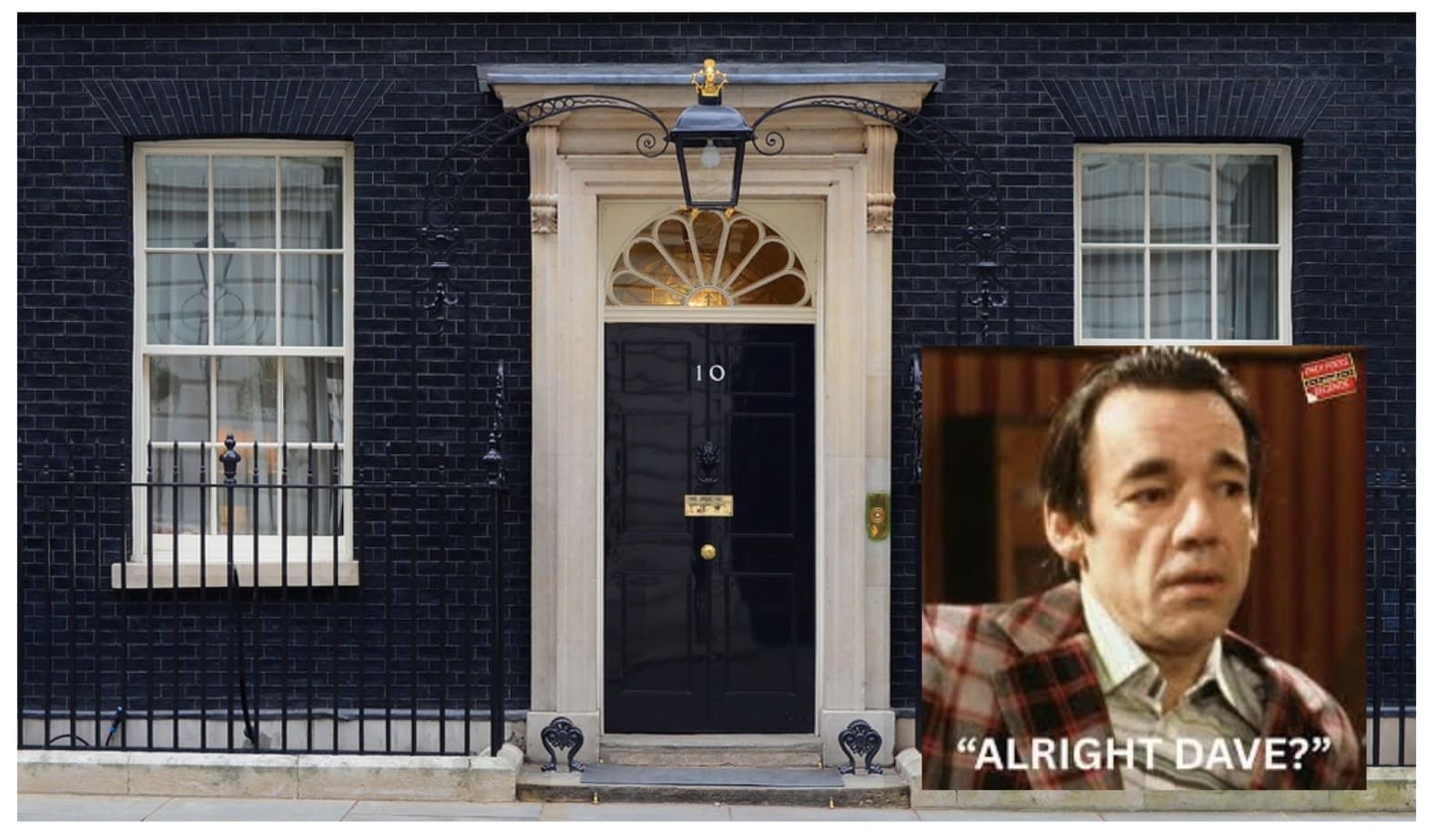
There is a brutal, almost comic truth running through modern British history: every prime minister the people of the United Kingdom have elected since 1951 has, in effect, made the country worse. Not noisier, not just disappointing, but materially poorer, more unequal, less confident, and progressively brittle. The names change, the faces age, and the slogans get shinier, but the outcome remains stubbornly the same. And yet, time after time, voters act like Trigger from Only Fools and Horses, clutching their familiar party colours as if repeating the ritual will somehow make the broom behave differently. Only Clement Attlee, the one prime minister rejected at the ballot box in 1951, can look back with pride. He rebuilt a nation battered by war, rationing, and bombed-out cities, founding the NHS, expanding council housing, guaranteeing social security, and committing the state to full employment. He governed as if politics were a moral project rather than a branding exercise. Since his defeat, Britain has never again elected a leader capable of even approaching that ambition.
Churchill returned soaked in nostalgia and inertia, more concerned with memory than momentum. Eden humiliated the country at Suez and exposed the emptiness of Britain’s imperial pretences. Macmillan papered over structural weakness with consumer comfort, while entire regions quietly hollowed out. Wilson promised the “white heat of technology” but governed cautiously, unwilling to confront entrenched power. Callaghan effectively conceded that democratic government itself was constrained by markets, a surrender that would haunt every successor. Thatcher came next, not just another wrong’un but the architect of a new Britain, one built on dismantled industry, broken unions, privatised public goods, and normalised inequality. Her legacy was a country addicted to speculation, finance elevated above production, and regions abandoned as collateral damage. Every prime minister since has accepted her settlement, arguing only over tone, speed, or spectacle, never direction.
Major lacked the authority to reverse course and sloganed morality while committing adultery with Edwina. Blair had a landslide but chose to make peace with neoliberalism, deregulating finance, outsourcing the state, and dragging Britain into Iraq, permanently corroding trust. Brown stabilised the banks during 2008 but saved a broken system intact, laying the groundwork for austerity. Cameron imposed that austerity with zeal, shrinking public services and gambling the country’s future on Brexit. May was paralysed. Johnson debased public life entirely. Truss detonated economic credibility in weeks. Sunak governed as a risk-averse caretaker, a competent Trigger who sweeps up after everyone else’s mess but never dares to move the broom outside the lines. Wages flattened, services continued to crumble, housing remained unattainable and politics reduced to technocratic triage. Nothing fundamentally changes because nothing fundamental is challenged.
And now there is Starmer, a more polished, more competent Trigger, who nevertheless behaves with the same stubborn, almost heroic caution. He reassures markets, newspapers, and donors that nothing disruptive will happen, managing decline with managerial finesse rather than vision. His failing model does not reverse failure; it merely polishes the broomstick while the dirt of inequality, poverty, and social erosion piles up around it. Britain does not suffer from a lack of seriousness; it suffers from a lack of courage, and Starmer’s hands on the wheel suggest continuity where rupture is desperately needed. The longer his politics continue, the more the Trigger virus spreads. Some are advocating for Nigel Farage next. The man who is more establishment than most of what preceded him and who promises to use a chainsaw when in reality he will only use a duster. He will enable the market place to swallow society whole and those who cannot afford health and education… will be left to scream from the icy cold water.
Voters act like Trigger with his broom, faithful to routine, convinced that repetition will somehow yield a different outcome. Time and again they vote for the familiar face, the party of empty promises, or the slogan that sounds right, and then marvel when the result turns out exactly as it always does: the country left slightly poorer, slightly meaner, slightly diminished. Repetition, predictability and an aversion to genuine reflection are celebrated as virtues and each election becomes a ritual of managed disappointment. Trigger never questions why the broom stays the same, never wonders if there might be a better tool; he trusts that loyalty and habit will carry him through. In the same way, British voters keep choosing managers of decline, hiring one after another to continue the same work with a different accent. Doing the bidding of their paymasters while sneering at those they deem inferior to them.
Attlee remains the reproach that hangs over them all. He confronted the crisis with ambition, solidarity, and vision. Every prime minister since has quietly whispered to the electorate that such ambition is no longer possible or lied through their teeth knowing that they will get away with it. What has been missing is not opportunity but will. Until Britain elects leaders prepared to sincerely confront power rather than accommodate it, Attlee will remain the last prime minister who can genuinely hold his head up, while the rest; the Churchills, Thatchers, Blairs, Camerons, Johnsons, Trusses, Sunaks, and Starmer blend into a long, unbroken story of decline, dutifully swept over by voters as loyal, unreflective, and tragically consistent as Trigger with his broom.