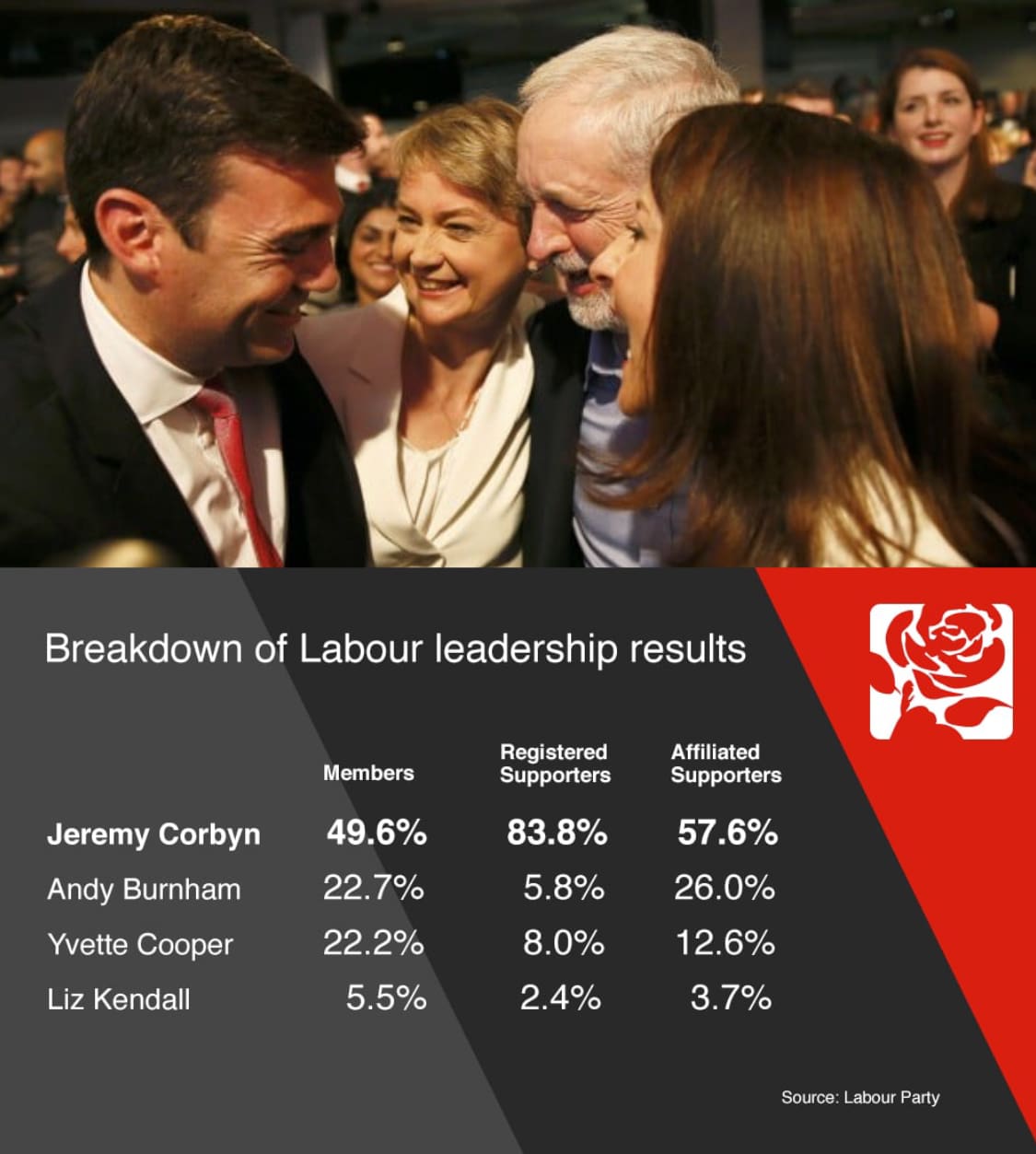
Ten Years Ago Today, Jeremy Corbyn Was Elected Leader Of The Labour Party. So Began One Of The Biggest Establishment Kickbacks In History
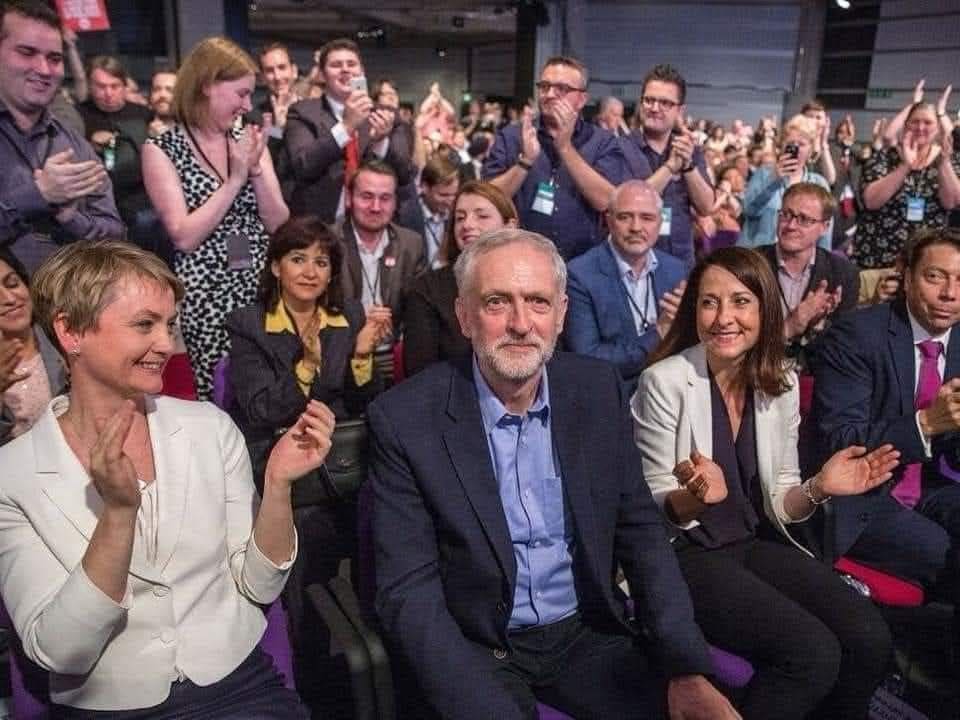
On 12th September 2015, Jeremy Corbyn was elected leader of the Labour Party. Hope surged. But from day one, he was flanked by enemies on his own benches. The very front row beside him became a firing squad, undermining every step, every inch of progress.
His biggest nemesis was Peter Mandelson. Mandelson’s creation was Keir Starmer. Together they inherited Labour and warped it into a Tory tribute act. But as the proverb says, “If you wait by the river long enough…”, and in British politics the river runs thick with the jetsam of Westminster, bodies drifting downstream, ejected and flushed away….
It’s not as if we weren’t warned. As Tony Benn once declared:
“If the Labour Party could be bullied or persuaded to denounce its Marxists, the media – having tasted blood – would demand next that it expelled all its Socialists and reunited the remaining Labour Party with the SDP to form a harmless alternative to the Conservatives… British capitalism would be made safe forever, and socialism squeezed off the national agenda. But if such a strategy were to succeed, it would in fact profoundly endanger British society. For it would open up the danger of a swing to the far-right, as we have seen in Europe over the last 50 years.”
And here we are…
Paul Knaggs, Labour Heartlands
How Powerful Interests United Against Jeremy Corbyn And Destroyed The Labour Party
When Jeremy Corbyn, a veteran socialist and backbench rebel, unexpectedly won the leadership of the Labour Party in 2015, it sent shockwaves through the British political establishment. For many on the left, it was a long-awaited return to core principles. For others, both in the UK and abroad, it was perceived as a direct and alarming threat. What followed was a sustained period of opposition, not just from domestic political opponents, but from a powerful alliance of British institutions and the Israeli government, both of whom viewed his leadership with profound unease.
A Threat to the British Establishment
From the outset, Corbyn’s platform represented a clear break from the political consensus that had dominated Westminster for decades. His policies—including nationalising key utilities, unilateral nuclear disarmament, and imposing higher taxes on corporations and the wealthy—were anathema to large sections of the British establishment.
- The Media Onslaught: The UK press, particularly the right-leaning newspapers, launched an unrelenting campaign against Corbyn. He was routinely portrayed as a dangerous extremist, a communist sympathiser, and fundamentally unfit for office. This wasn’t merely criticism of policies; it was a character assassination that questioned his patriotism and competence. Headlines focused on his past associations with groups like the IRA and Hamas, often stripping away the context of his stated aim for peace and dialogue.
- Internal Party Warfare: The Labour Party itself became a battleground. Many centrist Labour MPs (often referred to as Blairites) made little secret of their desire to oust him. A failed vote of no confidence and leadership challenge in 2016 revealed the deep fissures within Parliamentary Labour Party (PLP). This internal chaos, frequently leaked to the press, created a public perception of a party in disarray, undermining Corbyn’s authority from within.
- The Security and Diplomatic Sphere: Corbyn’s lifelong stance as a nuclear disarmer and critic of NATO alarmed figures within the military and security services. Briefings against him, suggesting he was a national security risk, appeared in newspapers. Furthermore, his critical stance towards foreign policy alliances, particularly the “special relationship” with the US and uncritical support for Saudi Arabia, marked him out as a maverick who threatened long-standing diplomatic protocols.
The Israeli Government’s Stance: Beyond Mere Criticism
While the British establishment recoiled at Corbyn’s economic and foreign policy, the Israeli government had a more specific and intense grievance: his long-standing support for the Palestinian cause and his characterisation of groups like Hamas and Hezbollah as friends in the pursuit of peace.
- The “Anti-Semitism Crisis”: This became the most potent and damaging line of attack. Corbyn’s history of supporting Palestinian groups and his presence at events where individuals with anti-Semitic views were also present provided ample ammunition. Critics, including Jewish community groups like the Jewish Leadership Council and the Board of Deputies of British Jews, accused him of allowing anti-Semitism to flourish within the Labour Party under his leadership.
The Israeli government, under Prime Minister Benjamin Netanyahu, actively amplified this narrative. Israeli officials publicly condemned Corbyn, and the state’s diplomats were accused of actively assisting groups working to undermine his leadership. For the Israeli establishment, Corbyn was not merely a critic of policy; he was framed as a existential threat to the UK’s Jewish community and, by extension, a delegitimiser of Israel itself. - A Shift in UK Policy: For decades, UK policy towards Israel, while sometimes critical of settlements, had been broadly supportive under both Labour and Conservative governments. Corbyn, a longtime supporter of the Palestinian solidarity movement and advocate for sanctions against Israel, represented a potential seismic shift. The prospect of a British prime minister who might recognise Palestine as a state and support the Boycott, Divestment, Sanctions (BDS) movement was a red line for Jerusalem. They therefore engaged in an unprecedented effort to ensure he would never reach Number 10.
A Confluence of Interests
The campaigns from the UK and Israeli establishments, while stemming from different primary concerns, converged powerfully. The British press found a compelling and morally charged stick with which to beat Corbyn in the form of the anti-Semitism allegations, which were vigorously promoted by his political opponents. This fused anti-Zionism with antisemitism to denounce the left and to discredit Corbyn’s entire project.
The result was to paint Corbyn not just as a radical, but as a morally compromised figure. By the 2019 general election, this narrative had become entrenched, contributing alongside the much bigger issue of Brexit significantly to Labour’s defeat. Boris Johnson’s lies and the corporate media bias got the Tories elected. And what a complete disaster that was.
The backlash against Jeremy Corbyn’s leadership was not a coincidence but a coordinated response from powerful interests who saw his ideology as a direct challenge to their own. The UK establishment feared his economic and foreign policy revolution, while the Israeli government feared his stance on Palestine. Together, they found common cause, creating a perfect storm of opposition that ultimately proved insurmountable for his project, fundamentally altering the trajectory of British politics.
Who the real enemy is: