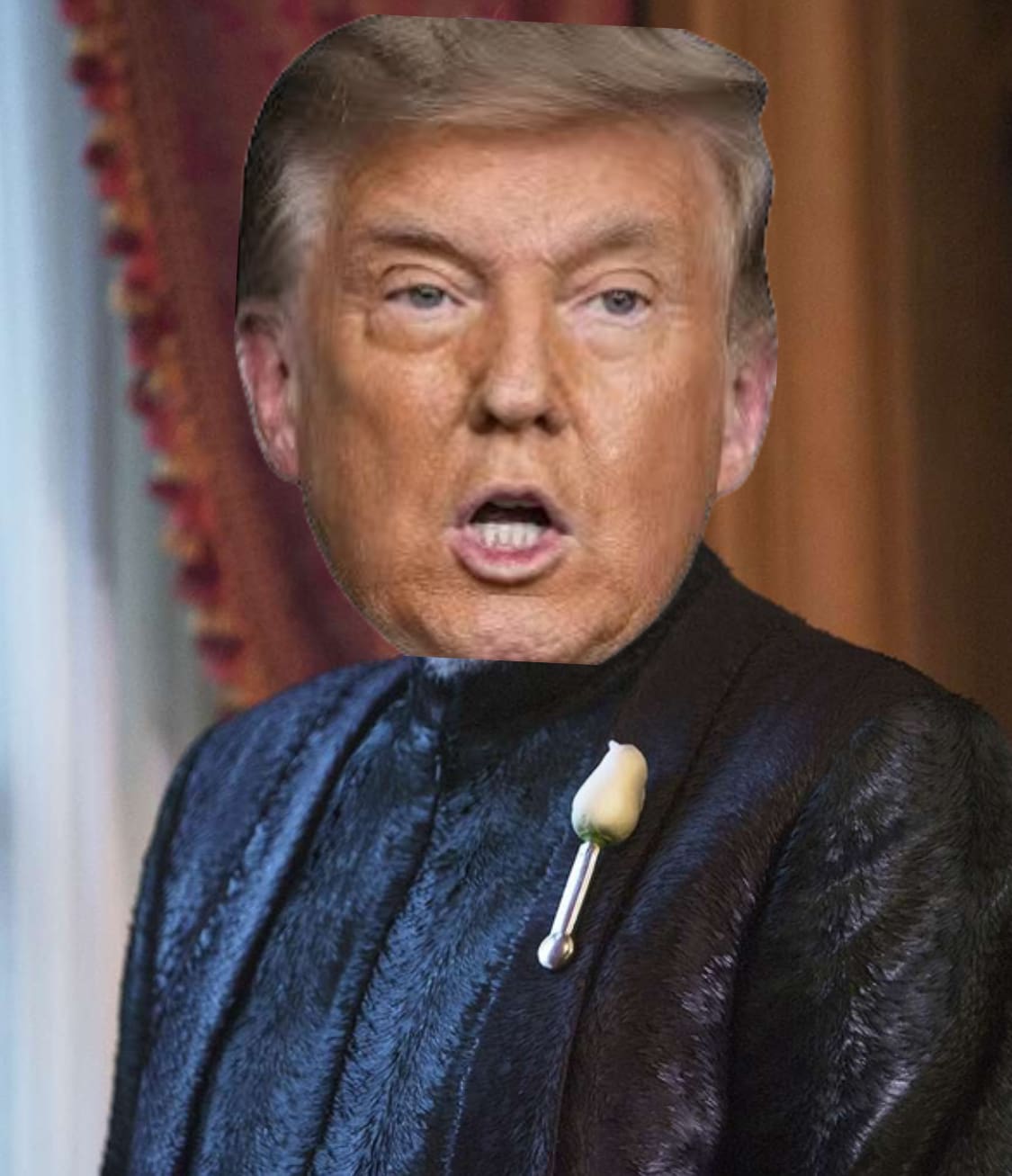
In the world of Panem, the rules are simple, brutal, and absolute. The Capitol reigns supreme, its authority unquestioned, its whims enforced through a combination of lavish spectacle and public humiliation. To step out of line is to risk being made an example of—a tribute sacrificed not in an arena, but in the court of public opinion, branded a traitor for the crime of dissent.
A similar, unsettling drama is playing out in the American political arena, where the presidency of Donald Trump often mirrors the dystopian theatrics of The Hunger Games. The recent, very public schism between Trump and his once-fervent loyalist, Congresswoman Marjorie Taylor Greene, serves as a perfect case study in how a leader can announce his superiority and publicly humiliate anyone who dares to question the official narrative.
The Capitol’s Decree: Loyalty is a One-Way Street
For years, Marjorie Taylor Greene was a prized tribute from District MAGA. She embraced conspiracy theories, attacked the Capitol’s designated enemies (the “fake news” media, the “deep state”), and performed loyalty with a fervor that made her a star in the regime’s propaganda machine. She was, in essence, a victor in Trump’s political games.
But in Panem, no victor is ever truly safe. The moment a tribute develops an independent thought or challenges the Gamemaker’s plan, they become a liability.
The breaking point, according to Greene herself, is the impending vote to release all files related to Jeffrey Epstein. This is the equivalent of demanding to see the Capitol’s blueprints—the secrets it guards most fiercely. When the petition gained enough signatures, including Greene’s, to force a vote, the Gamemaker took notice.
Trump’s response was a classic Capitol move. He didn’t engage with the substance; he attacked the person. On his version of the Capitol’s broadcast system, Truth Social, he labeled Greene “Wacky,” a “ranting Lunatic” who does nothing but “COMPLAIN, COMPLAIN, COMPLAIN!” He publicly revealed private slights, saying she was upset he wouldn’t return her calls, and promised his “Complete and Unyielding Support” to any challenger who would primary her.
The message to the other districts—sorry, Republican lawmakers—was clear: Question me, and you will be publicly shamed and cast out. Your past loyalty means nothing. My narrative is the only one that matters.
The Tribute’s Rebellion: A Glimpse Behind the Curtain
Greene’s retaliation was equally revealing. She didn’t just get angry; she did the one thing the Capitol fears most: she provided evidence. Sharing text messages to Trump and a White House aide, she attempted to pull back the curtain on the Gamemaker’s motives.
“Of course he’s coming after me hard to make an example to scare all the other Republicans before next weeks vote to release the Epstein files,” she wrote on X. “It’s astonishing really how hard he’s fighting to stop the Epstein files from coming out.”
In this moment, Greene transformed from a loyal victor into a symbol of a fractured system. Her statement, “I don’t worship or serve Donald Trump,” was a direct challenge to the core tenet of the Capitol’s power: absolute fealty. She exposed the conflict not as a policy disagreement, but as a fundamental battle over transparency and control. The Epstein files are the forbidden knowledge, and Trump, in her telling, is fighting as hard to suppress them as President Snow would to protect the secrets of the arena.
The Same Old Games: “Hoaxes” and “Fake Narratives”
The Capitol’s playbook relies on controlling the language. Claims that implicate the powerful are never serious inquiries; they are “hoaxes.” Uncomfortable revelations are “selectively leaked” to create a “fake narrative.” Trump has consistently called the Epstein links a “hoax,” while his White House dismisses damning emails as a partisan smear.
This is the political equivalent of the Capitol announcing that the games are for the tributes’ own good—a necessary and glorious tradition. It’s an attempt to reshape reality itself, to humiliate and discredit anyone who suggests that the emperor has no clothes, or that the powerful might have frequented Epstein’s island.
When Will It End?
So, when does the Hunger Games end? In Panem, it ended only when the districts united, saw through the spectacle, and refused to play by the Capitol’s rules any longer.
In American politics, it will end when the public tires of the spectacle of public humiliation as a tool of control. It will end when loyalty to a person is no longer the primary currency of political power. It will end when the pursuit of uncomfortable truths—whether about a financier’s flight logs or a president’s knowledge—is valued more highly than the preservation of a leader’s flawless facade.
The feud between Trump and Greene is not just political gossip. It is a stark reminder that in a system where a leader acts like a Gamemaker, every politician is a tribute, and every dissent is an act of rebellion. The only question that remains is whether the districts are still watching, or if they have finally started to see the arena for what it is.