

Donald Trump once styled himself as the dealmaker-in-chief, the insurgent who would end America’s “forever wars” and bring troops home from distant deserts. He derided interventionism, mocked nation-building, and wrapped himself in the language of restraint. Now, in a move as brazen as it is reckless, the man who campaigned as a reluctant warrior has chosen escalation over diplomacy and plunged the Middle East into a conflagration that could define a generation.
In coordination with the government of Benjamin Netanyahu in Israel, Trump authorised major combat operations against Iran without the approval of Congress and without even the pretence of a United Nations mandate. The objective, by his own words, is nothing less than regime change. It is an extraordinary gamble: to topple the ayatollahs from the air, to shatter a state of 85 million people through missile strikes and shock-and-awe theatrics, and to trust that something better will emerge from the rubble.
Only days earlier, American envoys had been in Geneva pursuing a diplomatic track. Omani mediation was active. European governments were cautiously optimistic. There were gaps, certainly — Iran’s ballistic missile programme remained a point of acute concern — but the scaffolding of negotiation still stood. Then, abruptly, it was kicked away.
The consequences have been immediate and terrifying. Iranian missiles have streaked across the skies of the Gulf. Air raid sirens have wailed in Dubai and Abu Dhabi. Debris has fallen near the luxury hotel Fairmont The Palm. Fires have burned in residential districts. One person has been killed in the UAE, others injured. Airspace across Qatar, Bahrain, Kuwait and Jordan has been closed or heavily restricted. Flights have turned back mid-air; Heathrow departures have taxied only to be cancelled. The world’s busiest travel hub has fallen eerily silent.
This is what “maximum pressure” looks like when it becomes maximum war.
Iran has struck at US bases in Qatar, Kuwait, the United Arab Emirates and Bahrain. It has declared American assets legitimate targets. The Strait of Hormuz — the narrow artery through which roughly a fifth of the world’s oil passes — now sits on a knife edge. Markets are already twitching. Energy prices are climbing. Insurance premiums for shipping are spiking. A regional war is no longer hypothetical; it is unfolding in real time.
And yet, for all the rhetoric of strength, this is a war born not of necessity but of choice.
Trump insists that overwhelming air power can degrade Iran’s capabilities sufficiently to trigger internal collapse. He has urged the Iranian people to rise up and “take over” their government. It is a seductive fantasy: that bombs dropped from 30,000 feet can midwife democracy. We have heard this before. The echoes of 2003 are unmistakable. Then, too, an American president spoke of liberation, of decisive strikes, of short wars and grateful populations. The result was chaos, insurgency and decades of bloodshed.
The historical parallel is uncomfortable for Trump, who built much of his early political identity by attacking the Iraq invasion and distancing himself from the neoconservative consensus. Yet here he stands, presiding over what may become the most consequential American military escalation since that very conflict.
There is also the question of legality. No congressional vote authorised this war. No UN Security Council resolution blessed it. Britain, under Prime Minister Keir Starmer, has reportedly refused to allow its bases to be used in support of the assault, citing grave concerns under international law. Even America’s closest allies are uneasy.
So why now?
At home, Trump faces deepening political headwinds. Inflation and affordability remain acute concerns for American voters. His approval ratings have slid as the mid-term elections approach. The coalition that returned him to office is restless, fractured between isolationists who wanted retrenchment and hawks who crave confrontation.
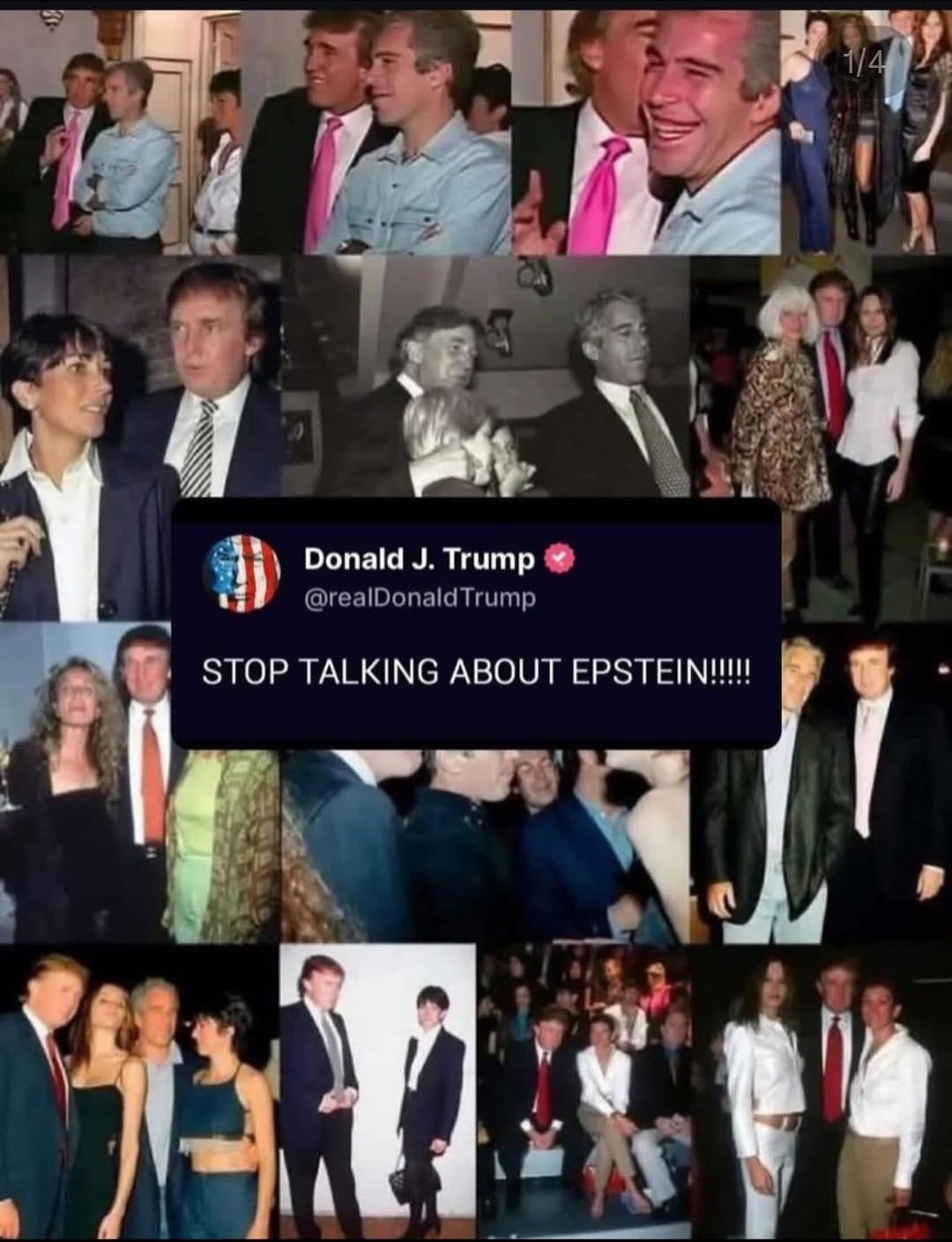
Compounding these pressures is the persistent shadow of the Epstein scandal. Fresh scrutiny of the so-called “Epstein files” has revived uncomfortable questions about powerful men, past associations and what remains undisclosed. While Trump has denied wrongdoing, the drumbeat of headlines has been relentless. Court filings, investigative reporting and political attacks have kept the issue alive in the public imagination.
Against that backdrop, a dramatic foreign crisis can serve as both shield and sword. It dominates news cycles. It rallies partisan support. It reframes a presidency under strain as a presidency at war. Historically, leaders have often enjoyed a short-term “rally round the flag” effect when military action begins. Critics are painted as unpatriotic; scrutiny is deferred in the name of unity.
It would be naive to assume that domestic politics played no role in the timing of this escalation. The optics are stark: diplomatic talks progressing one week; missiles launched the next. An administration battered by unfavourable polling suddenly commanding primetime addresses and wall-to-wall coverage focused on external enemies rather than internal scandals.
This does not mean the Iranian regime is benign or that its nuclear ambitions are trivial. Tehran’s record — repression at home, proxy warfare abroad, hostility towards Israel — is well documented. But recognising that reality does not require endorsing a maximalist war whose endgame is murky at best.
Even if the regime were to fall, what then? Iran is not a small state easily reshaped. It is a complex society with deep factional divides, powerful security services and a history of nationalist backlash against foreign interference. A vacuum could empower hardliners, fracture the country along ethnic lines or ignite proxy struggles among regional powers. The idea that the United States can calibrate destruction precisely enough to produce a stable, pro-Western successor government is an extraordinary act of faith.
Meanwhile, civilians are paying the price. Reports from Iran speak of strikes hitting urban areas, including a girls’ school in Hormozgan province where dozens were reportedly killed or injured. Satellite imagery shows smoke rising from compounds linked to the supreme leadership. Across the Gulf, families are sheltering from incoming missiles, children jolted awake by explosions overhead.
Trump has acknowledged the possibility of American casualties with chilling brevity: “That happens in war.” It is an astonishingly casual formulation for a decision that may claim lives across multiple nations.
The president has framed this as an existential confrontation with a “wicked, radical dictatorship”. Yet his critics see something more cynical: a high-stakes gamble by a leader whose domestic authority is ebbing, who has long thrived on crisis and confrontation, and who may calculate that bold aggression abroad can offset vulnerability at home.
History offers little comfort. Wars begun with confidence often end in compromise, stalemate or quagmire. Objectives expand. Timelines slip. Costs multiply. The Middle East, scarred by decades of intervention, has shown repeatedly that external powers cannot dictate outcomes at will.
The cork, as one correspondent put it, is out of the bottle. Iran will not roll over. Its leadership sees this as a fight for survival and will retaliate accordingly. Each strike invites a counterstrike. Each casualty deepens grievance. Each miscalculation risks widening the battlefield.
For a president who once promised to keep America out of new wars, this is a staggering reversal. For a world already strained by economic uncertainty and geopolitical tension, it is a dangerous new chapter.
The Chairman of the Board of Peace has started a war. Whether it secures his political fortunes, buries uncomfortable headlines or achieves the sweeping transformation he promises remains to be seen. What is already clear is that the costs — human, legal, economic and moral — will be borne far beyond Washington.
And once such wars begin, they rarely unfold according to plan.







