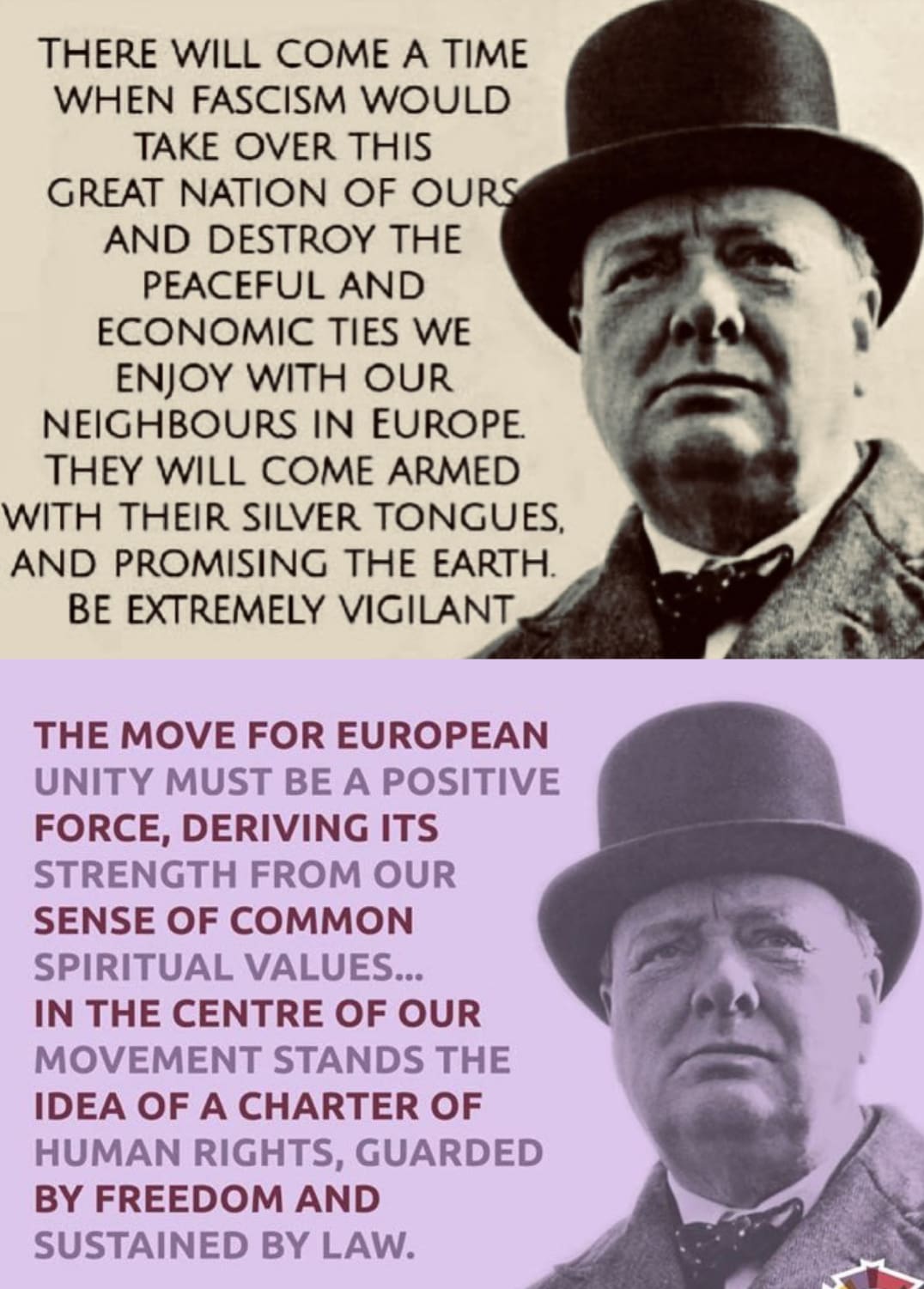
It is one of the most radical proposals in British politics, simmering for years on the Tory backbenches. Now, with Kemi Badenoch’s definitive commitment to withdraw from the European Convention on Human Rights (ECHR), it has been placed at the very heart of the Conservative election manifesto. This is not just a policy shift; it is a profound historical and diplomatic rupture and a move that would see its advocates betray the vision of one of their own greatest heroes: Winston Churchill.
The idea has long been a favourite of the party’s right flank. David Cameron refused to rule it out. Theresa May, as home secretary, was famously passionate about the notion, only to cool on it in Number 10. Boris Johnson kept “all options on the table” to salvage his Rwanda scheme, and Liz Truss boasted of her willingness to pull the trigger. Former cabinet ministers like Suella Braverman have made it their clarion call.
But now, amid public frustration over small boat crossings and court-blocked deportations, the appetite for withdrawal has gone mainstream. Even the Labour Party is exploring ways to alter how the ECHR is implemented in UK law to facilitate removals. The political pressure is immense, and the Tories, staring down the barrel of electoral oblivion and haemorrhaging votes to a Reform UK that has pledged to leave, feel they have no choice.
The Churchillian Legacy Abandoned
This is where the historical betrayal cuts deepest. The ECHR is not some diktat from a modern European super-state; it is a fundamentally British, post-war achievement. It was drafted by British lawyers, inspired by the horrors of fascism, and championed by Winston Churchill himself. He envisioned a “Council of Europe” and a charter of rights that would ensure the atrocities of the 1940s could never again be visited upon the continent.
For today’s Conservative leaders to now turn their backs on this Churchillian cornerstone is an act of staggering historical amnesia. They seek to align themselves with the bulldog spirit of Britain’s past while dismantling one of its most noble and enduring exports. The uncomfortable truth they must now confront is that the only other nation to have left the ECHR is Russia, following its invasion of Ukraine. This is not a club from which Britain should wish to resign.
A Diplomatic Minefield and a ‘Fag Packet’ Policy
Mrs. Badenoch, to her credit, has attempted to frame her conversion as a considered one. She points to the 200-page review by Lord Wolfson, which concluded that membership “places significant constraints” on government power. She argues this shows the Tories have “done the serious work,” unlike Reform, whose policy Chris Philp derided as a “slogan written on the back of a fag packet in a pub.”
Yet, this raises the key question Reform is now gleefully asking: why wasn’t this “serious work” done during the 14 years the party has been in government? The answer, which her predecessors—Cameron, May, Johnson—all discovered, is that leaving the ECHR is a diplomatic and practical minefield.
The Convention is intricately woven into the fabric of the Good Friday Agreement, providing a neutral human rights framework essential for peace in Northern Ireland. It also forms a foundational part of the UK’s post-Brexit trade and cooperation deal with the European Union. Withdrawal wouldn’t just be a symbolic snub to Europe; it would risk unravelling these delicate, hard-won settlements, creating a new era of friction with the EU and placing the Union of the United Kingdom under unprecedented strain.
A Catch-Up Strategy, Not a Clear Vision
Ultimately, Badenoch’s commitment feels less like a bold new vision and more like a desperate game of catch-up. For months, she resisted this very move, calling it “no silver bullet.” Now, with Nigel Farage’s drumbeat growing louder and her leadership rival Robert Jenrick having made it central to his own pitch, she has been forced to fold. The party is under pressure like never before, and its leader clearly feels cornered.
But in their rush to outflank Reform, the Conservatives risk making a catastrophic error. They are preparing to jettison a treaty born from British idealism, championed by their greatest modern figure, and central to the nation’s diplomatic standing—all for a policy that may prove to be an electoral Hail Mary rather than a genuine solution. It is not just a mistake; it is a grand betrayal of history, diplomacy, and the very legacy they claim to uphold.