

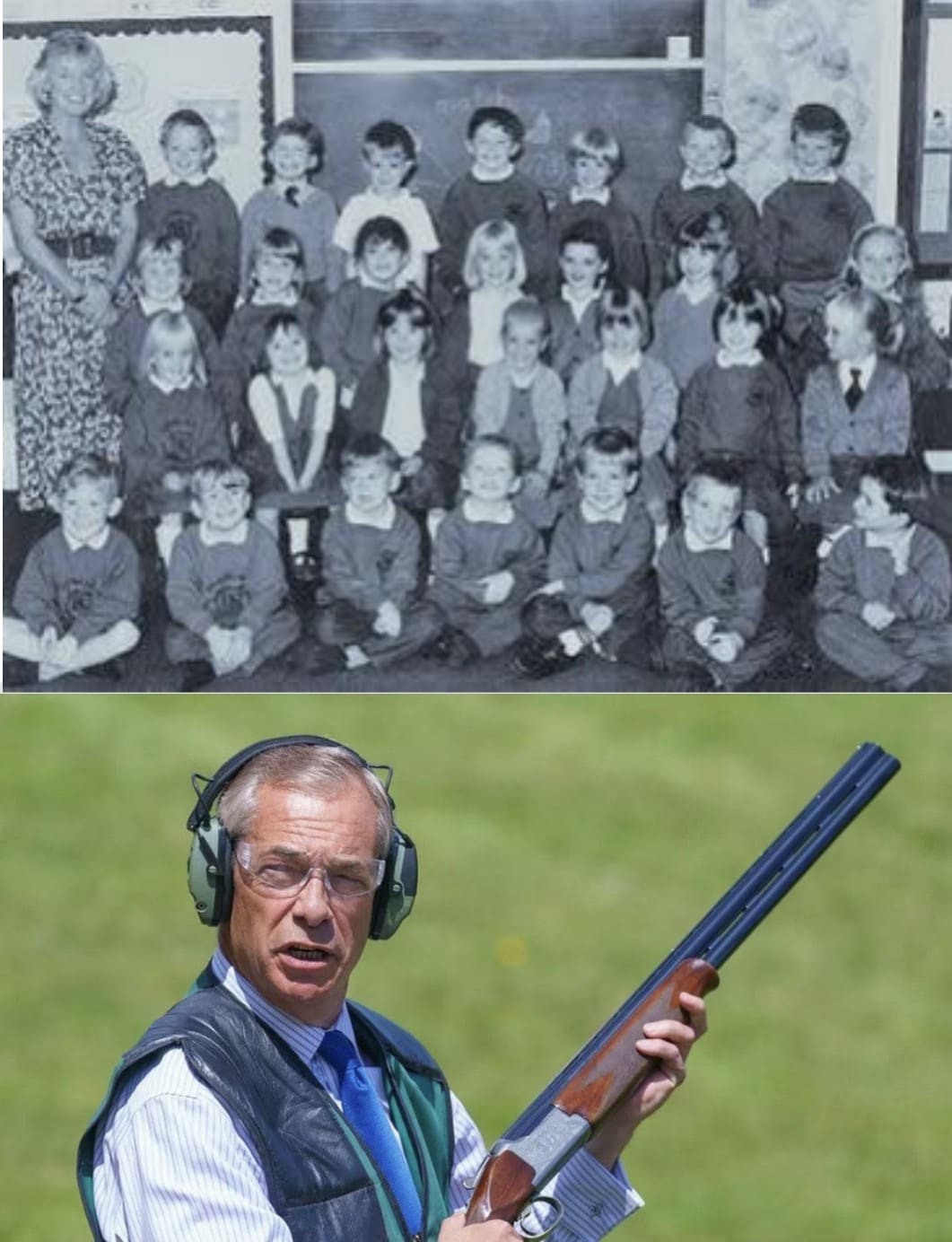
On 13 March 1996, Thomas Hamilton walked into Dunblane Primary School armed with legally owned handguns. Within minutes, sixteen children and their teacher lay dead. Fifteen others were injured. Hamilton then killed himself.
It remains the single worst mass shooting in British history. It also changed this country forever.
The public response was immediate, emotional and overwhelming. Ordinary people did what politicians so often hesitate to do: they acted. The Snowdrop Petition, named after the flowers that bloom in March, gathered hundreds of thousands of signatures and demanded one simple thing – that no other parent should ever have to bury their child because a gun was too easy to obtain.
The result was not hysteria. It was not “virtue signalling”. It was legislation. Two Firearms Acts that effectively banned the private ownership of most handguns in Great Britain.
And since those laws came into force, there have been no school shootings in the UK.
That is not coincidence. That is evidence.
Yet in 2014, Nigel Farage described the handgun ban as “ludicrous”, dismissing it as a “knee-jerk reaction” to the Dunblane massacre. He argued instead for “proper” gun licensing, as though the problem in Dunblane was paperwork rather than weapons.
To describe laws written in the blood of sixteen children and a teacher as ludicrous tells you almost everything you need to know about the man.
It tells you about his priorities.
It tells you about his values.
And it tells you how casually he treats the deaths of children when ideology gets in the way.
This is not a throwaway comment from a distant past. It matters because Farage remains the dominant figure in Reform UK, a party that trades heavily on grievance politics and imported culture wars. When people tell you who they are, you should listen.
In September 2025, Liberal Democrat leader Ed Davey accused Reform UK 2025 Ltd of wanting to roll back Britain’s gun laws, warning that their worldview pointed towards a Trump-inspired Britain where schools would be forced to prepare children for active shooter drills.
Reform’s response was carefully lawyered. A spokesman insisted the party had “no intention of changing the gun laws”.
Notably absent from this reassurance was Nigel Farage himself.
No clarification.
No condemnation of gun extremism.
No defence of the post-Dunblane settlement.
Just silence.
That silence matters too.
Because Farage has already gone on record. He has already called the ban ludicrous. He has already framed the most effective child-protection gun legislation in British history as an overreaction.
You cannot unring that bell.
Contrast this with the United States, the country Farage so often praises, platforms and imitates. In 2025 alone, the US recorded hundreds of mass shootings, with hundreds killed and nearly two thousand injured, according to widely used American tracking organisations. Children there do not associate schools with safety in the way British children still largely do. They practise lockdowns. They rehearse hiding. They learn, from a terrifyingly young age, what to do when a gunman enters their classroom.
That is the reality of “proper” gun licensing in practice.
The British handgun ban worked because it accepted an uncomfortable truth: fewer guns mean fewer gun deaths. No amount of bravado, culture-war rhetoric or libertarian posturing can change that.
And this is where Farage’s position becomes not just reckless, but grotesque.
To sneer at post-Dunblane legislation as a knee-jerk response is to sneer at grieving parents who refused to accept that their children’s deaths were inevitable. It is to sneer at a society that decided some freedoms are not worth the cost in small coffins.
It is also to align, whether openly admitted or not, with a political movement that treats gun violence as collateral damage in a wider ideological battle. A movement that shrugs at school shootings and insists that the solution is always more guns, more arming, more “responsible” ownership – right up until the next massacre.
Farage may now prefer not to talk about guns. Reform UK may insist nothing will change. But politics is not just about manifestos; it is about instincts. And Farage’s instincts were laid bare long ago.
He looked at Dunblane and saw an inconvenience to ideology.
The British public looked at Dunblane and said, “Never again.”
So here is the real question for voters.
Do you want a Britain that continues to prove that gun control saves lives?
Or do you want a Britain inching towards the American model, where children are trained not just to read and write but to survive?
Do you want classrooms defined by curiosity – or by fear?
Because when you vote, you are not just choosing a party. You are choosing whose lives matter and whose deaths can be dismissed as “ludicrous”.
Know what you are voting for.







