We celebrate the heroes who shout. The ones who march, who protest, who demand the world listen. History builds monuments to raised voices and dramatic gestures.
But sometimes the most powerful act of resistance is silence. Stillness. The simple refusal to move.
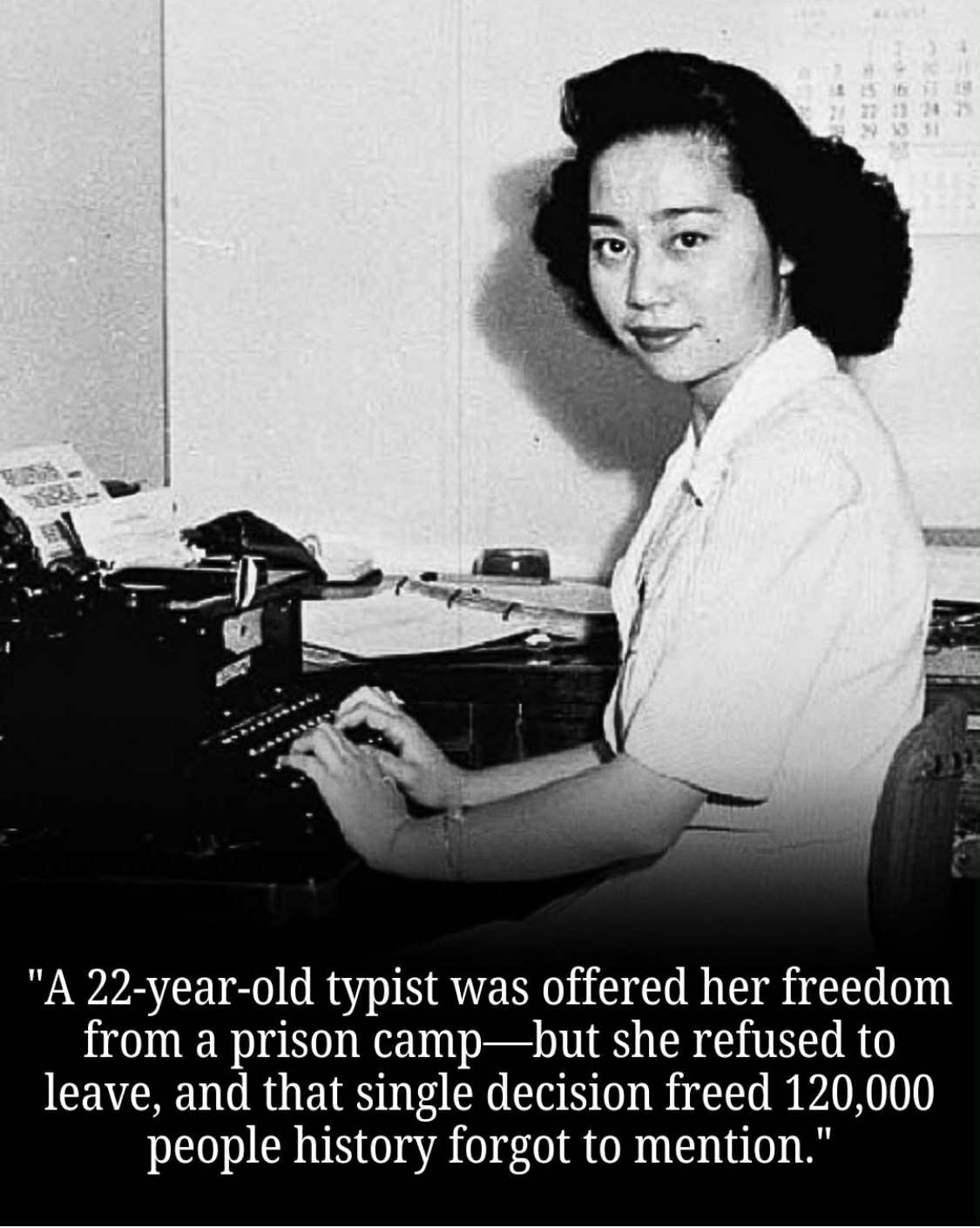
Her name was Mitsuye Endo, and she defeated the United States government without ever raising her voice.
In 1941, Mitsuye Endo was 22 years old and living in Sacramento. She was everything America claimed to value. Born in California. Raised Christian. She spoke only English. Her brother wore a United States Army uniform, fighting for the country they both called home.
Endo worked as a typist at the California Department of Motor Vehicles. She filled out forms, filed paperwork, and followed rules. She lived a quiet, ordinary life.
Then Pearl Harbor happened, and everything changed.
Overnight, her face became suspicious. Her ancestry — Japanese — became proof of a disloyalty she had never shown. California dismissed her from her job, not for anything she had done, but simply for who her grandparents were. Soon after, she was sent to the Tule Lake internment camp.
Barbed wire. Guard towers. Armed soldiers. American citizens imprisoned without charge or trial.
Endo was bewildered. She was a typist. The most dangerous thing about her was her typing speed.
But a lawyer named James Purcell saw something else: the perfect plaintiff. He was preparing a legal challenge to the internment camps and needed someone who dismantled the government’s argument of “military necessity”. Someone so obviously loyal that no court could plausibly label her a threat.
Mitsuye Endo was that person.
She did not seek attention. She was not political. She wanted her quiet life back. But when Purcell explained that more than 120,000 people were being imprisoned without committing any crime, she understood what was at stake.
“I agreed,” she later said, “because they said it’s for the good of everybody.”
And so a shy government typist became the plaintiff in Ex parte Endo.
She was transferred to Topaz internment camp in the Utah desert. Summers were brutal. Winters were freezing. Dust coated everything: the food, the beds, and the air itself. Her case moved slowly through the courts as months turned into years.
Eventually, the government realised it had a problem.
Endo’s file contained nothing. No evidence of danger. No proof of disloyalty. They knew that if her case reached the Supreme Court, they would lose. So they made her an offer.
She could leave.
She was granted clearance to walk out of camp immediately. She could go to Chicago or New York, sleep in a real bed, eat proper food, and reclaim her freedom. All she had to do was accept.
But there was a condition they did not say aloud.
If Endo left the camp, her case would be dismissed as “moot”. There would be no Supreme Court ruling. No legal precedent. No declaration that the internment of loyal citizens was unlawful.
And 120,000 people would remain behind barbed wire.
The government was offering to buy her silence with her own freedom.
Imagine standing at that crossroads. The door is open. Your nightmare can end today. No one would blame you for walking through.
Endo looked at that door and thought of her parents. Her friends. The families still sleeping in barracks, eating mess-hall food, breathing desert dust. She understood that her freedom was being used as a weapon against everyone else.
She said no.
She chose to remain imprisoned so the Supreme Court would be forced to rule. She understood something profoundly simple: her individual freedom meant nothing if everyone else stayed behind.
For two more years, she waited at Topaz. No speeches. No protests. She simply existed — a loyal American citizen behind barbed wire, quietly proving the government wrong every single day.
On 18 December 1944, the Supreme Court ruled unanimously in her favour. The government, it said, had no authority to detain a loyal citizen.
The victory was total.
Panicking, the Roosevelt administration announced — one day before the decision became public — that Japanese Americans could return to the West Coast and that the camps would close. They attempted to present it as their own decision.
But history tells a different story.
The camps did not close because the war ended. Japan would not surrender for another eight months. They closed because a woman from Sacramento refused to save only herself.
Mitsuye Endo left Topaz without fanfare. There were no book deals, no lecture tours, no monuments. She moved to Chicago, became a secretary, married, and lived quietly. Even her children did not learn the full story until they were adults.
She died in 2006 at the age of 86, having spent most of her life in the same obscurity she had always preferred.
Meanwhile, Fred Korematsu — whose challenge to the camps failed — became a national figure. His case is taught in law schools. There are statues, commemorations, and a national day in his name.
Mitsuye Endo actually won. She forced the Supreme Court to rule that the detention of loyal citizens was unlawful. She helped free 120,000 people.
And almost no one knows her name.
What Endo understood is something we often forget: real power is not always loud. Sometimes it lies in the quiet refusal to cooperate with injustice, even when cooperation would set you free.
She proved you do not need a microphone to shake the foundations of government. You only need to know where you stand and then refuse to move.
She stood in front of an open prison door and said, in effect, ‘Not without everyone else‘.
That is not just courage. It is moral clarity of the rarest kind.
And when she had done something genuinely historic, she returned to typing and filing paperwork as if defeating the government was simply something you did on a Tuesday.
So the next time someone tells you one person cannot change the system, remember Mitsuye Endo.
A 22-year-old typist took on the United States government during wartime — and won.
By refusing to win alone.
Her name was Mitsuye Endo.
And now you know what she did.