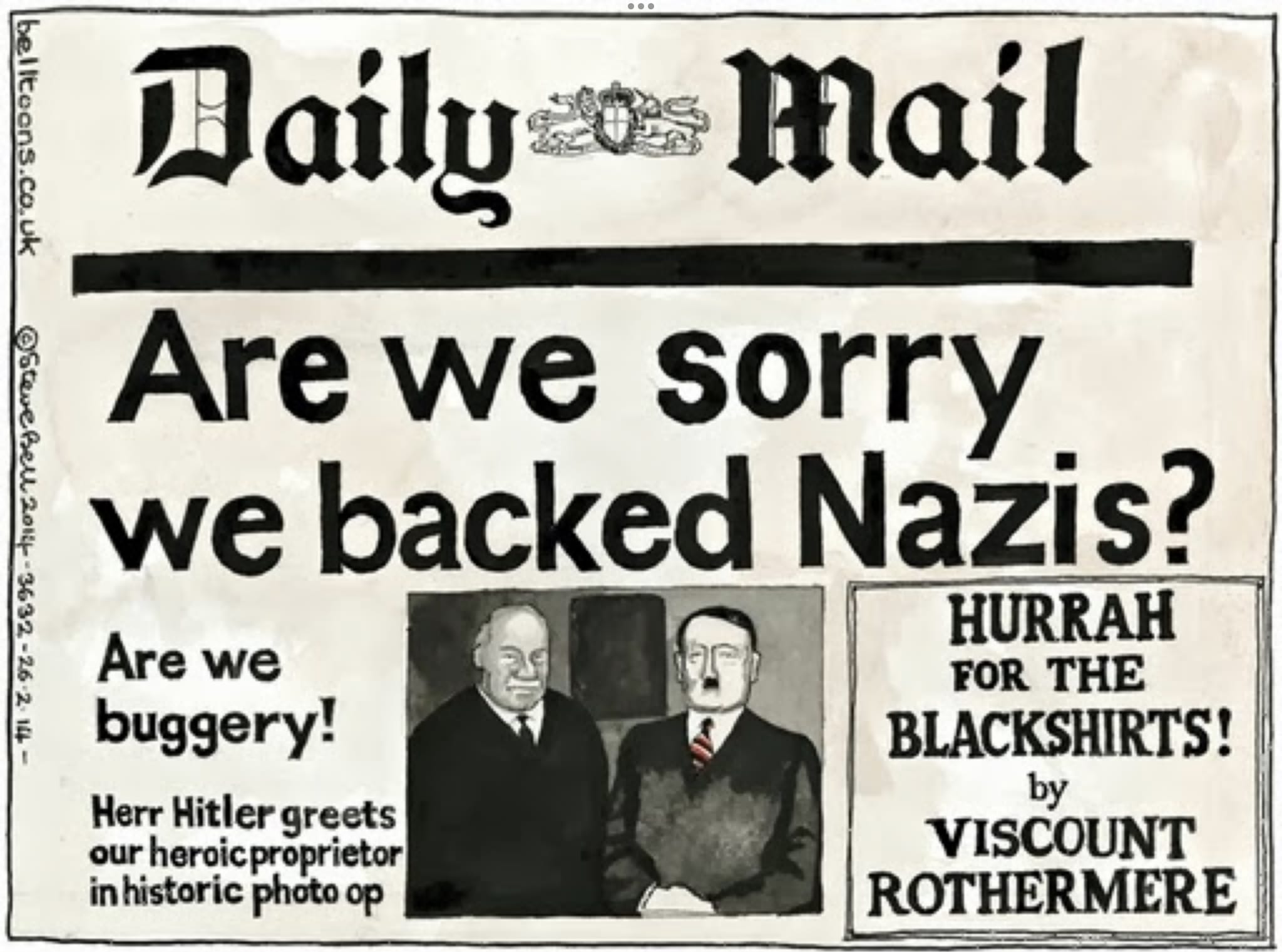
Over half a million likes on social media—very well deserved.
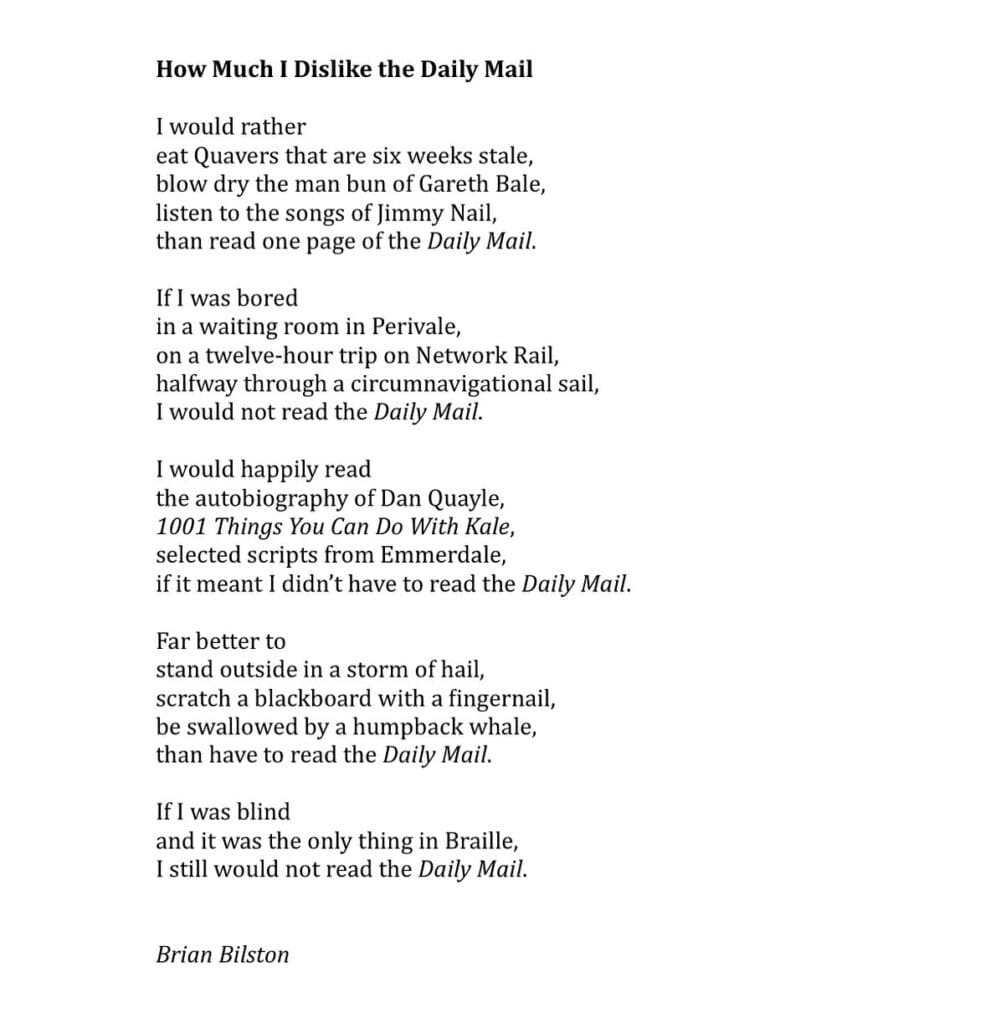
Ten (I know only ten, I hear you all say) Reasons Not to Trust the Daily Mail
The Daily Mail is one of the most widely read newspapers in the United Kingdom, but its popularity does not necessarily equate to reliability. For many years, the paper has been criticised by journalists, academics, and regulators for its approach to news. Here are ten reasons why it is often considered untrustworthy.
1. Sensationalism
The Daily Mail is notorious for blowing stories out of proportion. Headlines are often designed to shock or anger rather than inform. For example, minor events can be presented as national scandals, while statistics are frequently framed in the most dramatic possible light.
2. Scaremongering
A hallmark of the paper is its tendency to create moral panics. Whether it be crime rates, immigration numbers, or the supposed dangers of everyday products, the Daily Mail has a track record of whipping up fear among its readers. This style of reporting shapes public opinion through emotion rather than evidence.
3. Misreporting Science
One of the most persistent criticisms of the paper is its poor handling of scientific studies. It has a long-running habit of claiming that everyday items either “cause” or “cure” cancer. This kind of distortion not only undermines public understanding of science but can also fuel health anxiety.
4. Political Bias
The Daily Mail is unapologetically right-wing, and its editorial line reflects this. Its political coverage tends to favour Conservative policies while attacking Labour, the Liberal Democrats, and other alternatives. This overt bias means it cannot be relied upon for balanced political analysis.
5. Questionable Accuracy
Independent fact-checkers and press regulators have repeatedly found errors in the Daily Mail’s reporting. Stories are sometimes based on flimsy evidence or anonymous sources, with corrections buried later and far less prominently than the original claims.
6. Clickbait Headlines
The paper often uses misleading headlines to drive readership. A headline may suggest shocking revelations or dire consequences, but the body of the article often tells a far less dramatic story. This is designed to draw in readers but undermines the integrity of the reporting.
7. Obsession with Celebrity Gossip
The Daily Mail devotes extraordinary amounts of space to celebrity stories, often publishing intrusive details about people’s private lives. This preference for gossip over substantive journalism weakens its claim to be a serious news outlet.
8. Demonisation of Groups
For decades, the paper has been accused of stigmatising migrants, asylum seekers, and people on benefits. Its coverage often frames these groups as threats or burdens, reinforcing stereotypes rather than providing fair reporting.
9. Regulatory Censures
The Daily Mail has been the subject of numerous complaints upheld by the Independent Press Standards Organisation (IPSO). These relate to issues such as inaccuracy, misrepresentation, and breaches of privacy, further demonstrating a pattern of unethical practices.
10. International Reputation
The newspaper’s reputation for unreliability is so widely recognised that in 2017, Wikipedia editors formally banned it from being used as a source, citing its “poor fact checking, sensationalism, and flat-out fabrication.” This is a remarkable indictment, given Wikipedia’s reliance on published material.
In summary, while the Daily Mail is undeniably influential, influence should not be confused with trustworthiness. From sensationalism and scaremongering to poor accuracy and a history of regulatory reprimands, the evidence suggests readers should treat its reporting with caution. For those seeking factual, balanced journalism, there are far more reliable outlets available.