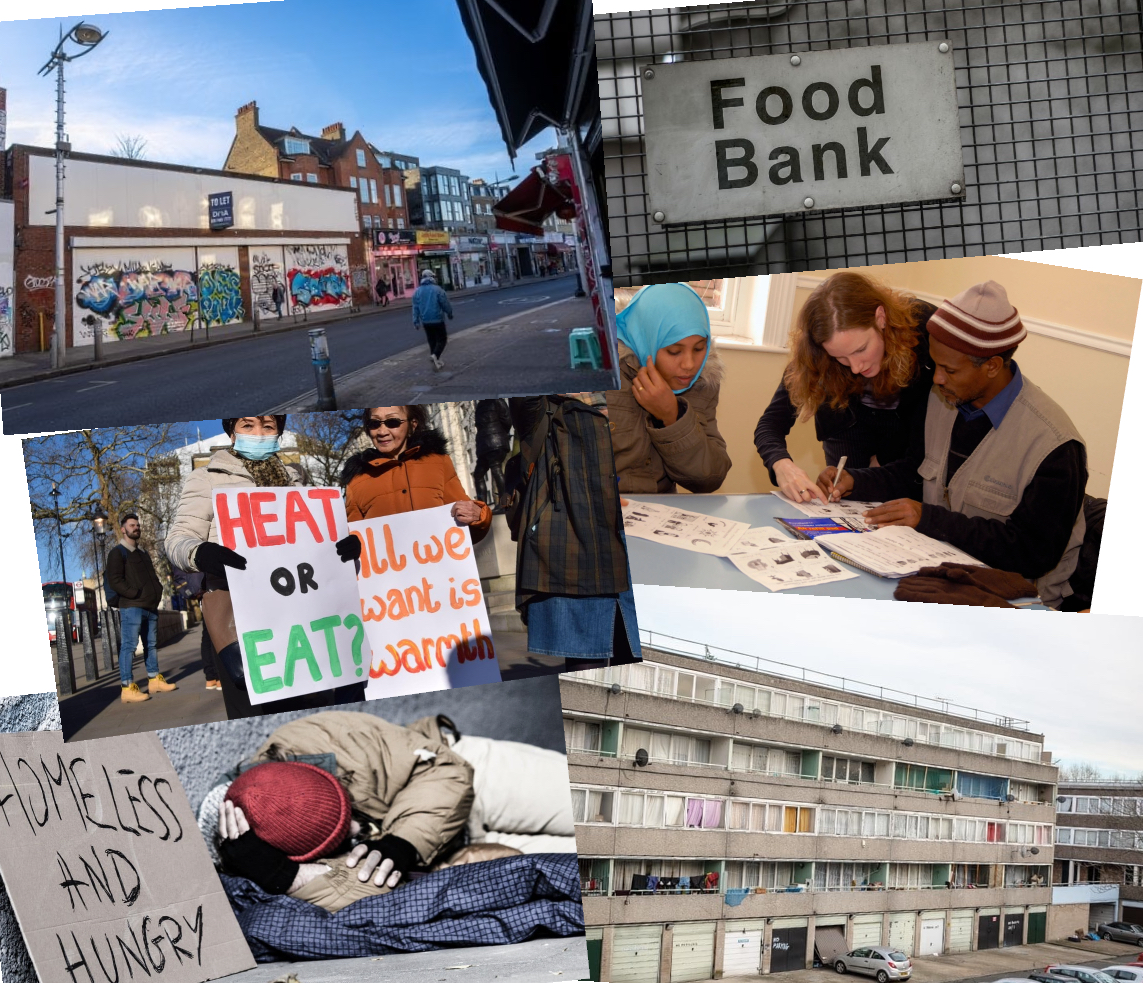
This article is for those who have the capacity to see beyond immigration and focus on the real causes of societal and community breakdown.
Today, these communities face a confluence of deep, interlocking crises. Yet, from the corridors of power in Westminster, the response often feels like a distant echo, a scripted debate utterly disconnected from the reality on the ground. This is the story of that growing chasm.
The Enduring Issues Gripping Working-Class Communities
The challenges are not new, but they have intensified, creating a pervasive sense of precariousness.
- The Precarious Economy: The era of stable, unionised, well-paid industrial work is largely gone, replaced by a gig economy of zero-hour contracts, agency work, and low-paid service jobs. Wages have stagnated for over a decade, while the cost of living has skyrocketed. Work no longer provides a reliable route out of poverty; for many, it is poverty.
- The Housing Crisis: The dream of homeownership has evaporated for a generation. Sky-high rents in both cities and towns swallow a disproportionate amount of income, leaving little for savings or leisure. Social housing stocks have been decimated by right-to-buy and a failure to build, trapping families in expensive, often poor-quality private rentals. The security of having a permanent roof over one’s head is a luxury many now fear losing.
- The Dismantling of Public Services: The pillars of community life have been weakened to the point of collapse. The NHS, though beloved, is on its knees, with waiting lists for GPs and specialists stretching for months. Social care is in crisis. Bus routes, libraries, youth clubs, and community centres—the vital organs of a town—have been shut down due to brutal austerity cuts, leaving areas feeling hollowed out and abandoned.
- A Loss of Pride and Identity: With the closure of mines, factories, and docks, more than just jobs were lost. A sense of collective purpose, pride, and identity vanished. This cultural loss is profound. It feeds a narrative of decline and neglect, a feeling that your community’s history and contribution have been forgotten by those in power.
The Westminster Failure: All Soundbite and Scapegoating But No Solution
Confronted with these monumental issues, the response from the mainstream political establishment has been woefully inadequate. The failure is not one of policy alone, but of empathy, attention, and basic competence.
- Political Theatre Over Substance: Politics has increasingly become a game played for short-term headlines. Debates are dominated by personality clashes, Brexit re-fights, and culture wars, while the grinding daily struggle of making ends meet is ignored. The issues that matter to working people are complex and require long-term, patient investment—something that doesn’t fit a 24-hour news cycle or a snappy campaign slogan.
- A Consensus of Neglect: While they may squabble at the despatch box, there has been a remarkable consensus among successive governments—both Tory and Labour—on the core economic model. The adherence to austerity, privatisation, and flexible labour markets has been bipartisan. The result is that many voters feel they have no real choice; they are simply offered different managers for the same declining system.
- Condescension and Caricature: When working-class concerns are acknowledged, it is often through a lens of patronising caricature. They are either labelled as nostalgic “left behind” relics or, worse, stereotyped as narrow-minded and xenophobic. Their legitimate anger over economic injustice is too often misinterpreted or dismissed as prejudice, allowing politicians to avoid addressing the actual material roots of their discontent.
- The London-Centric Bubble: Power, wealth, and media attention are overwhelmingly concentrated in London. The priorities of the capital’s affluent elite shape policy, while the needs of ex-industrial towns, rural areas, and smaller cities are an afterthought. A minister visiting a struggling high street for a photo opportunity is no substitute for a coherent industrial strategy or investment in regional transport.
A Glimmer of Hope?
The consequence of this failure is a deep and corrosive distrust in politics itself. Voter apathy and the sentiment that “they’re all the same” are understandable reactions to being consistently overlooked.
The remedy does not lie in another government initiative devised in Whitehall. It begins with listening. It requires a politics that shifts its focus from the interests of big business and the metropolitan class to the everyday realities of those who keep the country running—the carers, the cleaners, the factory workers, and the call centre staff.
It demands bold, long-term thinking: a massive programme of building social housing, properly funding public services through fair taxation, empowering trade unions, and investing in green industries that can provide good jobs in the places that need them most.
Working-class communities are not asking for charity or pity. They are asking for fairness, for respect, and for a renewal of the basic contract that a hard day’s work should earn you a secure and dignified life. Until mainstream politics finds the courage to deliver on that fundamental promise, the quiet betrayal will continue, and the chasm between Westminster and the nation it purports to serve will only grow wider.
In the post-war decades, a certain contract was understood in Britain. If you worked hard, played by the rules, and contributed, you could expect a foundation of security: a stable job, a home you could afford, and a welfare state that would catch you if you fell. For millions in working-class communities across the nation, from the industrial heartlands of the North to the coastal towns of the South East, that contract has been torn up.
Today, these communities face a confluence of deep, interlocking crises. Yet, from the corridors of power in Westminster, the response often feels like a distant echo, a scripted debate utterly disconnected from the reality on the ground. This is the story of that growing chasm.
The real solution lies with each and every one of us, and here is exactly how: