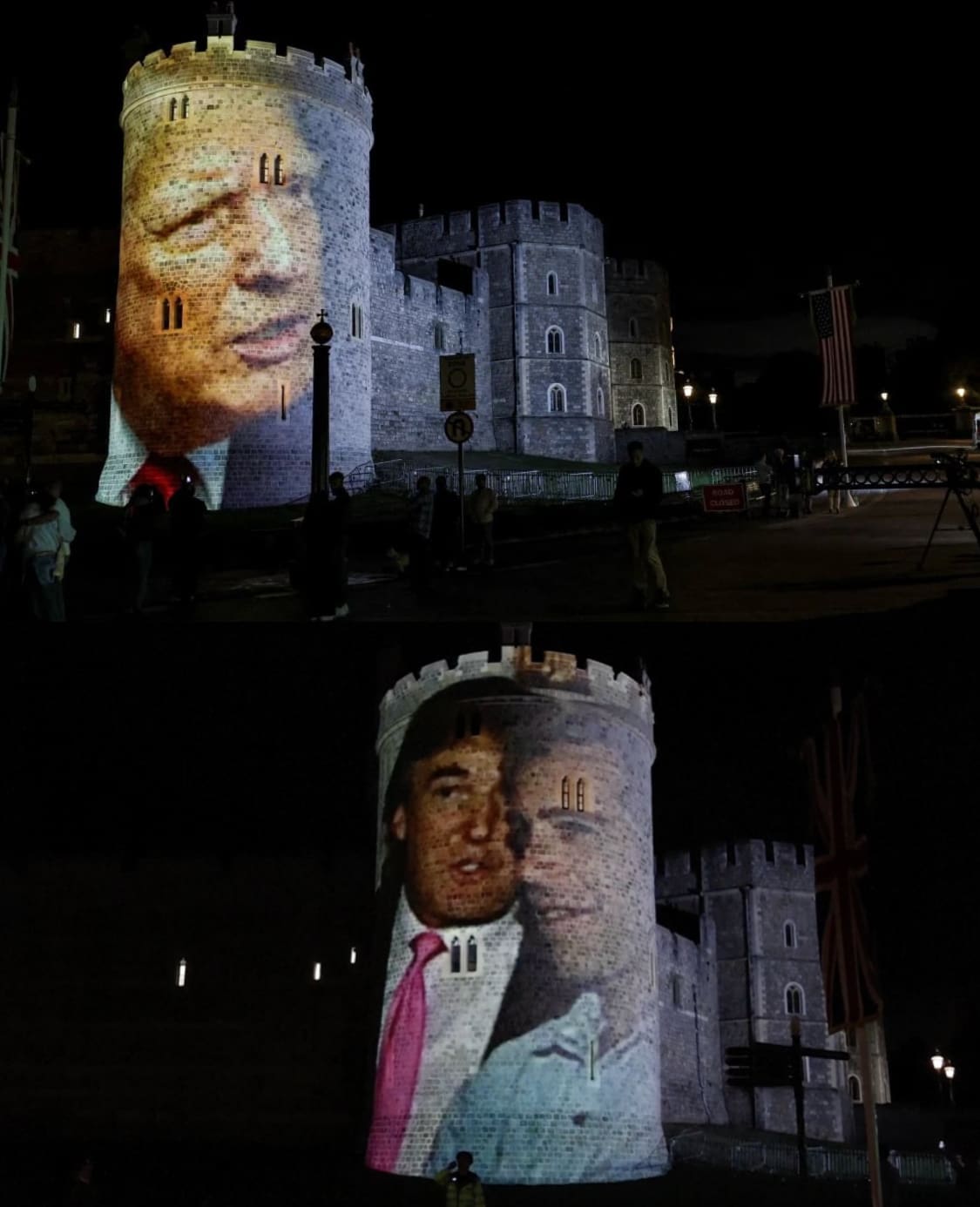
Windsor Castle, a symbol of national integrity, was instead used as a canvas to project the image of a US president alongside convicted paedophile Jeffrey Epstein, as arrests were made and a lavish banquet was prepared inside. The scene encapsulates a profound moral crisis: why is a man with deep and enduring links to a convicted sex offender being fêted with Britain’s highest diplomatic honour?
The state visit, a spectacle of pomp and ceremony, is designed to celebrate shared values and deep alliances. Yet, the honour bestowed upon Donald Trump forces a grim questioning of what values Britain now champions. Mr Trump’s long-standing association with Epstein, a man who cultivated a network of power to abuse the vulnerable, is not a peripheral controversy but a central facet of his biography.
Led by Donkeys are absolute Jedis…
— Stuzi 🐝🐝 (@stuzi_pants) September 16, 2025
Word coming out that they’ve been arrested outside Windsor Castle after projecting a film highlighting Trump’s close relationship with world’s most prolific pedophile Jeffrey Epstein onto the walls of the Castle 🔥 👌
pic.twitter.com/FQIP91OdpL
A Timeline of Allegations and Associations: A Friendship Under Scrutiny
The president’s visit is shrouded by a timeline of allegations that stand in stark contrast to the dignity of a state banquet:
- The 1990s & Early 2000s: Trump and Epstein were well-documented social companions. A 2002 quote from Trump to New York Magazine hangs heavily in the air: “I’ve known Jeff for fifteen years. Terrific guy… It is even said that he likes beautiful women as much as I do, and many of them are on the younger side.”
- 2005: Court documents from a Florida victim alleged she was recruited to give Trump a massage at his Palm Beach club.
- 2015: During his presidential campaign, Trump distanced himself, claiming they had a falling out. “I haven’t spoken to him in 15 years,” he said, a timeline contradicted by other reports.
- July 2019: Following Epstein’s arrest, Trump claimed he was “not a fan,” yet a court filing that same month unsealed an alleged victim’s deposition claiming she was forced to have sex with Trump at Epstein’s parties—an allegation he vehemently denies.
- April 2024: The House Judiciary Committee published a 2003 birthday book for Epstein containing a message allegedly from Trump: “Jeffrey: It’s a great honor to be at your birthday party with you and all your distinguished guests. You are a great friend and a lot of fun to be with. Your friend, Donald Trump.” Trump’s team dismisses it as a forgery.
Questioning the Royal Family’s Integrity: The Andrew Precedent
This visit prompts an uncomfortable but necessary examination of the monarchy’s own moral judgement. The institution is still reeling from the scandal surrounding Prince Andrew, who paid millions to settle a civil sexual assault case with Virginia Giuffre, who alleged she was trafficked to him by Epstein.
The king, who has sought to define his reign by a commitment to duty and service, now faces a severe test of integrity. By rolling out the red carpet for a figure with his own serious and unresolved questions over his association with a paedophile, the palace risks being accused of a breathtaking double standard. It signals that geopolitical realpolitik and the allure of American power utterly eclipse any consistent principle of moral conduct.
The optics are damning: one member of the family is cast into exile for his Epstein links, while the head of state hosts another man with a strikingly similar association, treating him to the highest honours the nation can offer. This does not simply create an appearance of hypocrisy; it fundamentally questions the institution’s ability to discern right from wrong when it conflicts with diplomatic convenience.
A Fortified Visit, A Divided Nation
The immense security operation—over 1,600 officers guarding a president with no public engagements—speaks volumes. It is not to protect a beloved leader but to shield a deeply divisive one from the anger of the citizens of its closest ally. The projections on the castle walls were not vandalism; they were a public indictment, a stark reminder of the questions that pomp and ceremony cannot obscure.
In choosing to honour Donald Trump with a second state visit, the British establishment has made a conscious choice. It has chosen to ignore serious allegations, to overlook deeply troubling associations, and to prioritise power over principle. The message it sends to the victims of Epstein and to the nation is a chilling one: whose company you keep matters less than the office you hold.