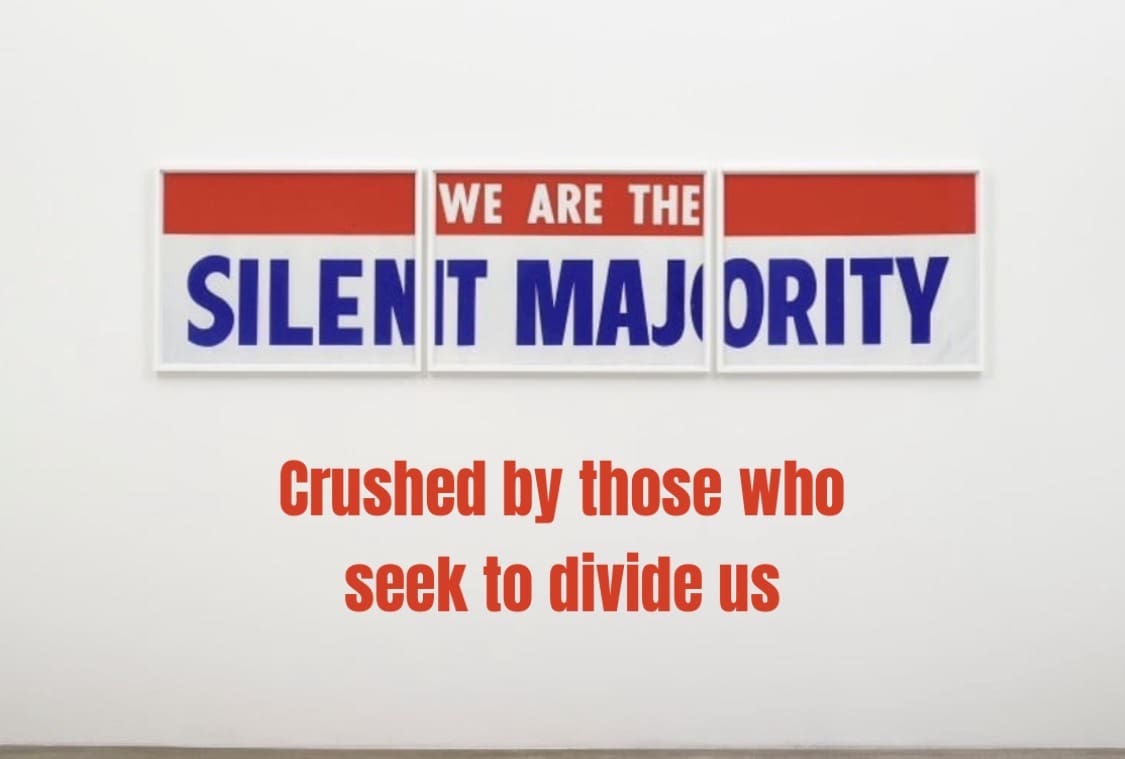
While the Majority Stare at the TV… the Minority Destroy
Democracy, we are told, is the rule of the people. It is presented as the highest form of political legitimacy: the idea that ordinary citizens collectively determine how their society is governed. Yet in practice, democracy often functions less as popular rule and more as a carefully managed performance. While the majority sit back watching the spectacle of politics as though it were simply another programme on television, a small, organised minority quietly shapes the real decisions. The result is a political system that bears the language of democracy but frequently lacks its substance.
The core problem lies not merely in corruption or bad leaders but in participation. Democracies depend upon the active engagement of citizens. Voting alone is not sufficient; it is merely the minimum requirement. For democracy to function meaningfully, people must pay attention, challenge authority, organise collectively, and hold power to account. Yet, in many modern societies, including the UK and the USA, the majority do none of these things. Politics becomes something distant and tedious, something to glance at between entertainment programmes or social media scrolling.
This passivity creates a vacuum, and vacuums in politics never remain empty. They are quickly filled by those with the time, resources, and motivation to dominate the system. Wealthy individuals, powerful corporations, well-funded lobbyists and professional political operators step in where ordinary citizens have stepped away. These actors do not merely influence policy; they shape the boundaries of what is politically possible.
Mark and others spell it out. Ignore it at our peril.
In theory, every citizen possesses one vote and therefore equal power. In reality, influence is distributed far more unevenly. Wealth buys access. It buys research teams, lobbying firms, media influence and campaign funding. The wealthy can shape public narratives, promote favourable candidates and marginalise dissenting voices. They do not need the approval of the majority so long as the majority remain disengaged.
A small but determined minority can therefore wield disproportionate control over political outcomes. This phenomenon has been observed repeatedly throughout history. Political scientists often refer to the “iron law of oligarchy”: the idea that all organisations, even those founded on democratic ideals, gradually concentrate power in the hands of a few. Without constant vigilance from the wider public, decision-making drifts upwards into the control of elites.
Modern media culture exacerbates the problem. Politics increasingly resembles a spectacle rather than a participatory process. Television debates, viral clips and personality-driven campaigns encourage people to view politics as entertainment. Citizens become spectators rather than participants. The framing of politics as a competitive drama, complete with heroes, villains and dramatic confrontations, may attract viewers, but it rarely encourages sustained engagement with complex policy questions.
Meanwhile, the machinery of governance continues to operate quietly in the background. Legislation is drafted in committee rooms. Regulations are shaped through consultations dominated by industry experts. Lobbyists negotiate behind closed doors. These processes determine the substance of political outcomes, yet they attract little public attention compared with the theatre of election campaigns.
This imbalance allows powerful interests to operate with relative freedom. Corporations lobby for favourable tax structures, weaker regulations or lucrative government contracts. Wealthy donors finance political parties and influence candidate selection. Think tanks funded by private interests produce research that supports predetermined conclusions. None of this necessarily violates the formal rules of democracy, yet collectively it distorts them.
The crucial point is that these actors succeed not simply because they are powerful but because the majority are absent. When citizens fail to scrutinise decisions or challenge narratives, the path is clear for organised minorities to dominate. Democracy weakens not through a dramatic coup but through gradual neglect.
One might imagine that elections provide an effective corrective. After all, voters can remove unpopular governments from power. Yet elections themselves are shaped by the same structural inequalities. Campaigns require funding, media exposure and organisational infrastructure. Candidates who threaten entrenched interests often struggle to gain visibility or credibility. By the time voters reach the ballot box, their choices may already have been narrowed by forces operating long before election day.
Furthermore, political messaging frequently appeals to emotion rather than analysis. Fear, identity and tribal loyalties can be more effective tools of mobilisation than rational debate about policy. When citizens approach politics primarily through these lenses, it becomes easier for skilled communicators to manipulate opinion while leaving underlying power structures untouched.
The result is a strange paradox. In theory the majority hold ultimate authority, yet in practice they rarely exercise it in any sustained or organised way. Democracy becomes a ritual performed at intervals rather than a living system of continuous participation. Once the ritual is complete—once votes are cast and winners declared—most people return to their daily lives and the political stage clears. What remains is a professional class of politicians, advisers, lobbyists and donors who continue shaping policy largely beyond public scrutiny.
This does not mean democracy is entirely meaningless, nor that change is impossible. History offers many examples of ordinary people reasserting political influence through organised action: labour movements, civil rights campaigns, environmental activism and grassroots political organising have all forced powerful interests to concede reforms. These movements succeed precisely because they break the pattern of passive spectatorship. They transform citizens from observers into participants.
The difficulty is that such mobilisation requires effort, awareness and collective solidarity, qualities that modern consumer culture often discourages. When people are exhausted by work, distracted by endless streams of entertainment and convinced that their voice makes little difference, participation declines. Cynicism becomes a self-fulfilling prophecy. If individuals believe democracy is pointless, they disengage; and their disengagement ensures that democracy becomes increasingly hollow.
Thus, the uncomfortable truth emerges: democracy does not disappear because it is overthrown. It erodes because it is neglected. While the majority stare at the television, figuratively or literally, the minority organise, strategise and accumulate power. They write the rules, fund the campaigns and shape the narratives that define political reality.
The destruction is rarely dramatic. It does not arrive with tanks in the streets or the suspension of constitutions. Instead, it advances quietly through indifference, complacency and the gradual concentration of influence. By the time many citizens notice the imbalance, it has already become deeply embedded.
If democracy is to mean anything more than a slogan, it requires more than occasional voting. It demands attention, participation and a willingness to challenge those who claim authority. Otherwise, the pattern will continue: the majority watching from the sidelines and the minority deciding the future.
In the end, democracy survives only if the public refuses to remain an audience.