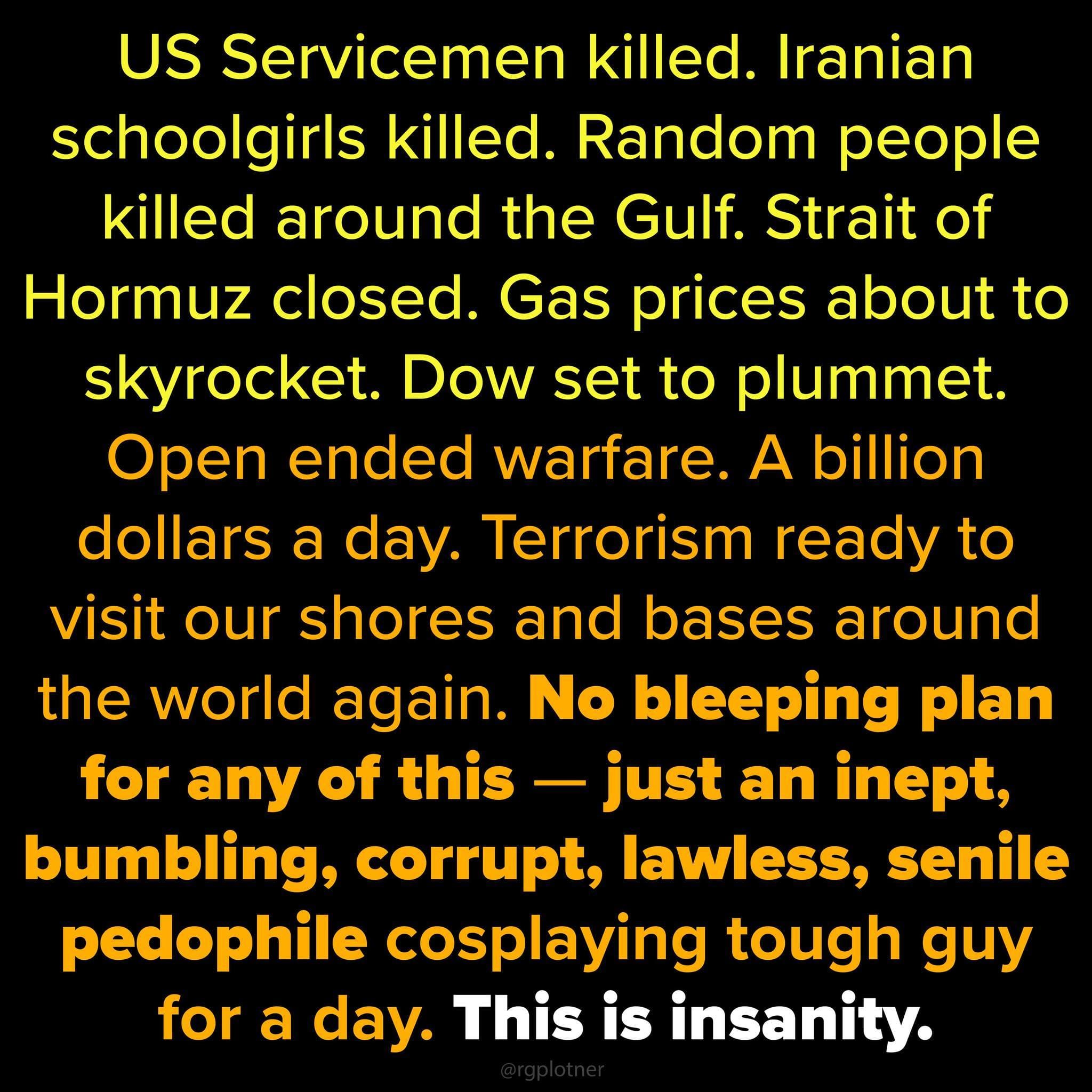
For years, Donald Trump has cultivated an image of strength: a leader willing to act decisively where others hesitate. But the reality of his presidency has increasingly collided with the mood of the American public. Nowhere is that collision clearer than in his decision to wage war against Iran — a conflict that has deepened domestic divisions and accelerated a growing national fatigue with his leadership.
The simple truth is that most Americans do not want this war. Polling throughout the opening weeks of the conflict has shown a consistent pattern: a clear majority of the public opposes military escalation with Iran. After decades of entanglements in Iraq and Afghanistan, the appetite for yet another ‘Middle Eastern’ war is almost non-existent.
Trump appears either unable or unwilling to recognise this reality.
Instead, he has framed the conflict in the language of bravado and spectacle. Social media accounts linked to the White House have posted stylised footage of missile strikes and bombing runs that resemble video game trailers rather than depictions of real warfare. Explosions are edited into cinematic montages. Drone camera footage is cut together with dramatic music and point-of-view shots designed to make the viewer feel like the one pulling the trigger.
The effect is grotesque.
War is not entertainment. War is death, destruction, trauma and grief. To package it as spectacle in the hope of generating “likes” and online applause is not only tone deaf, it reveals a disturbing trivialisation of human suffering.
The contrast between image and reality was starkly displayed at Dover Air Force Base, where Trump attended the dignified transfer of six American soldiers killed in the conflict. Standing beside grieving families, the president adopted the solemn posture expected of a commander-in-chief. It was a moment of mourning and respect.
Yet the sombre dignity of that ceremony sat uneasily alongside the triumphalist propaganda emerging from his administration.
Because beyond the carefully staged photographs and sombre speeches lies a far darker truth: this war is claiming lives across a wide region and its consequences remain frighteningly uncertain.
Hundreds have already been killed across Iran and neighbouring states. Civilian casualties are mounting. There are serious questions about whether American or allied strikes were involved in the bombing of a girls’ school that reportedly killed more than 160 children, an atrocity Trump immediately attempted to blame on Tehran without presenting evidence. US officials have since conceded, ‘It was probably the US that was responsible’.
The fog of war is thick, but the human cost is unmistakable.
Back home, Americans are asking a simple question: why?
The administration has offered a shifting set of explanations. At various times, the war has been framed as preemptive defence, retaliation, a campaign to weaken Iranian influence, or even a pathway to “regime change”. None of these goals has been clearly defined, and none appears to command strong public support.
To many observers, the strategy looks less like a coherent foreign policy and more like improvisation driven by political necessity.
Trump entered this crisis with his popularity already fragile. His approval ratings had slipped amid economic anxiety, political scandals and growing public exhaustion with the constant turbulence surrounding his presidency. A foreign conflict, in the minds of some political strategists, can sometimes rally a divided nation around its leader.
But that calculation seems to have backfired.
Instead of boosting support, the Iran war has intensified scepticism toward Trump’s judgement. Many Americans remember the disastrous intelligence claims that preceded the invasion of Iraq in 2003. They have heard promises before about swift victories and easy wars. They know how those promises ended.
As petrol prices begin to climb and the possibility of wider regional escalation looms, the public mood has hardened rather than softened.
Internationally, the war has also strained relationships with allies. The so-called “special relationship” between the United States and the United Kingdom has come under particular pressure as Keir Starmer has resisted calls to offer full-throated backing for an illegal intervention.
For Trump, alliances are transactional arrangements, partnerships that exist on America’s terms and often only when they serve his immediate interests. When allies hesitate, he interprets caution as betrayal.
Yet Britain’s reluctance reflects a wider global unease about the legality and wisdom of the conflict. International law questions remain unresolved, and several European governments have quietly signalled their discomfort with Washington’s approach.
Trump’s frustration with these hesitations has been palpable.
But the deeper problem for him is not abroad; it is at home.
The United States today is not the country it was during the Cold War or even during the early years after the attacks of 11 September 2001. The public is weary of endless military adventures. Young Americans in particular view foreign interventions with suspicion, shaped by the costly legacy of Iraq and Afghanistan.
They see a president who seems to revel in confrontation while offering little clarity about the path forward.
That perception is corrosive.
The presidency carries immense moral weight, especially when it sends soldiers into battle. Americans expect their commander-in-chief to treat war with gravity and restraint. Trump’s blend of bombast, online theatrics and political grandstanding has instead reinforced the impression of a leader who views conflict as another arena for spectacle.
Even some conservative commentators who once defended him are beginning to attack him.
And so the gap between Trump and the American public continues to widen.
A presidency that once thrived on populist anger now finds itself confronting a different kind of sentiment: exhaustion. Many Americans simply want stability, competence and a leader who does not treat global crises like episodes in a reality television show.
The war with Iran has crystallised those frustrations.
Far from strengthening Trump’s political position, it has reminded voters why they lost faith in him in the first place. Every new casualty, every contradictory explanation, and every triumphalist video posted online reinforces the same uncomfortable question: is this really the leadership America wants?
For an increasing number of Americans, the answer is becoming clear.
They want the war to end.
And they want Trump gone with it.