The climate crisis was not an unforeseeable accident. It was not a sudden scientific discovery that caught the fossil fuel industry by surprise. For decades, some of the world’s most powerful oil, gas and coal companies had access to scientific evidence warning them that burning their products was heating the planet and they continued to build their businesses around fossil fuels.
The evidence goes back far further than many people realise.
Climate science itself is more than a century old. Scientists understood the basic greenhouse effect in the 19th century, while research into the consequences of rising carbon dioxide accelerated during the 20th century. By the late 1950s, scientists working with or for the fossil fuel industry were already investigating the impact of carbon dioxide released by burning fossil fuels. Research dating from 1957 involved scientists at Humble Oil, a predecessor of ExxonMobil. By 1968, industry-linked evidence had identified potentially catastrophic climate risks.
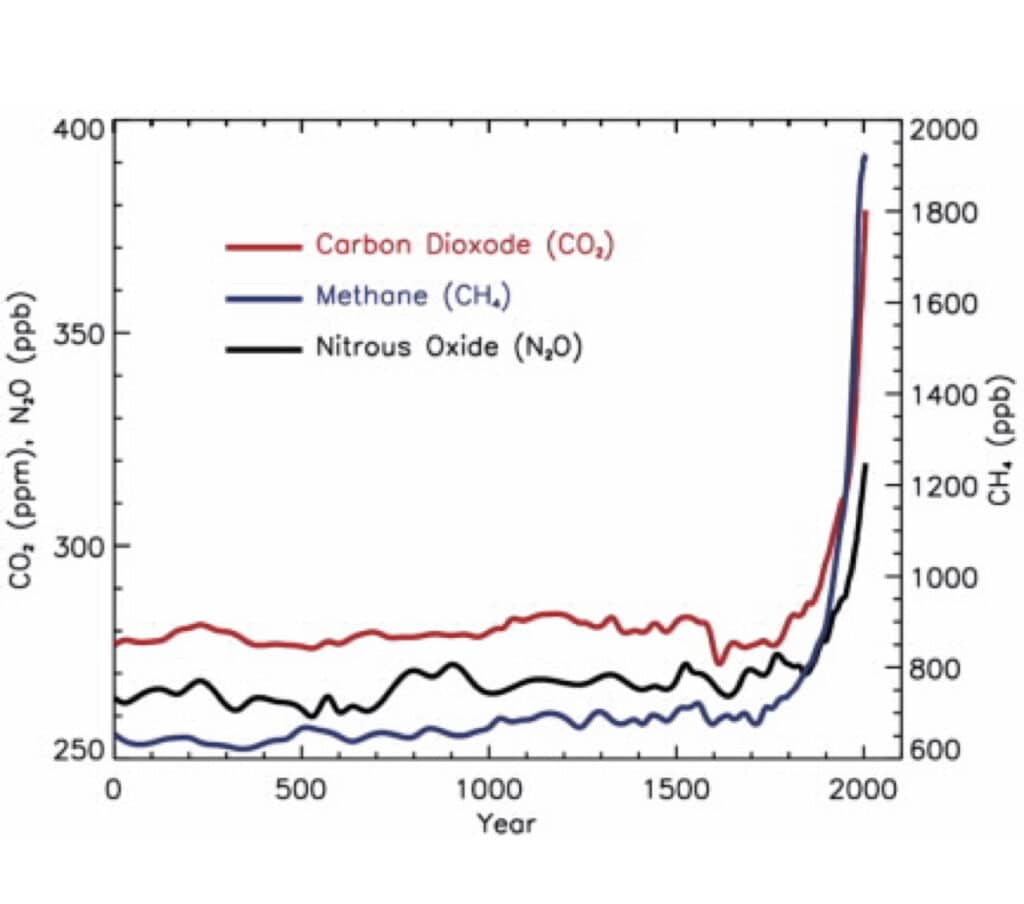

Then came the warnings from inside the corporations themselves.
In 1977, Exxon scientist James Black warned senior management that carbon dioxide produced by fossil fuels could cause significant global warming. The company’s researchers subsequently conducted sophisticated climate research, including experiments measuring carbon dioxide in the atmosphere and oceans and computer modelling of future warming.
An internal Exxon document from 1978 reportedly estimated that doubling atmospheric CO₂ could increase average global temperatures by 2–3°C. It warned that decisions about changing energy strategies could become critical within just five to ten years.
This was not ignorance. It was knowledge.
By 1981, Exxon was reportedly considering climate change when assessing the development of the huge Natuna gas field in Indonesia. Its own scientists understood that the company’s fossil fuel activities had potentially enormous implications for atmospheric carbon dioxide.
And yet the public message increasingly diverged from the private one.
Research examining 187 ExxonMobil communications found a striking discrepancy: internal documents and scientific publications overwhelmingly acknowledged that climate change was real and human-caused, while public advertorials increasingly promoted doubt.
Exxon subsequently cut its climate research programme dramatically. One 1982 budget decision reduced funding for CO₂ research from $900,000 to $385,000 immediately and to $150,000 the following year, an 83% reduction.
The consequences are now being experienced by ordinary people.
Extreme heat, flooding, wildfires, drought and other climate-related impacts carry enormous social and economic costs. Households face pressure from energy prices while the companies responsible for extracting and selling fossil fuels have continued to generate enormous revenues and profits.
The central issue is therefore not simply whether the industry knew.
It is what it did with what it knew.
For generations, the public was entitled to believe that the companies selling the fuels powering modern society were confronting the consequences honestly. Instead, the historical record shows something far more disturbing: sophisticated scientific knowledge existed inside parts of the industry while public campaigns helped manufacture uncertainty.
The climate crisis was not simply discovered.
It was warned about — repeatedly — and the warnings were ignored.