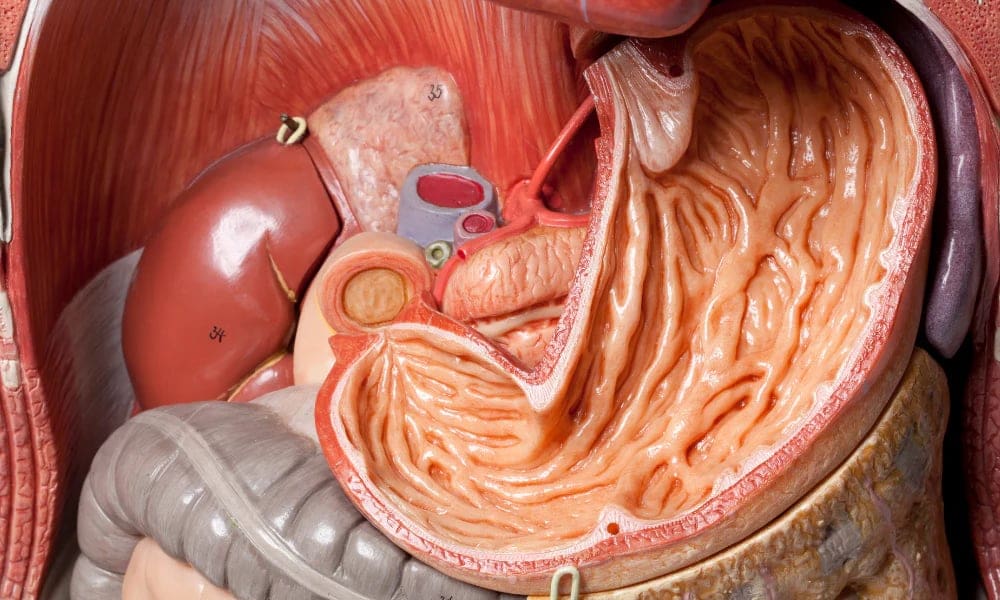
The human stomach is far more than a simple food container. It is a remarkably resilient, intelligent and hardworking organ that plays a vital role in digestion, immunity and even communication with the brain. From producing acids strong enough to dissolve metal to housing its own nervous system, the stomach is one of the body’s most underestimated marvels.
Here are ten factual and genuinely amazing facts about the human stomach, in British English:
- Your stomach acid is powerful enough to dissolve metal.
Gastric acid has a pH of around 1.5–3.5, strong enough to corrode steel. Thankfully, the stomach protects itself with a thick mucus lining that is constantly renewed. - The stomach can dramatically change size.
When empty, the stomach is roughly the size of a clenched fist. After a large meal, it can expand to hold more than a litre of food and drink without bursting. - You do not digest food immediately in the stomach.
The stomach mainly breaks food down mechanically and chemically into a semi-liquid called chyme. Most nutrient absorption actually happens later in the small intestine. - Stomach growling has nothing to do with hunger.
Those rumbling noises (called borborygmi) are caused by muscles pushing air and fluid through the digestive tract, and they occur whether you are hungry or full. - The stomach renews its lining every few days.
Without this rapid renewal, the stomach would digest itself. The entire lining is replaced roughly every three to four days. - Stress can physically change how your stomach works.
Anxiety and stress can slow digestion, increase acid production and worsen conditions like acid reflux, ulcers and irritable bowel symptoms. - Your stomach contains its own nervous system.
Known as the enteric nervous system, it can operate independently of the brain and contains hundreds of millions of neurons – so many it is sometimes called a “second brain”. - Spicy food does not damage the stomach lining.
Chillies contain capsaicin, which stimulates pain receptors but does not burn or harm the stomach itself. In some cases, it may even help protect against ulcers. - The stomach plays a role in immunity.
Its acid acts as a powerful barrier, killing many harmful bacteria and pathogens before they can reach the intestines and bloodstream. - Your stomach knows when you are hungry before you do.
It releases a hormone called ghrelin, which signals hunger to the brain. Ghrelin levels rise before meals and fall once you have eaten.
Yet more myths busted and facts learned.
To report this post you need to login first.