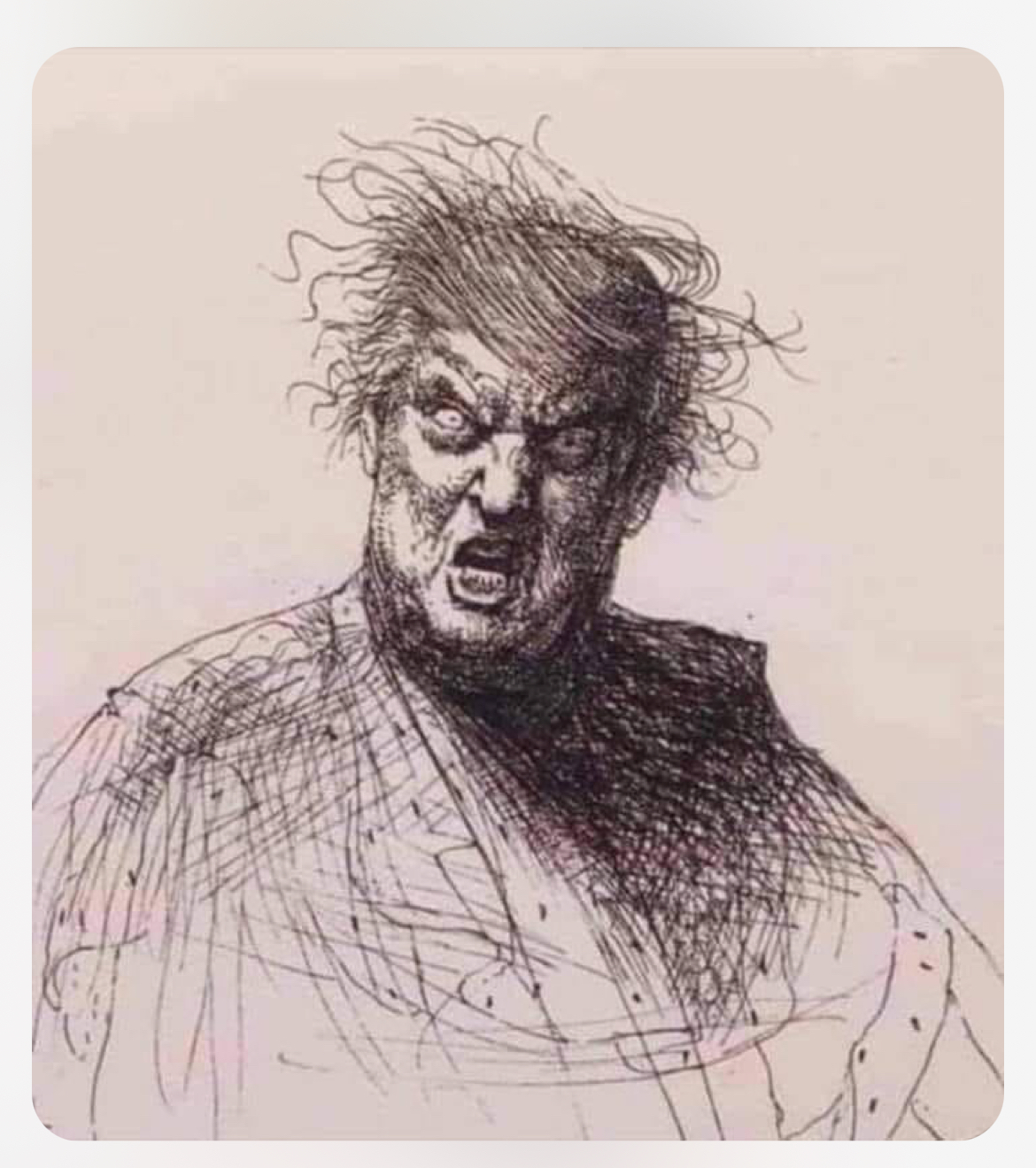
In physics, entropy is a measure of disorder. It describes the tendency of systems to move from order to chaos over time. Ice melts, buildings decay and the universe itself drifts slowly toward disorder. The second law of thermodynamics tells us that entropy always increases.
Yet in global politics over the past decade, something strange appears to happen whenever Donald Trump enters the stage. Chaos is promised. Disorder is forecast. Markets panic and diplomats warn of catastrophe. But again and again, the outcome is something much more predictable: the system reorders itself. The crisis dissipates. The storm passes.
In that sense, Trump has become the political opposite of entropy.
Rather than chaos spiralling endlessly, his confrontations often follow a surprisingly consistent script, one that analysts can see coming a mile away.
The Physics of Entropy
To understand the metaphor, it helps to briefly explain entropy itself.
Entropy is a concept from thermodynamics describing the amount of randomness or disorder within a system. A tidy room left unattended slowly becomes messy. Heat spreads out from hot objects to cold ones. Energy disperses until equilibrium is reached.
In the natural world, systems move inevitably toward greater disorder unless energy is constantly applied to maintain order.
Politics often appears to behave the same way. Wars escalate. Crises multiply. Rivalries deepen. One miscalculation leads to another until events spin out of control.
But modern geopolitical crises involving Trump often defy this expectation.
Instead of chaos growing uncontrollably, tensions rise dramatically, only to settle back into familiar patterns.
The Predictable Crisis Cycle
Take the recent confrontation involving Iran.
For decades, military analysts have mapped out what would happen if Iran were attacked or if its regime faced an existential threat. The scenario has been rehearsed endlessly in think tanks and war games.
First, Tehran would escalate regionally.
Second, it would threaten global energy supplies, particularly by targeting shipping in the strategically vital Strait of Hormuz, through which roughly a fifth of the world’s oil passes.
Third, oil prices would surge. Insurance for tankers would skyrocket. Markets would panic.
Fourth, global leaders would warn of economic catastrophe.
And finally, the political pressure on the American president would become unbearable.
Every step of this chain reaction has appeared almost exactly as predicted.
Iranian forces and proxies threaten shipping. Tankers are damaged. Oil prices spike. Economists forecast a global slowdown.
The system appears to be descending into disorder.
And then comes the final step.
Trump backs away.
The TACO Pattern
The phenomenon has become so regular that commentators have given it a name.
In the Financial Times, columnist Robert Armstrong coined the phrase “TACO” — Trump Always Chickens Out.
Armstrong argues that Trump’s rhetoric often suggests maximum escalation: crushing sanctions, military threats, and dramatic declarations of victory. But when the economic or political cost begins to rise, he looks for an exit.
Markets have begun to understand this pattern.
Armstrong wrote that Trump’s latest comments about winding down the conflict signalled something very clear: the president was searching for a way out.
And markets responded instantly.
Oil prices fell. Traders relaxed. The sense of imminent catastrophe faded.
Chaos, once again, turned back into order.
Why the Pattern Exists
There are several reasons why this cycle repeats.
First, Trump’s political instincts are heavily shaped by economics. Rising oil prices, stock market crashes, or disruptions to global trade directly threaten American prosperity and therefore his domestic political support.
Second, wars are unpredictable and expensive. Even limited conflicts can spiral into long and unpopular engagements.
Third, Trump’s style of negotiation relies heavily on brinkmanship. Escalation is used as leverage, but the ultimate goal is often a deal, or at least the appearance of one.
The result is a pattern of dramatic confrontation followed by rapid de-escalation.
The world braces for chaos, but the crisis resolves before reaching its most destructive stage.
Tehran’s Calculation
For the leadership in Iran, the lesson is equally predictable.
They do not necessarily need to win militarily.
They only need to survive politically.
If the regime in Tehran remains in power despite American and Israeli pressure, it can claim victory at home and across the region.
Even if infrastructure is damaged or weapons destroyed, the regime’s survival becomes proof of resilience.
Iran’s nuclear programme, for example, could theoretically be rebuilt. Scientists remain. Knowledge remains.
Like the mythical Persian phoenix, it can rise again if the political will exists.
What the World Learns
While crises may settle back into equilibrium, global powers are studying the pattern carefully.
In Beijing, strategists are closely watching American responses to international crises. Their focus is the future of Taiwan.
Chinese leader Xi Jinping has made clear that reunification with Taiwan is a long-term strategic objective.
Any attempt to seize the island would trigger enormous economic consequences: sanctions, trade disruption, and possible military confrontation.
The key question for Beijing is how much economic pain the United States is willing to endure in order to defend its allies.
Trump’s recent behaviour provides data.
If markets fall sharply, if oil prices spike, or if global supply chains fracture, will Washington escalate or step back?
Every crisis helps answer that question.
The Illusion of Chaos
Trump built much of his political persona around unpredictability.
Allies and adversaries alike often described him as mercurial, volatile, and impossible to anticipate.
But over time, patterns emerge.
His negotiating style follows a recognisable sequence:
- Escalate dramatically.
- Create maximum uncertainty.
- Allow economic pressure to build.
- Seek a way out while declaring victory.
This sequence produces the appearance of chaos without allowing chaos to fully unfold.
It is political theatre performed on the global stage.
Order After the Storm
In physics, entropy increases because no guiding force restores order.
In geopolitics, however, systems contain powerful stabilising forces: markets, alliances, public opinion, and economic reality.
These forces act like gravity pulling events back toward equilibrium.
Trump’s confrontations push the system toward disorder, but these constraints—and his own political instincts—often pull it back before it collapses.
Thus, the world experiences cycles of alarm followed by relief.
The storm gathers.
The storm threatens.
And then, almost inevitably, the storm breaks apart.
The Anti-Entropy President
This is why Trump increasingly appears to be the opposite of entropy.
He promises disruption but delivers repetition.
He threatens catastrophe but produces a pattern.
And patterns, by definition, create order.
For analysts and markets alike, that predictability has become the most surprising development of all.
The president once feared as the ultimate agent of chaos may have become something else entirely: a leader whose crises follow a script and whose storms rarely last long enough to change the climate of global politics.