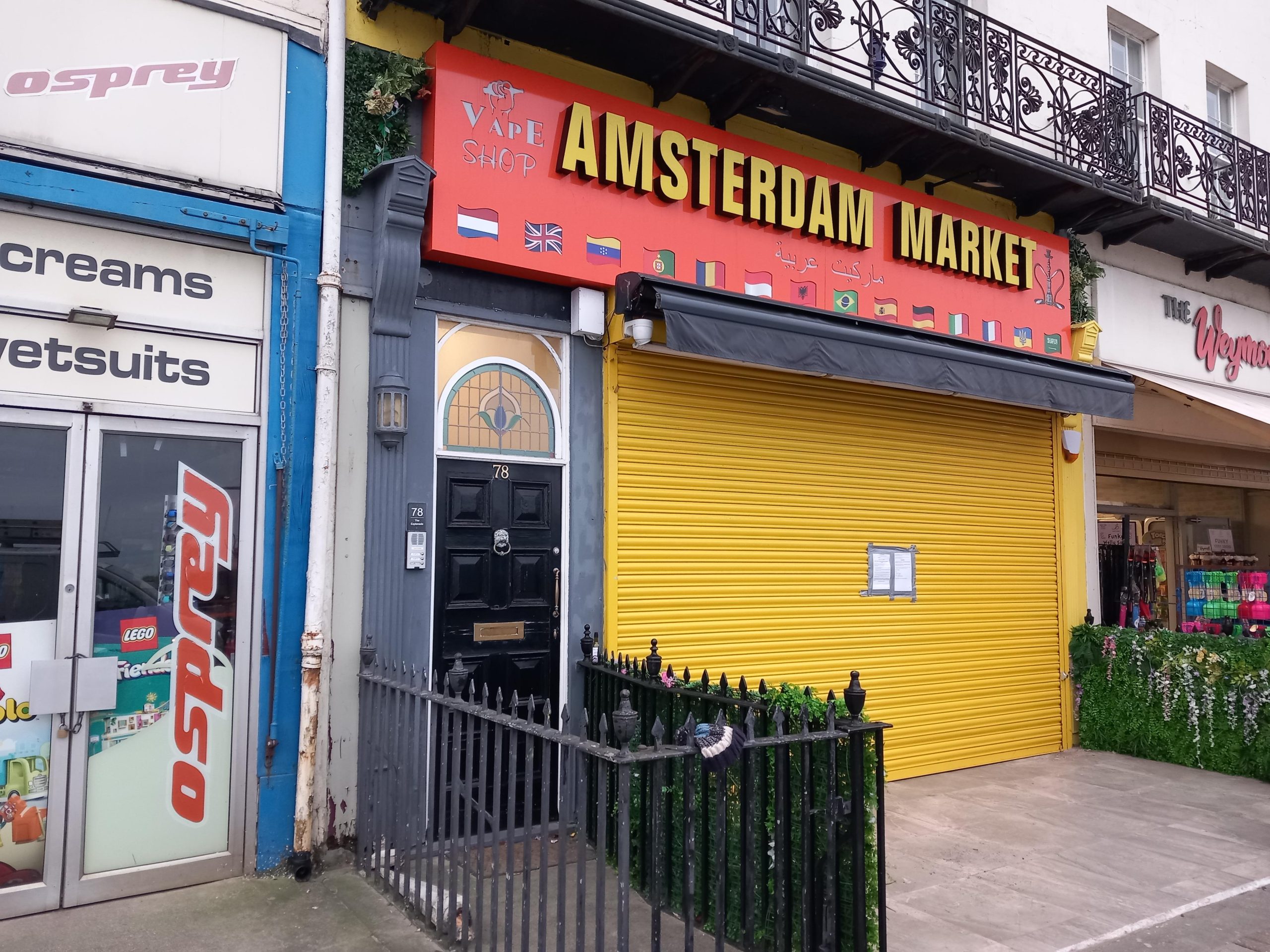
You do not need a spreadsheet or a government dashboard to tell how poor a place is. You only need to walk down the local high streets.
Count the vape shops. Count the bookmakers. Count the off-licences and takeaways. Then count how many cafés, gyms, nurseries, libraries or community spaces remain. The imbalance tells a story that has been more than a decade in the making.
This did not happen overnight. And it did not begin with the current government.
New research by the Independent Commission on Neighbourhoods (Icon) puts hard evidence behind what people have been seeing for years. England’s poorest neighbourhoods now have around 70% more vape shops, bookmakers, off-licences and takeaways than wealthier areas. They have half the number of childcare facilities, far fewer cafés and gyms, and higher vacancy rates.
These patterns are the accumulated outcome of ten to fifteen years of high street erosion, wage stagnation, collapsing retail chains, weak planning enforcement and sustained public disinvestment. Labour has been in office for around 18 months. The shopfronts people see today were shaped long before that.
A slow, grinding decline
The modern British high street has been deteriorating steadily since at least the early 2010s. Online retail accelerated closures. Austerity hollowed out local government. Business rates punished small retailers. Banks, post offices and pharmacies retreated. What remained was a shrinking pool of businesses able to survive in places with falling incomes and rising rents.
In that environment, a particular retail ecology took hold.
Bookmakers, vape shops, off-licences and takeaways thrive where money is tight, stress is high and alternatives are scarce. They are not signs of consumer abundance but of constrained choice. They do not anchor communities; they extract from them.
Icon’s research shows that in deprived neighbourhood shopping parades, the everyday “shops down the road”, there are roughly double the number of unhealthy food outlets compared with affluent areas, alongside significantly less social infrastructure. Vacancy rates are higher too, locking decline in place.
Once that tipping point is reached, regeneration becomes vastly harder. The high street stops being a place to linger and becomes a place to endure.
Why blaming the present misses the point
It is politically convenient to pretend this decay is recent. It is also wrong.
Professor Will Jennings’ research shows that public perceptions of high street decline worsened dramatically over the past decade, with the sharpest collapse in local pride occurring between 2022 and 2024, the tail end of Conservative government. Two earlier YouGov surveys chart the same trend: people consistently report that shops and high streets have declined more than any other aspect of their local area.
Labour inherited high streets already hollowed out, with retail collapse baked in and neighbourhood infrastructure stripped to the bone. Eighteen months in office is enough time to inherit the wreckage, not enough time to reverse a decade of structural damage.
That context matters. Without it, public anger risks being misdirected and cynically exploited.
The politics of visible decay
High street decline is politically potent because it is impossible to spin. People do not need briefing notes to know when their area is worse than it used to be. They remember what was there ten years ago. They remember when the bank was open, when there were shops for children, and when there was somewhere to sit that did not require spending money.
Polling shows the decline of high streets remains one of the biggest concerns people have about their local area. It is no accident that this sense of loss is strongest in places that have experienced long-term economic neglect; many of them are Labour heartlands, and many of them are targeted aggressively by Reform UK (who have provided absolutely no ideas to help solve the issue).
Nigel Farage’s focus on “broken” high streets works precisely because the damage is real and long-standing. Where mainstream politics fails to acknowledge the timescale of decline, resentment fills the gap.
Dorset shows this is not just an urban story
Dorset is often assumed to be immune from these trends. It is not.
Despite its image, Dorset contains neighbourhoods facing entrenched deprivation driven by high housing costs, low wages, seasonal work and poor access to services. In those areas, the same retail patterns emerge: thinning services, rising vacancies and a shift toward low-value, high-turnover outlets that can survive where others cannot.
The lesson is simple. This is not about north versus south or cities versus countryside. It is about what happens when places are left to drift for a decade or more.
What the shopfronts are really telling us
The clustering of vape shops and bookmakers is not a cultural failure. It is a historical record.
It tells us:
– how long investment has been absent
– how thoroughly planning has failed
– how deeply inequality has been allowed to embed
– how little regard has been shown for neighbourhood life
If Labour’s “pride in place” agenda is to mean anything, it must start by being honest about this timeline. These high streets were broken slowly, over many years. Fixing them will require sustained intervention, not instant miracles.
Until then, Britain will continue to advertise its poverty in neon signs and betting odds, a decade of neglect written plainly across the places people walk every day.
We have prepared two models to redesign our High Streets for the decades… ahead. Let us know your thoughts.