

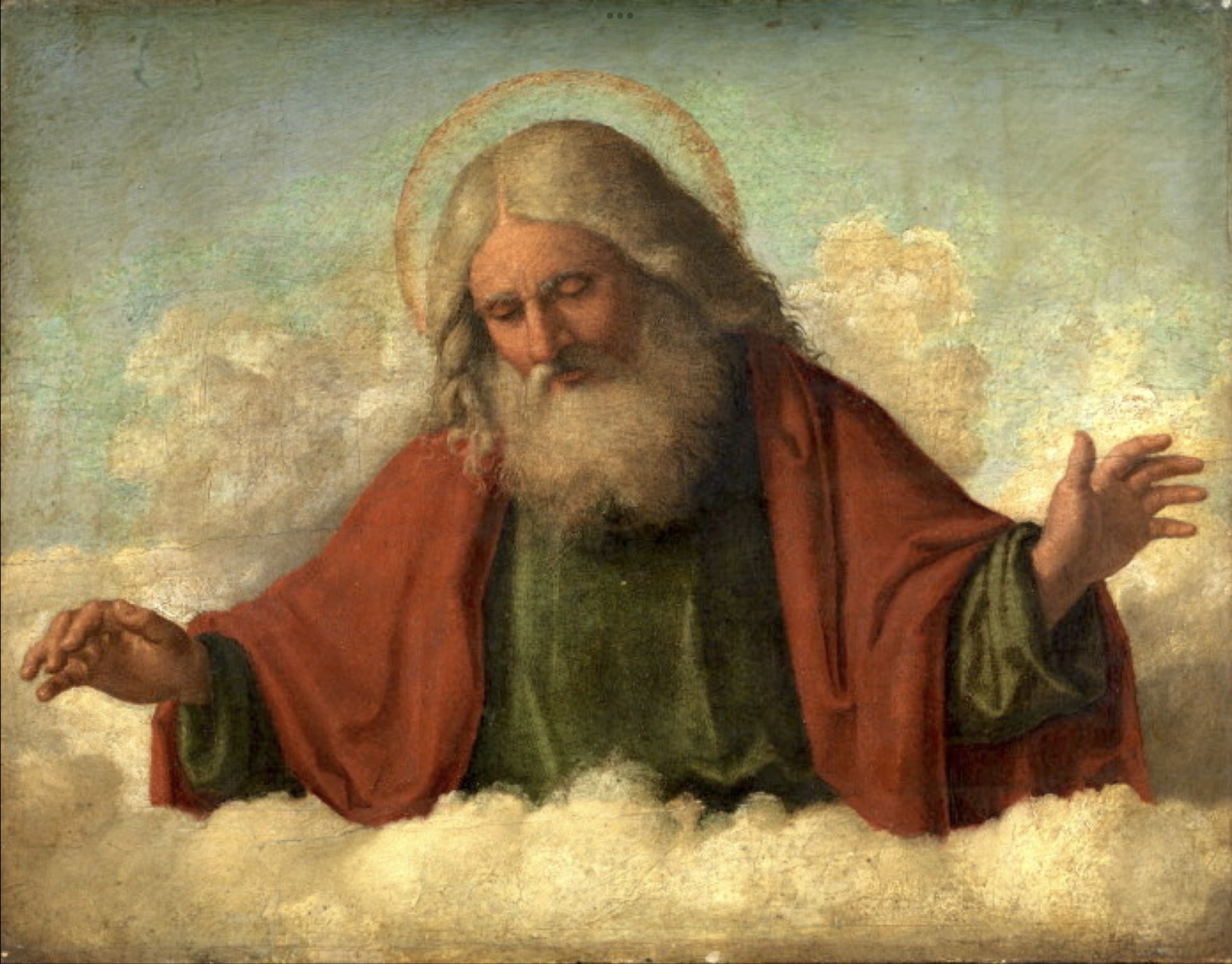
Few philosophical questions cut as deeply into the human condition as this one: if all human beings were to become extinct, would God cease to exist, while science and nature continued regardless? It is a provocative idea because it forces us to examine whether God is an objective reality independent of human thought or whether the divine exists primarily as a product of human consciousness, culture and belief.
At the heart of this debate lies a distinction between what exists independently of us and what exists because we perceive it.
Nature, by every available measure, appears to be independent of humanity. Mountains existed before the first human walked the Earth. Oceans moved with the tides long before language, religion or civilisation. Stars were born and died across the universe billions of years before Homo sapiens emerged. Should humanity disappear tomorrow, rivers would still carve valleys, forests would still grow over the ruins of cities, and the laws of physics would continue to govern matter and energy. Gravity would not suddenly vanish because there were no longer minds capable of naming it.
Science, however, requires more careful consideration.
Science itself is not merely “things in the world”; it is the method by which humans describe and understand reality. The processes science studies—evolution, thermodynamics, plate tectonics, chemical reactions — would undoubtedly remain. But science as a discipline, as a body of knowledge, as an intellectual framework, would vanish with us because there would be no scientists left to observe, theorise or record. In this sense, nature remains absolutely, while science survives only as the reality it describes, not as a human institution.
This is where the question of God becomes especially fascinating.
For many religious believers, God is understood as eternal, omnipresent and wholly independent of human existence. In Christian theology, for example, God is the creator of the universe, existing before time itself. Under that view, human extinction would be tragic but irrelevant to God’s existence. God would remain, because God is not contingent upon human recognition.
Yet there is another powerful philosophical argument: that God exists only insofar as human beings conceive of him (or her or they).
Religion is undeniably a human phenomenon. Every conception of God comes to us through human language, human culture and human interpretation. Scriptures were written by people. Doctrines were debated by people. Moral frameworks attributed to divine authority were constructed and enforced by people. Without humanity, there would be no churches, no prayers, no sacred texts, no rituals, and crucially, no minds in which the concept of God could reside.
From this perspective, God may be seen less as an external being and more as the ultimate expression of human attempts to explain existence, morality and mortality.
If that is true, then God dies with humanity.
This argument aligns closely with existential and humanist philosophy. Thinkers such as Nietzsche challenged the traditional conception of God not merely as a metaphysical being but as a central organising principle of civilisation. His famous declaration that “God is dead” was not a literal statement about divine mortality but an observation that belief systems depend upon human acceptance. Once belief collapses, the practical reality of God in human society collapses with it.
By extension, if humanity itself disappears, the concept of God disappears entirely.
There is a brutal logic to this. A deity who is worshipped by no one, remembered by no one, and conceptualised by no mind may still be argued to exist in some abstract metaphysical sense — but that existence becomes impossible to distinguish from non-existence. If there is no consciousness left in the universe capable of perceiving or relating to God, what meaningful difference remains?
Nature, by contrast, needs no witness.
The sea does not require admiration to be vast. The sun does not need belief to rise. Evolution does not need observers to continue shaping life. Whether humans exist or not, entropy increases, ecosystems adapt, and the cosmos expands.
This contrast reveals something profound: nature is indifferent, while God may be relational.
If God’s existence depends on relationship, faith or consciousness, then extinction severs that relationship permanently. In that sense, it is not merely humans who end, but the entire realm of meaning, morality and transcendence that humans project onto the universe.
Some would argue this makes nature the more fundamental truth.
Science and nature do not seek comfort. They offer no promise of justice, no afterlife, no moral accounting. A star exploding in a distant galaxy does not care whether humanity survives. A virus evolves without malice. An earthquake destroys without intent. Nature simply is.
God, on the other hand, is often bound up with purpose.
To believe in God is often to believe that existence has meaning beyond material processes. Remove the beings who ask “why?”, and only the “how” remains.
In this sense, the extinction of humanity may indeed mean the extinction of God — not necessarily as an absolute metaphysical claim, but as a meaningful concept. The universe continues, but stripped of narrative, value and divine interpretation.
Ultimately, the debate turns on what one believes God to be.
If God is an eternal creator independent of humanity, then He survives our extinction.
If God is a human construct born from consciousness, fear, hope and the search for meaning, then He dies with us.
Nature, however, remains the silent victor in either case.
Long after the last human voice has fallen silent, the wind will still move through empty streets, the stars will still burn above a darkened Earth, and the universe will continue utterly unchanged by our absence.
Perhaps that is the most unsettling thought of all: not whether God survives us, but how little nature needs us to continue.







