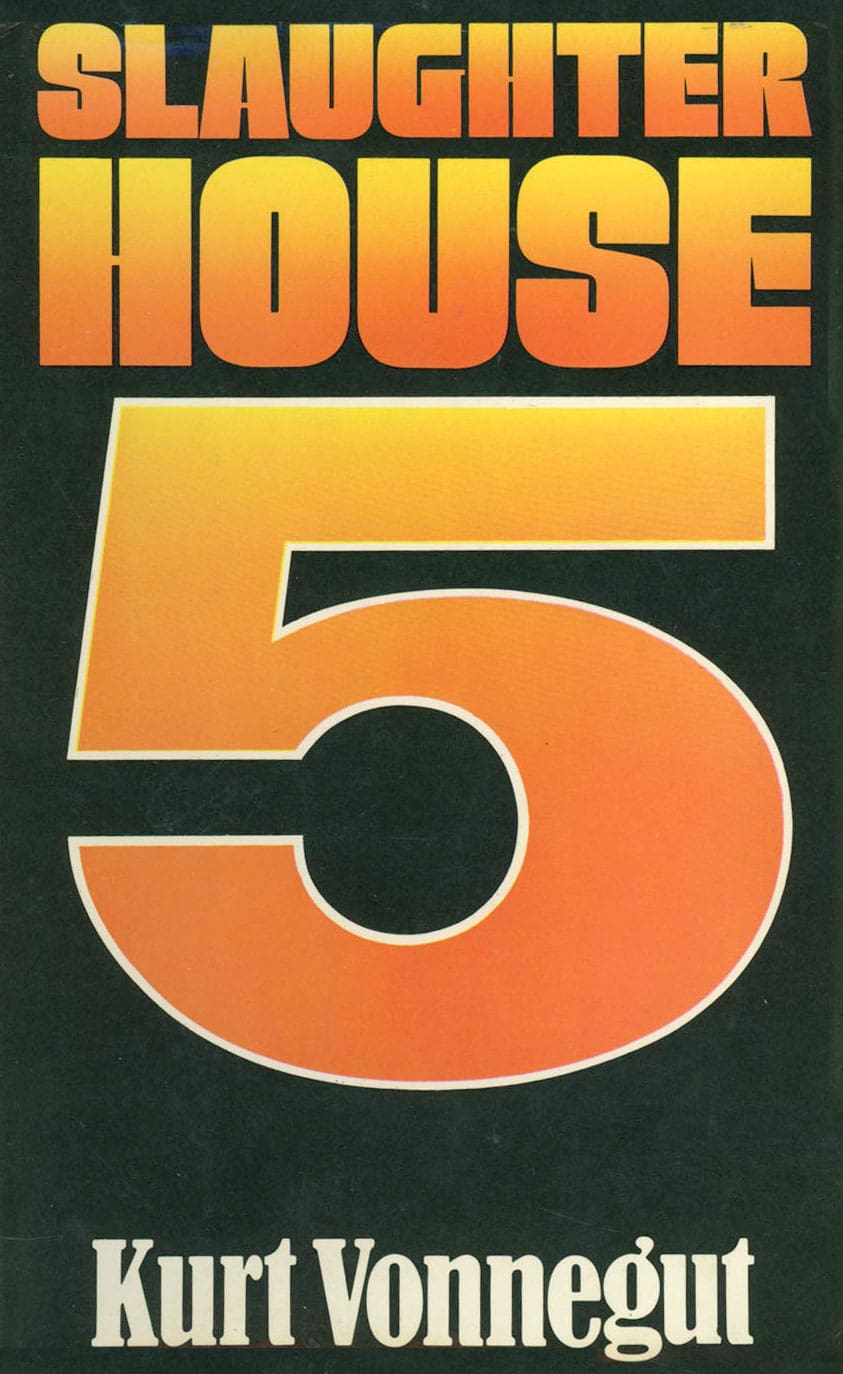
In the long shadow of war and global disillusionment, Slaughterhouse-Five stands out not just as a literary classic, but as an urgent, strange, and heartbreakingly honest reckoning with what it means to live and die in the wake of history.
Published in 1969, Kurt Vonnegut’s surreal anti-war novel is a masterpiece of dark satire, science fiction, and moral clarity. At a time when the world feels increasingly absurd and fragmented, Slaughterhouse-Five offers something rare: a lens through which to understand our disorientation.
The Bombing of Dresden—and the Reversal of Time
Central to the novel is Vonnegut’s first-hand experience as a prisoner of war in Dresden during one of the most devastating Allied attacks of the Second World War. The 1945 bombing killed an estimated 25,000 people and incinerated one of Europe’s most beautiful cities in a matter of hours. The irony? Dresden had little military significance. It was, in effect, an act of theatre and annihilation.
Vonnegut’s protagonist, Billy Pilgrim, survives the bombing by hiding in a slaughterhouse-turned-prison—Schlachthof-fünf, or Slaughterhouse-Five. The novel’s account of the bombing, though brief, is devastating in its simplicity.
But in one of the book’s most striking scenes, Vonnegut describes the bombing in reverse. The film of the air raid is rewound: bombs fly upwards into the bellies of planes, fires shrink and disappear, and the city is slowly rebuilt. Eventually, the deadly machinery is returned to factories and disassembled. Humans, instead of destroying, are shown to be unmaking death, undoing violence, and restoring the world.
It’s a fantasy—of course. But it’s also an act of narrative resistance. By reversing the bombing, Vonnegut momentarily gives the reader a glimpse of an impossible justice: the unravelling of war’s consequences. It is both beautiful and heartbreaking, because it cannot be true.
A Novel That Rejects Conventional Time
Billy Pilgrim’s journey is famously non-linear. He becomes “unstuck in time,” slipping without warning between different moments of his life: childhood, the war, mundane suburban existence, and even a stint in an alien zoo on the planet Tralfamadore.
This fractured structure mimics the nature of trauma: how it disrupts chronology, repeats itself, and lingers in unexpected ways. Billy’s experience with time is a metaphor for how those who’ve witnessed horror often continue to relive it, in pieces, forever.
The science fiction elements, especially the Tralfamadorians and their philosophy that all moments exist simultaneously, aren’t there to distract from the real-world horror. They’re a psychological mechanism, a form of emotional insulation. The Tralfamadorians insist that death is just one bad moment among many. “So it goes,” they say whenever death occurs.
This refrain becomes the novel’s emotional heartbeat: part resignation, part lament, and part numbed repetition.
Satire with Serious Bite
Vonnegut’s writing is stripped-back, almost childlike, but never naïve. He uses humour not to mock suffering but to highlight its absurdity. The bureaucracy of the military, the senselessness of patriotism, and the hollow language of politicians are all skewered with wit and brevity.
But Vonnegut’s humour is not cruel. There’s deep compassion beneath the satire, especially for the ordinary people caught in the machinery of war. Billy Pilgrim is not a hero. He’s confused, passive, and frequently ridiculous and all the more human for it.
In an age of polished narratives and performative outrage, Vonnegut’s awkward, stumbling honesty feels like a relief.
Still Urgent, Still Essential
Today, the world feels increasingly like the one Vonnegut described: fragmented, absurd, and hostile to meaning. Wars continue. Civilians suffer. Our timelines are filled with atrocity and distraction. Vonnegut doesn’t offer easy comfort, but he does offer clarity.
Slaughterhouse-Five teaches that we can’t always make sense of history. We can’t always fix it. But we can refuse to forget it. We can bear witness. We can mourn with grace and laugh without cruelty.
It is not just a book about war. It’s about memory, survival, and the limits of understanding. And it’s exactly the kind of story we need when the world makes no sense.
“It is so short and jumbled and jangled, Sam, because there is nothing intelligent to say about a massacre.”
— Kurt Vonnegut, Slaughterhouse-Five
A letter from Kurt Vonnegut