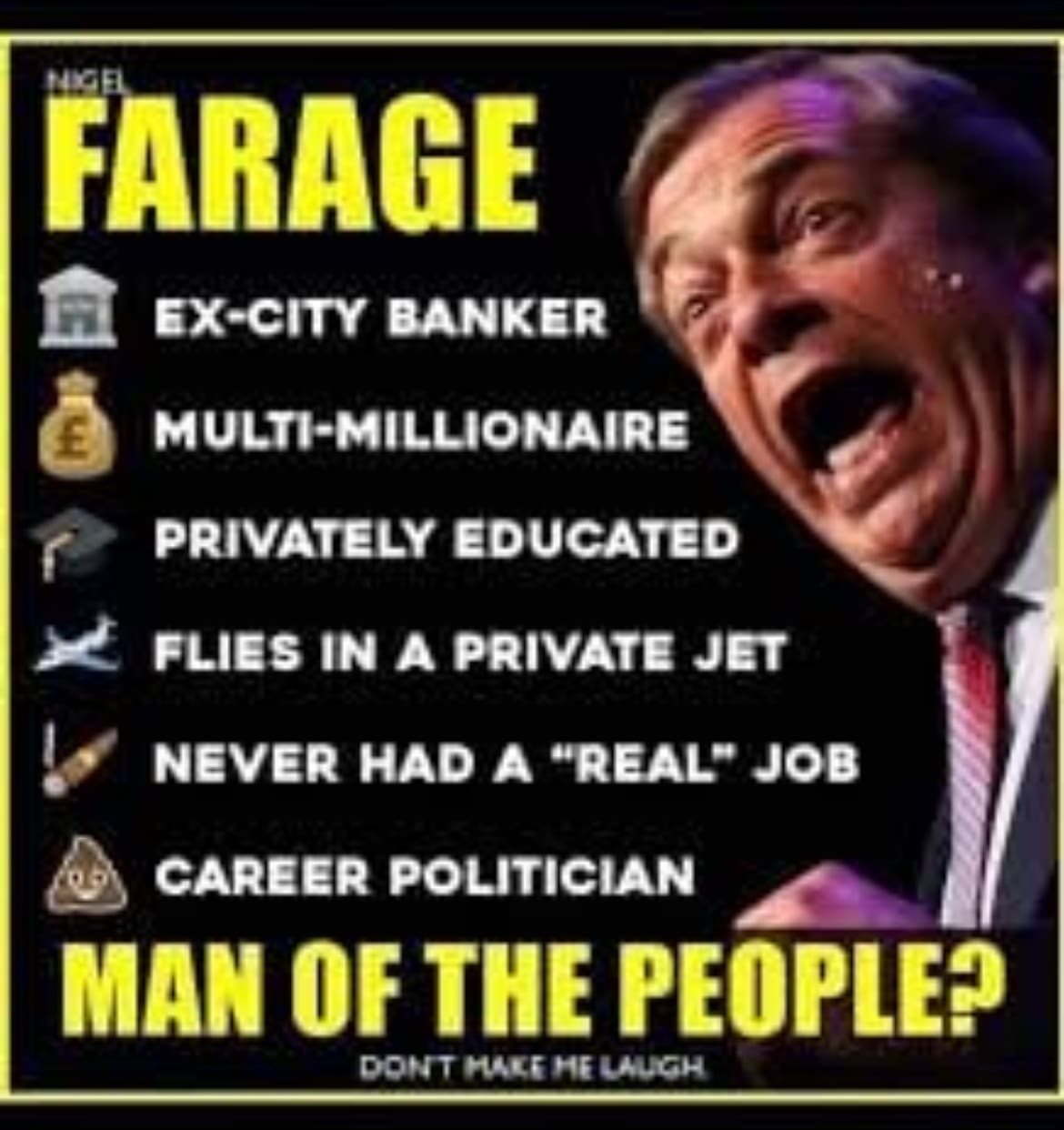
When it comes to foreign policy, leadership is supposed to be about principles. Yet the latest comments from Nigel Farage suggest something rather different: a politician reading the polls and adjusting his position accordingly.
At the start of the escalating confrontation between the United States and Iran, Farage’s position appeared straightforward. Speaking soon after the conflict began, the Reform UK leader backed the idea of “regime change” in Tehran and said Britain should do “all we can to support the operation.” In other words, he was clearly aligning himself with the hard-line approach of Donald Trump and the military campaign being pursued with support from Israel against Iran.
But within days the tone changed.
On Tuesday, Farage declared that Britain should not get involved in the war. “If we can’t even defend Cyprus,” he said, referring to Britain’s military commitments in the eastern Mediterranean, “let’s not get ourselves involved in another foreign war.”
The shift was immediate and obvious. Critics were quick to call it what it looked like: a U-turn.
The change coincided with the publication of polling that revealed deep divisions among Farage’s own supporters. A survey by YouGov found that voters who backed Reform in the 2024 general election were far from united about military action. Only 24 per cent supported Britain actively joining attacks on Iran, while 63 percent favoured a defensive or retaliatory stance rather than direct participation in the conflict.
That kind of split creates a dilemma for any party leader, particularly one whose political appeal rests heavily on populism. Farage has long claimed that he is guided by conviction rather than opinion polls. Yet his sudden shift from enthusiastic support for regime change to caution about foreign entanglements raises obvious questions.
Opportunism is his raison d’être.
The confusion is compounded by the fact that Farage’s own party appears deeply divided on the issue. His deputy, Richard Tice, has taken a far more aggressive position. Tice has said Britain should assist the United States and Israel “in any way they saw appropriate,” describing Iran as a permanent strategic threat to Western security.
Other Reform figures have struck a different tone. Robert Jenrick has argued that prolonged conflict would push up global energy prices and damage the British economy, urging a more cautious “Britain First” approach. Meanwhile, Andrea Jenkyns has refused to rule out the possibility of British troops eventually being deployed on the ground, a suggestion that highlights just how unsettled the party’s position remains.
Even more hawkish is Nadhim Zahawi, who recently joined Reform and has argued that the UK should make its military bases fully available to American forces and support the bombing campaign from the outset.
Taken together, these competing statements reveal a party without a coherent foreign policy. One faction favours aggressive intervention alongside Washington; another argues for isolationism and economic realism. In the middle stands Farage, apparently attempting to reconcile the irreconcilable.
This internal division mirrors similar tensions within the American conservative movement. Supporters of Trump often advocate a mixture of muscular nationalism and isolationism, a combination that can easily collapse into contradiction when real conflicts arise.
For Britain, the stakes are serious. War in the Middle East has immediate consequences for global oil prices, trade routes and regional stability. British military bases in Cyprus could play a strategic role in any wider conflict, while escalating tensions risk drawing NATO allies into an unpredictable confrontation.
In that context, the public expects clarity from political leaders.
Instead, what they appear to be getting from Farage is something closer to opportunism. First enthusiastic support for regime change, then sudden caution once the political risks become clearer.
A leader guided by principle would argue consistently for either intervention or restraint. A leader guided by the polls does something else entirely.
They let their citizens know they cannot be trusted.