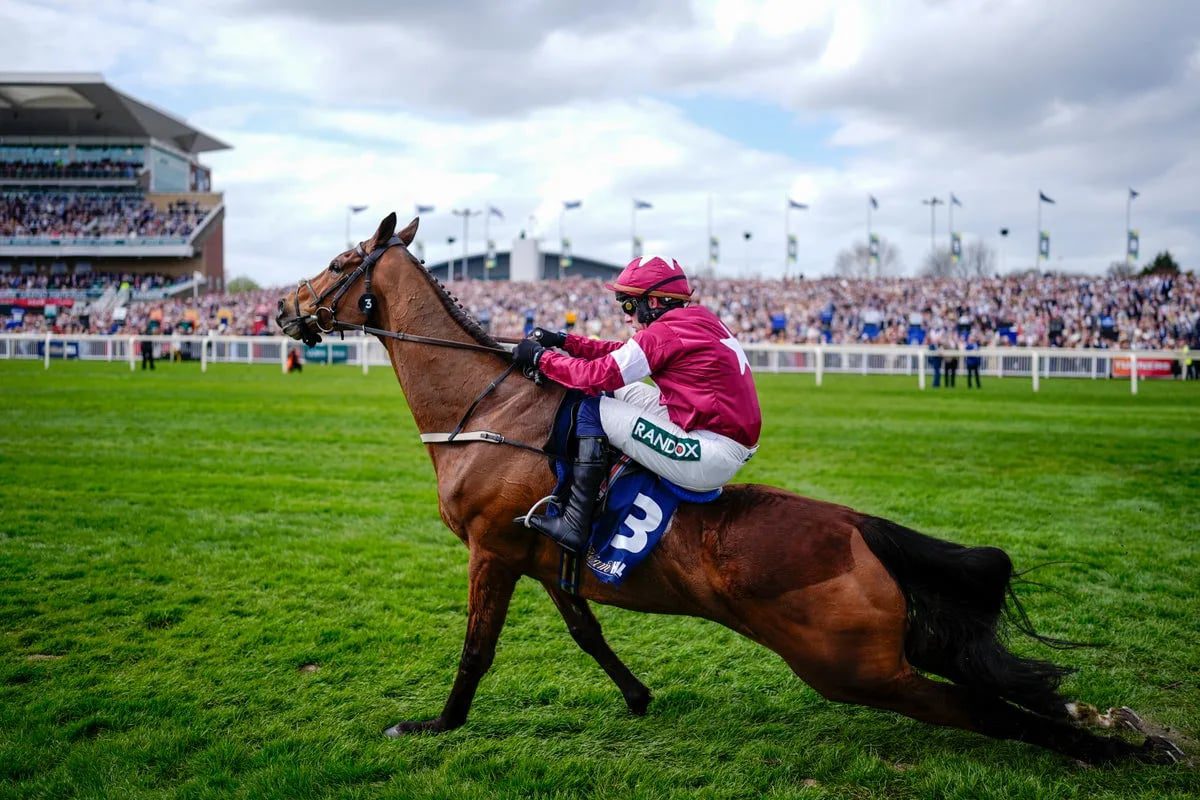
Another horse is dead.
Another name added to the growing, shameful list.
This time it is Gold Dancer, killed following the Mildmay Novices’ Chase at the Grand National Festival at Aintree, the latest victim of a sport that continues to dress cruelty up as heritage, glamour and entertainment.
The RSPCA says this is now the 42nd racehorse fatality in competitive action in the UK this year alone, and it is only April. Forty-two lives extinguished in barely four months for the sake of gambling slips, television spectacle and a few minutes of crowd excitement.
At what point do we stop pretending this is unfortunate and start calling it what it is?
Systemic barbarity.
Horse racing, and especially jump racing events like the Grand National Festival, has long hidden behind the language of tradition. Supporters speak reverently of history, pageantry and national identity, as though age somehow sanitises suffering. But tradition is no defence for cruelty. Cockfighting was once tradition. Bear baiting was once tradition. The age of a practice does not make it moral.
The Grand National in particular has become a grotesque symbol of this contradiction: polished silverware, champagne hospitality and corporate sponsorship built upon an arena where animals are pushed to physical extremes over punishing distances and dangerous fences.
When horses fall, break limbs, suffer catastrophic internal injuries or collapse after the line, the response is always the same. We hear sombre statements about “learning lessons”, “reviewing procedures” and “welfare improvements”.
And then the races continue.
Another meeting.
Another fence.
Another death.
Gold Dancer’s death is not an isolated tragedy. It is part of an industrial pattern.
Forty-two fatalities are not bad luck.
They are evidence.
Evidence that the risk is not incidental but embedded in the sport itself.
No amount of veterinary supervision, softer landings or post-race inquiries can change the basic reality that these animals do not choose this life. They are bred, trained and entered into dangerous competition for human profit and pleasure. Their bodies become commodities; their deaths are written off as unfortunate costs of doing business.
The most damning aspect is society’s selective outrage.
If forty-two dogs had died in organised competition by April, there would be national fury and immediate calls for prohibition. Yet because these deaths happen on racecourses, under the respectable banner of sport, they are tolerated.
The uncomfortable question is whether we value spectacle more than sentient life.
For all the polished PR from racing authorities, the central truth remains brutally simple: if a sport routinely kills its participants, it forfeits the right to call itself civilised.
Gold Dancer deserved better than to die for applause.
Perhaps the bleakest truth is that the headline question feels less like satire and more like an indictment of the sport itself: if horses keep dying at this rate, what exactly is the moral difference between celebrating the race and openly admitting what it costs?
Because right now, the Grand National’s glamour is stained with blood.