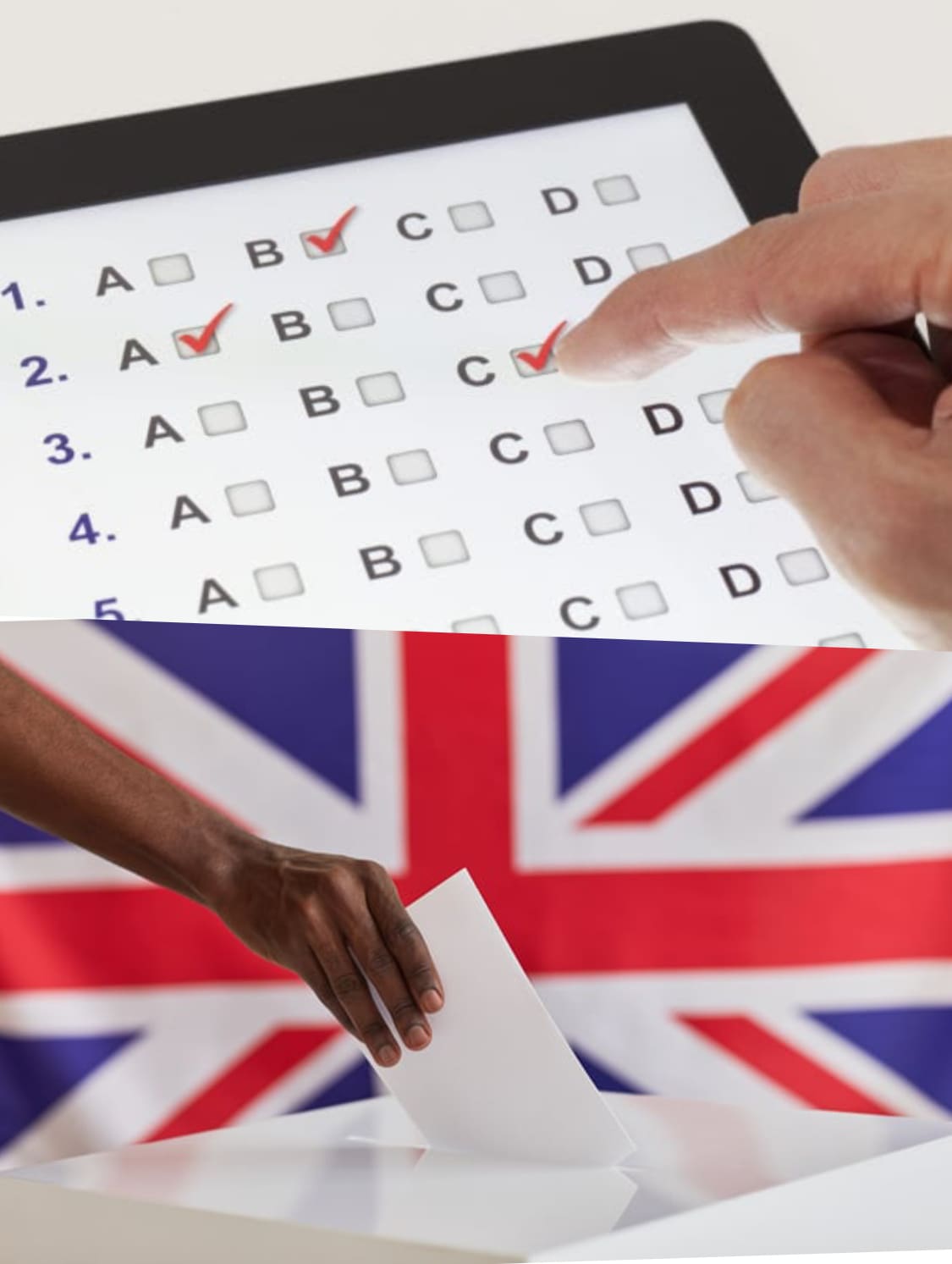
Perhaps unsurprisingly, a growing number of Britons say they would back a measure long considered unthinkable: requiring voters to demonstrate a basic understanding of politics, media literacy, and civic processes before casting their votes. Frustration with the flood of misinformation, misleading headlines and online conspiracies has led many to question whether democracy can truly function when decisions are made on falsehoods or emotional manipulation. Polls and informal surveys suggest that, far from being a fringe idea, a substantial portion of the electorate believes that ensuring voters are informed is not elitist — it is essential to preserving the integrity of the nation’s democracy.
This follows the supposed leaking of a document purporting to come from a civic-reform group calling itself the Democratic Integrity Foundation (DIF) that has surfaced online. Entitled “Competence: The Missing Element in Modern Democracy”, it lays out a detailed plan to introduce a nationwide Voter Competence Test before the next general election.
The 12-page memorandum argues that the survival of democracy depends on “a citizenry that can tell fact from fiction.” It rails against what it calls “corporate media manipulation, algorithmic propaganda and emotional populism” and insists that “truth must once again be the qualifying standard of democratic participation.”
“To say that valuing truth is elitist is itself the language of those who profit from confusion. Ordinary people deserve facts, not fabrications.”
The document rejects charges of elitism:
Below are excerpts from the supposed memorandum — presented here as a fictionalised reconstruction to explore the debate it raises.
Extract: ‘Competence: The Missing Element in Modern Democracy’
Purpose:
To establish a universal, non-partisan civic-literacy test ensuring that every voter understands the fundamentals of the system they influence.
Principles:
- Free access and unlimited retakes.
- Questions are published regularly.
- Independent oversight.
- Education first, testing second.
- National online platform plus local test centres.
- Free preparatory courses through libraries and adult-learning centres.
- Oversight by an independent Civic Knowledge Commission.
- Public reporting of all results, anonymised and statistical only.
Implementation:
Statement from an unnamed founder (“R”):
“We have a democracy in which truth is optional. The test is not to exclude, but to awaken. We are not taking votes away from people; we are returning them to reality.”
Fifteen Sample Questions from the Alleged DIF Voter Competence Test
(Each correct answer is given below the list.)
- When you encounter a news story online, what is the most reliable first step to verify its accuracy?
A. Check whether it supports your opinion
B. Look for who shared it most
C. Identify the original source and confirm its credibility
D. Read the comments section - Who sets the United Kingdom’s annual national budget?
A. Local councils
B. The European Commission
C. HM Treasury, approved by Parliament
D. The Bank of England - If two events are correlated, it means:
A. One caused the other
B. They happen together but may not be causally linked
C. They cancel each other out
D. Both are false - A political advertisement on social media must legally include:
A. The candidate’s social-media handle
B. A “promoted by” line identifying the sponsor
C. An official government watermark
D. Nothing at all - When a headline uses extreme language or emotional triggers, the best response is to:
A. Share it immediately
B. Check alternative outlets and original data
C. Assume it’s true
D. Ignore all news entirely - The House of Lords primarily functions to:
A. Pass laws without review
B. Examine and amend legislation passed by the Commons
C. Set tax rates
D. Enforce court rulings - An opinion column differs from a news report because:
A. It includes verified facts only
B. It openly expresses personal interpretation
C. It is always false
D. It cannot be published online - If a politician makes a numerical claim, a responsible voter should:
A. Repeat it until corrected
B. Ask for the data source and context
C. Trust it if it feels right
D. Assume journalists already checked it - Deepfake technology allows:
A. Editing of documents only
B. Synthetic audio-visual manipulation that can mimic real people
C. Secure online voting
D. Protection against misinformation - When Parliament is “prorogued”, it means:
A. Dissolved for a general election
B. Temporarily suspended between sessions
C. Replaced by regional assemblies
D. Abolished - In the UK, freedom of expression is limited when:
A. Speech incites violence or hatred
B. Someone disagrees with you
C. You criticise the government
D. You use satire - An “echo chamber” in social-media terms is:
A. A group chat
B. An environment where users encounter mainly views they already agree with
C. A place for balanced debate
D. A recording studio - Before sharing a statistic, a voter should check:
A. Whether it has been peer-reviewed or comes from official data
B. How many likes it has
C. Whether it fits their political preference
D. If it appeared on a meme - The independent body overseeing UK elections is:
A. The Home Office
B. The Electoral Commission
C. The Supreme Court
D. The BBC - The phrase “post-truth politics” refers to:
A. Government transparency
B. A culture in which emotional appeal outweighs factual accuracy
C. A period after the truth has been revealed
D. Political fact-checking
Correct Answers
1 – C 2 – C 3 – B 4 – B 5 – B 6 – B 7 – B 8 – B 9 – B 10 – B 11 – A 12 – B 13 – A 14 – B 15 – B
In reality the test would probably include 30 questions with a pass rate set at 70%. Thus, all tests would require a minimum of 21 correct answers.
Why the Document Matters
Whether this memorandum ever existed outside an imaginative exercise is almost beside the point. It crystallises a question Britain cannot avoid: how can a democracy survive when voters cannot agree on basic facts?
The fictional DIF proposal forces a hard conversation — about the balance between equality and responsibility, free speech and factual literacy. Its defenders would call it civic renewal; its critics, a dangerous flirtation with technocracy.
Either way, it reminds us of a simple truth: democracy’s strength lies not only in counting votes but in ensuring those votes are cast in knowledge, not ignorance.
The present day and history tell us that ignorance does not support a democracy; it destroys it.