The latest migration figures released by the Office for National Statistics tell a story that cuts directly against years of political rhetoric, sensationalist headlines and culture war panic amplified by sections of the right-wing media and opportunistic politicians.
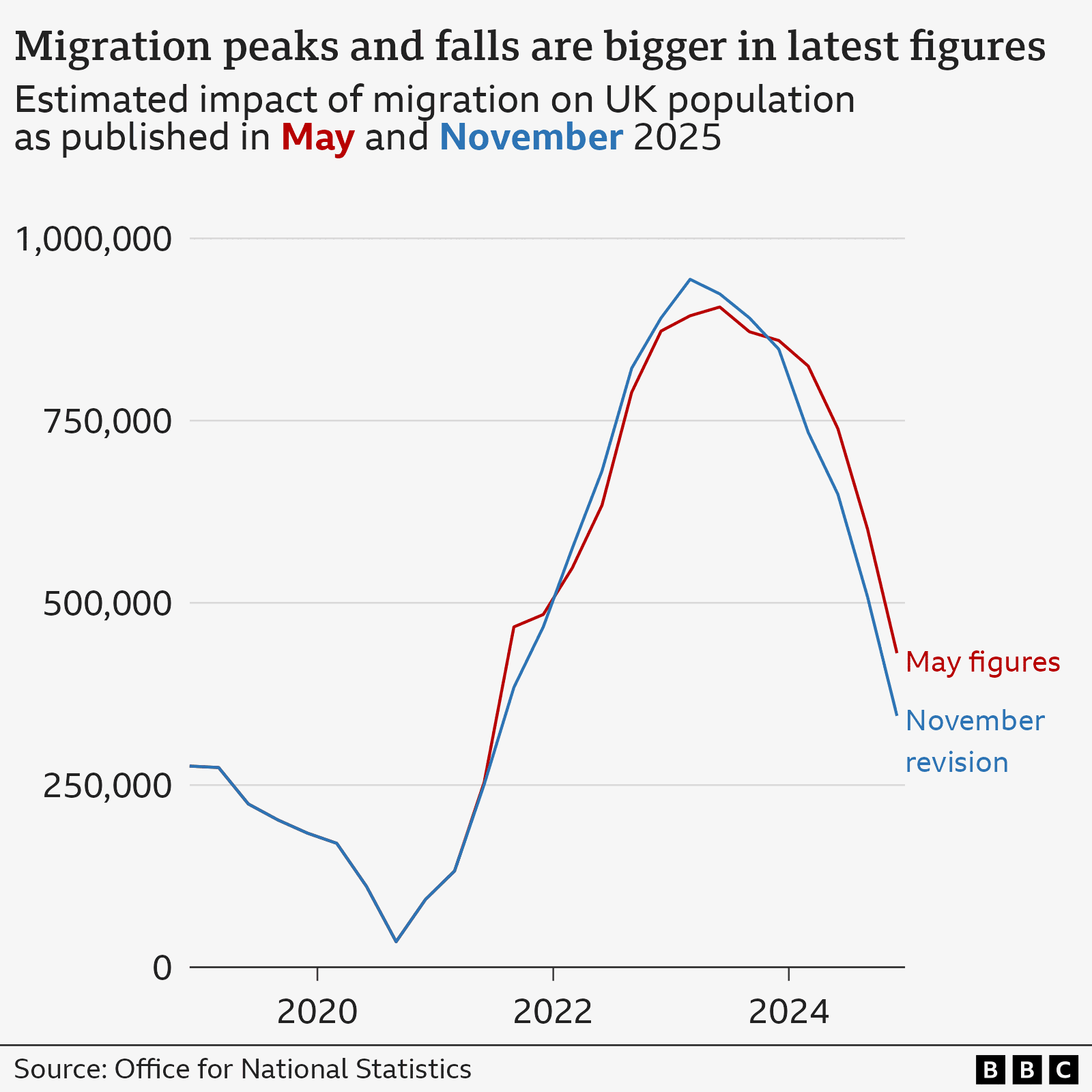
Net migration to the UK has fallen dramatically. According to the official figures, net migration dropped to 171,000 in the year to December 2025; a decline of nearly 50% from the previous year and far below the extraordinary post-pandemic peak of 944,000 recorded in 2023.
Yet despite this steep decline, many voters still believe migration is rising uncontrollably.
That disconnect between reality and perception did not emerge by accident. It is the product of a political and media environment where emotion, outrage and manufactured fear often carry more weight than evidence.
For years, migration has been presented by parts of the British press and political class as an existential crisis. Every small boat crossing becomes a rolling news spectacle. Isolated crimes involving migrants are elevated into national morality tales. Statistical complexity is flattened into simplistic slogans about “open borders” or “invasions”.
The facts paint a much more nuanced picture.
The ONS figures show the decline has been driven largely by a 47% drop in people arriving from outside the EU for work-related reasons. Immigration is not spiralling upward; it is falling sharply. Emigration also remains substantial, with an estimated 642,000 people leaving the UK over the same period.
In other words, the reality is already moving in the direction many politicians claimed they wanted.
Yet this has not slowed the rhetoric.
Parties such as Reform UK continue to frame migration as though Britain remains in a state of unprecedented escalation. Meanwhile, sections of the tabloid press still rely heavily on alarmist framing that keeps audiences angry and fearful regardless of what the data says.
This matters because public perception increasingly appears detached from measurable reality.
Research by the think tank British Future found many people wrongly believe migration is continuing to rise even while official statistics show the opposite. That gap demonstrates the power of repeated narratives over factual information.
The issue is not simply disagreement over policy. Reasonable people can support lower or higher migration levels. The deeper problem is what happens when political discourse becomes untethered from evidence altogether.
When voters are repeatedly told the country is facing an ever-worsening crisis despite clear evidence of decline, trust in institutions erodes. Facts become secondary to identity politics and grievance. Complex social and economic challenges are reduced to simplistic scapegoating.
This environment benefits populists who thrive on permanent outrage. If migration numbers fall, the rhetoric rarely softens because the political utility lies not in solving problems but in sustaining anger.
It also creates impossible standards for governments. Even when migration falls dramatically, opponents can simply claim the figures are fake, insufficient or proof of hidden conspiracies. The target continually moves.
The Prime Minister, Keir Starmer, will inevitably present the new figures as evidence his government is delivering control and stability. Politically, ministers will hope the numbers blunt the appeal of Nigel Farage and Reform UK on one of their strongest campaigning issues.
But the broader challenge goes beyond party politics.
Britain increasingly faces a crisis of information where loud narratives overpower sober evidence. Social media algorithms reward anger. Some newspapers prioritise clicks over context. Politicians know emotionally charged messaging spreads faster than statistical nuance.
The result is a country where many people sincerely believe conditions are worsening even when the measurable trend points the other way.
Migration remains an important issue that deserves serious debate. Housing pressures, public services, labour shortages and integration all require honest discussion. But that discussion becomes impossible when fiction consistently drowns out fact.
The latest ONS figures should serve as a reminder that reality still matters; even if parts of Britain’s political and media ecosystem seem determined to ignore it.