

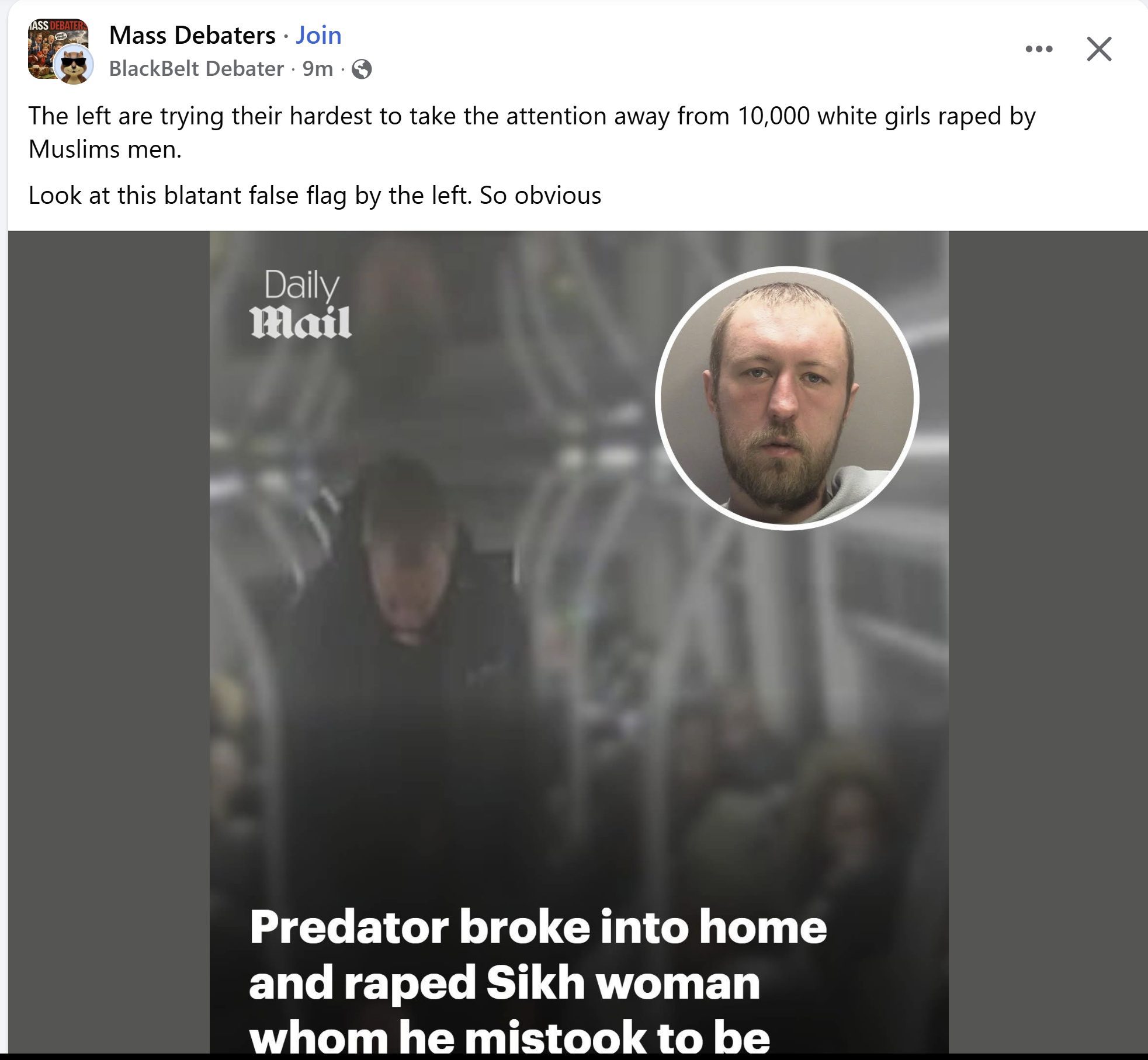
The sentencing of John Ashby to life imprisonment, with a minimum term of nearly 14 years, for the religiously aggravated rape of a Sikh woman in Walsall should have been a moment of clarity. A moment to recognise the brutality of the crime, the courage of the victim and the seriousness of violence against women. Instead, parts of the online far right have responded with something altogether more disturbing: denial, conspiracy and naked opportunism.
The facts of the case are not in dispute. Ashby targeted a stranger, followed her home, forced entry and carried out a violent, degrading assault while hurling racist abuse. The court heard overwhelming evidence, including DNA and identification, leading to his guilty plea mid-trial. A High Court judge described him as “a very dangerous man,” and prosecutors made clear the attack was driven by religious hatred. The victim herself spoke of the life-altering trauma she endured, while also expressing relief that justice had finally been done.
None of that has stopped a predictable chorus online. Rather than engage with the reality of the crime, some voices have sought to twist it into something else entirely. Claims of “false flags,” attempts to downplay the offender’s actions, or the reflex to redirect outrage toward minority communities have all surfaced in the wake of this case. It is a reaction that says far more about those promoting it than it does about the crime itself.
This is the uncomfortable truth: for these groups, sexual violence is not a cause to confront with honesty or compassion. It is a tool. It’s a means of generating anger, stoking division and reinforcing pre-existing narratives about race and identity. When a case does not fit neatly into those narratives, it is dismissed, distorted, or explained away. The victim becomes secondary, an inconvenient detail rather than the human centre of the story.
If the concern were genuinely about protecting women, the response would look very different. It would involve consistency, acknowledging that perpetrators come from all backgrounds and that victims deserve dignity regardless of who harmed them. It would mean supporting survivors, engaging with the realities of abuse and resisting the urge to weaponise tragedy for political ends. Instead, what we see is selective outrage and a willingness to exploit suffering.
The spread of conspiracy thinking, suggestions that a case like this is somehow fabricated or manipulated, marks a deeper problem. It reflects a growing detachment from evidence and a slide into reflexive distrust of anything that does not align with a particular worldview. When even a proven case of rape becomes fodder for baseless speculation, it signals a troubling erosion of empathy and reason.
This should concern anyone paying attention. Not just because the rhetoric is offensive, but because it normalises a mindset in which victims are dehumanised and truth is optional. When serious crimes are reduced to talking points in a culture war, the consequences extend beyond online spaces. It undermines public understanding, damages trust and ultimately makes it harder to address the very issues being invoked.
There is nothing ambiguous about this case. It is an example of extreme violence, compounded by hate. The justice system has responded accordingly. What remains is how society chooses to react and whether it is willing to reject those who would turn such suffering into yet another vehicle for division.







