

For Free-Thinking Women, Does Death Appear the Only Escape?
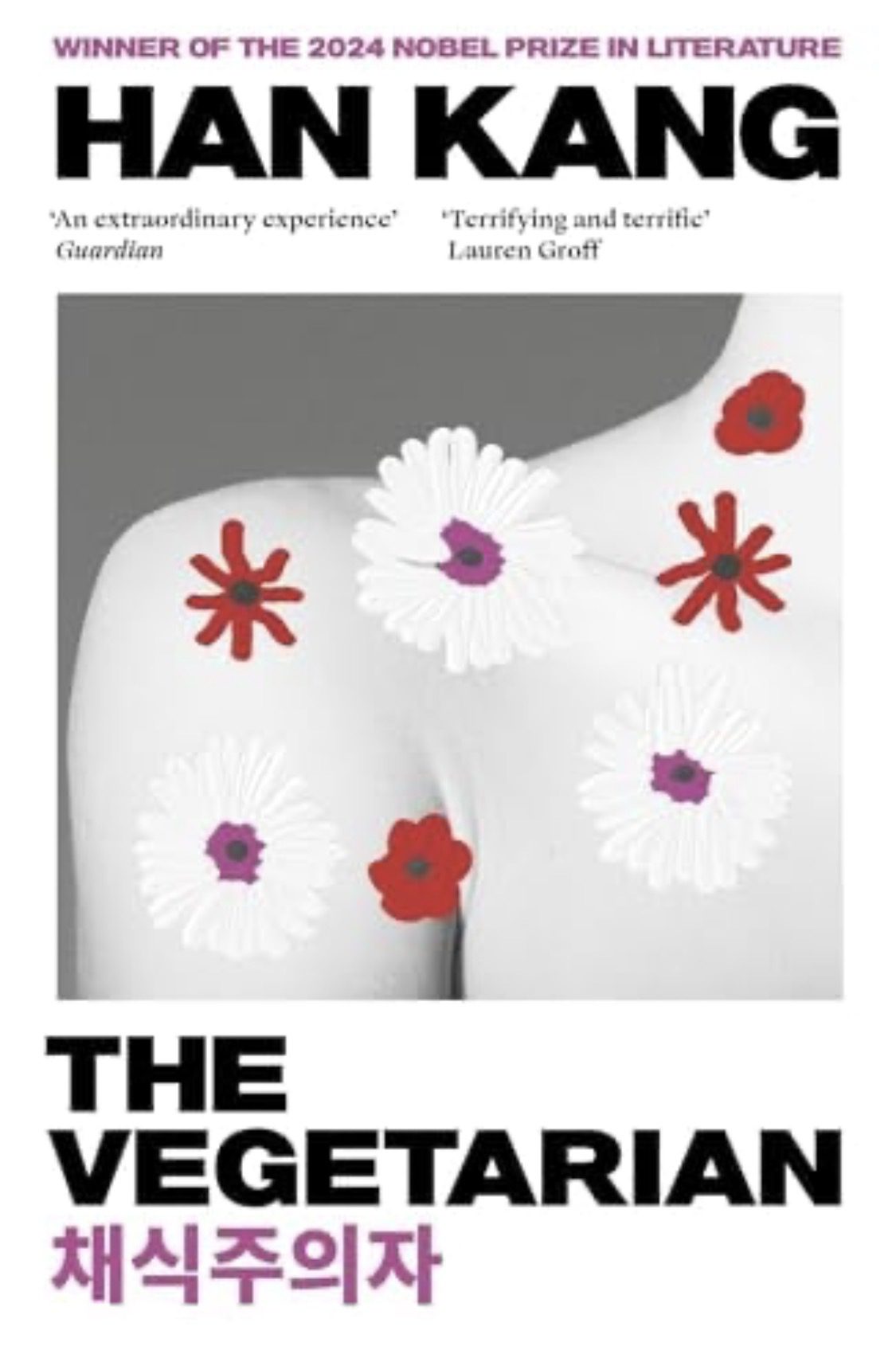
The Vegetarian by Han Kang is not an easy novel to read, nor is it meant to be. Winner of the Man Booker International Prize, it is a sparse, unsettling and deeply symbolic work that explores autonomy, violence and the crushing weight of societal expectation, particularly as it bears down on women.
At its centre is Yeong-hye, an apparently ordinary woman living in Seoul, whose quiet decision to stop eating meat becomes the catalyst for a slow and disturbing unravelling. What begins as a personal choice soon escalates into something far more radical: a rejection not just of meat, but of human desire, social norms, and ultimately, life itself.
The novel unfolds through the perspectives of three other characters: her husband, her brother-in-law, and her sister, each of whom projects their own needs, frustrations and obsessions onto Yeong-hye. Strikingly, Yeong-hye herself is largely voiceless. This narrative choice is deliberate and devastating: her silence mirrors the way her autonomy is stripped from her, piece by piece, by those around her.
There is a brutality running through the novel that feels both physical and psychological. From domestic control to institutional force-feeding, the violence Yeong-hye experiences is often framed as “care” or “normality.” It raises an uncomfortable question: when a woman refuses to conform, how quickly does concern turn into coercion?
The book’s imagery is stark and often surreal. Yeong-hye’s desire to become plant-like, rooted, passive, and untouched can be read as an attempt to escape a world that demands her compliance. In this sense, the novel brushes up against the provocative idea suggested in this review’s subtitle: that for a free-thinking woman trapped in an oppressive structure, self-erasure may appear as the only form of control left.
But it would be too simplistic and perhaps misleading to interpret The Vegetarian as arguing that death is the only escape. Rather, Han Kang presents a world in which meaningful escape is systematically denied. Yeong-hye’s trajectory is less a statement of inevitability and more an indictment of the systems—familial, cultural, and medical—that leave her with so few viable choices.
It is also important to situate the novel within its cultural context. While its themes are universal, the pressures depicted are rooted in specific social expectations within modern South Korea, particularly around gender roles, obedience and family hierarchy. However, readers from many backgrounds will recognise echoes of these constraints in their own societies.
Ultimately, The Vegetarian is a haunting meditation on control over one’s body, one’s identity and one’s fate. It does not offer comfort or resolution. Instead, it leaves the reader with a lingering unease and a question that resists easy answers: what does true autonomy look like in a world that fears it?
This is a novel that demands reflection rather than passive consumption. Disturbing, poetic, and uncompromising, it lingers long after the final page, not because it resolves its tensions, but because it refuses to.







