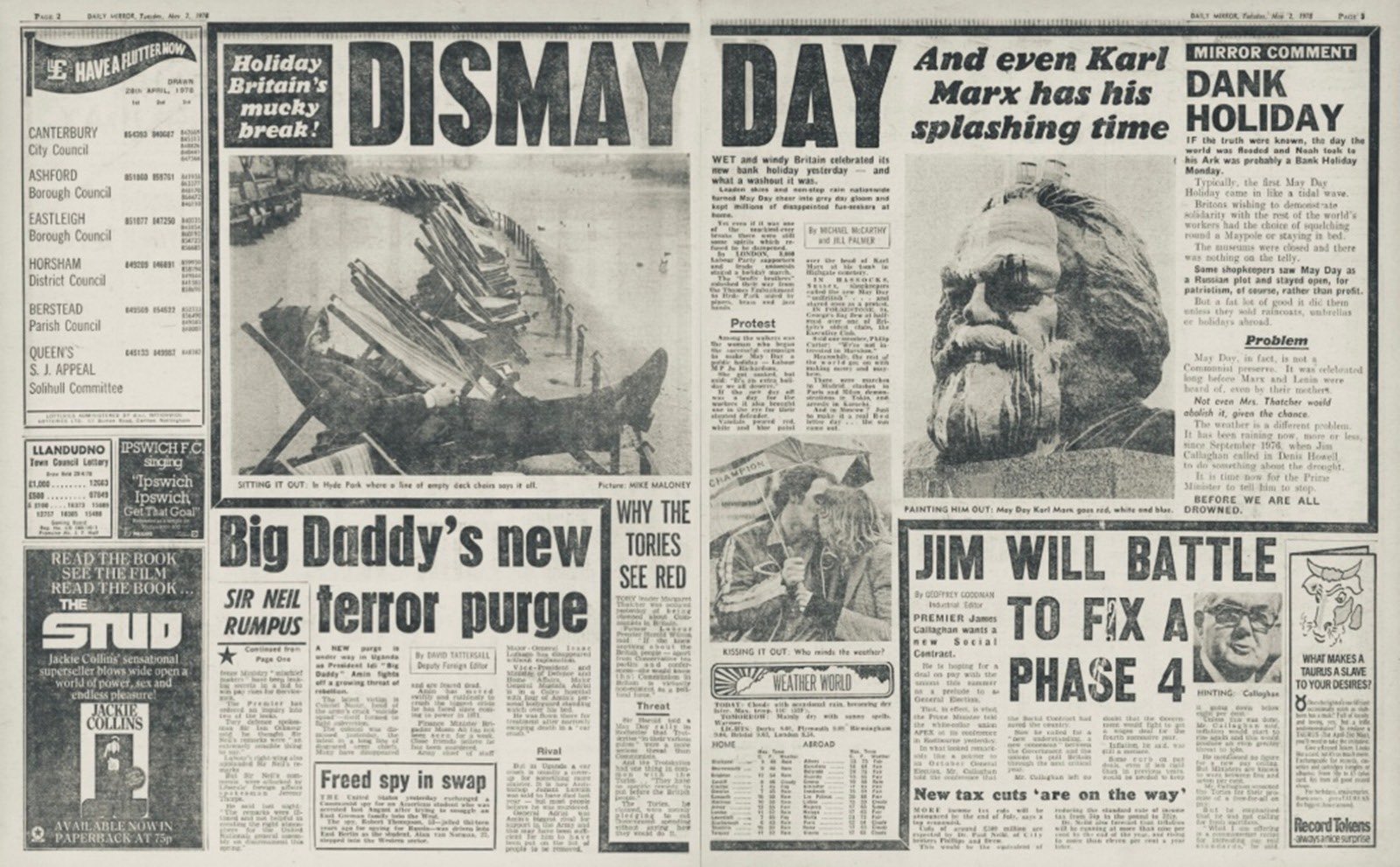
In 1978, Britain marked its first official early May bank holiday, a move intended to align the country with international labour traditions associated with May Day. Yet what might have been a straightforward calendar reform quickly became a cultural and political flashpoint. The reaction exposed not just ideological divides but also how quickly charged and often illogical labels can take hold in public discourse.
The introduction of the holiday, linked historically to workers’ rights movements and the legacy of figures like Karl Marx, prompted fierce backlash in some quarters. Marx’s grave in Highgate Cemetery was vandalised, a symbolic act reflecting the suspicion with which some viewed the occasion. For critics, the holiday was framed not as a benign day off but as an ideological import, “un-British” or even “communist,” terms that appeared frequently in headlines and commentary.
Retailers and business owners were among the most vocal opponents. Some shopkeepers publicly pledged to remain open, presenting their stance as a defence of British values against what they saw as unnecessary foreign influence. Meanwhile, certain Conservative clubs reportedly flew flags at half mast, a gesture usually reserved for mourning, now repurposed to signal disapproval of a public holiday. These responses illustrate how symbolism and language intertwined to amplify the sense of controversy.
Yet the reality of the May Day bank holiday was far less dramatic. For most people, it was simply an additional day of rest, comparable to existing bank holidays with no enforced political participation. The gap between perception and reality raises an enduring question: why do exaggerated or ill-fitting labels gain traction so quickly?
Part of the answer lies in the power of language to simplify complex issues. Terms like “communist” or “un-British” carry emotional weight, allowing individuals and media outlets to frame events in stark, easily understood terms. However, such labels often lack precision. In the case of May Day 1978, they obscured the practical nature of the policy and instead recast it as a cultural threat.
This pattern persists today. Public debate frequently gravitates toward shorthand descriptions that prioritise impact over accuracy. Once established, these narratives can spread rapidly, shaping opinion before facts have time to settle.
The story of May Day’s introduction in Britain is therefore not just about a holiday but about how societies interpret change. It serves as a reminder that the words used to describe events can be as influential as the events themselves and that those words are not always grounded in logic.