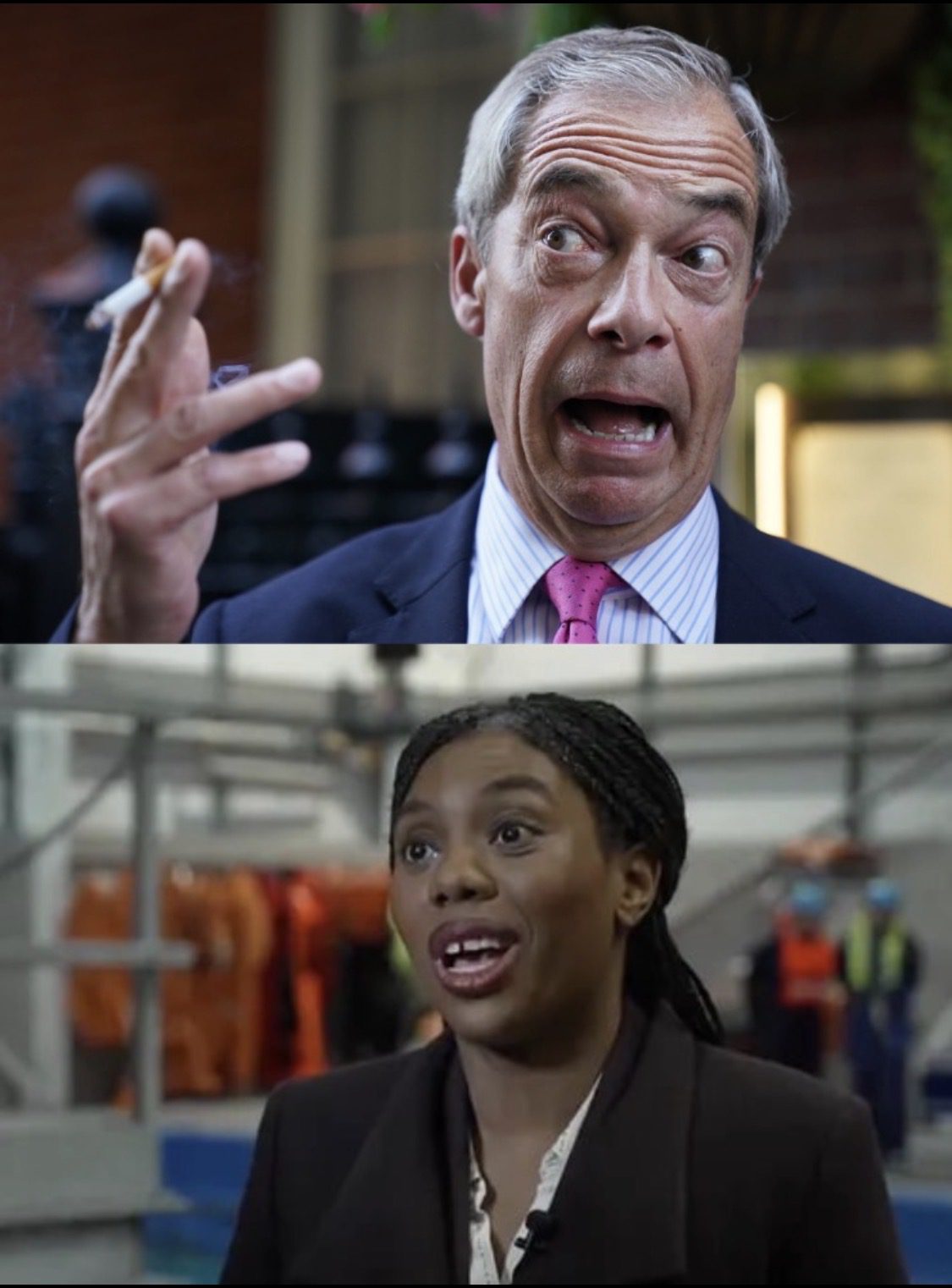
A political clash on regional radio has reignited a long-running question in British politics: who speaks for “ordinary people”? When Kemi Badenoch challenged Nigel Farage over reports of a £5 million gift from a wealthy donor, she did more than trade insults; she struck at the heart of Farage’s carefully cultivated image as a man of the people.
Speaking on BBC Radio Merseyside, Badenoch dismissed Farage’s claim that he connects with working-class voters in places like Liverpool while Conservatives appear “aloof and remote.” Her rebuttal was simple but potent: someone who can receive a multimillion-pound gift and allegedly fail to register it promptly is hardly living the same reality as the voters he claims to represent.
“Who gets £5m as a gift?” Badenoch asked. “If I got £50,000 as a gift, I think people would raise their eyebrows.” Her point resonates because it taps into a broader unease about political authenticity. Farage has built his brand on pub conversations, anti-establishment rhetoric, and a rejection of elite politics. Yet episodes like this risk undermining that narrative.
The controversy centres on claims that Farage received the substantial sum from a major donor prior to entering Parliament. While political donations and financial support are not unusual in British politics, the scale of the figure and questions around transparency, have fuelled criticism. Badenoch’s argument is not just about the money itself but what it symbolises: proximity to wealth and influence that sits uneasily with anti-elite messaging.
This tension is not unique to Farage. Across Europe and beyond, populist figures have often relied on significant financial backing from wealthy individuals or networks. The paradox is clear: movements that rail against elites frequently depend on elite resources to function. Badenoch’s intervention simply makes that contradiction harder to ignore in this particular case.
However, whether this critique will land with Farage’s core supporters is another matter entirely. His appeal has never rested solely on personal circumstances but on his ability to channel frustration over immigration, economic stagnation, and distrust in institutions. For many voters, those concerns outweigh questions about funding or political consistency.
Moreover, Farage has proven remarkably resilient to criticism over the years. From his time leading UKIP through the Brexit campaign and into his leadership of Reform UK, controversies have often strengthened rather than weakened his standing among supporters who view attacks as evidence of establishment bias. In that context, Badenoch’s comments may reinforce existing divisions rather than shift opinions.
Still, the issue raises important questions about accountability and honesty in public life. If politicians position themselves as outsiders fighting for ordinary people, there is a reasonable expectation that their financial dealings align with that image, or at the very least, are transparent. The perception of forgetting to declare a £5 million gift risks appearing not just out of touch, but dismissive of rules that apply to others.
For Badenoch, the exchange also serves a strategic purpose. By targeting Farage directly, she attempts to reclaim ground for the Conservatives among voters drifting toward Reform UK. Casting him as part of the very elite he criticises is an effort to puncture his outsider appeal and reframe the political battlefield.
Whether it works remains uncertain. Political identities, once formed, are difficult to shift. But moments like this do matter. They expose contradictions, invite scrutiny, and force voters to reconsider the narratives they are being sold.
In the end, the question is less about whether Badenoch has a point—many would argue she clearly does—and more about whether that point cuts through. For critics of Farage, it reinforces a long-held view of a politician whose anti-establishment persona masks establishment ties. For his supporters, it may simply be dismissed as another attack from a political class they already distrust.
And that is the real challenge: not exposing contradictions, but making people care about them.