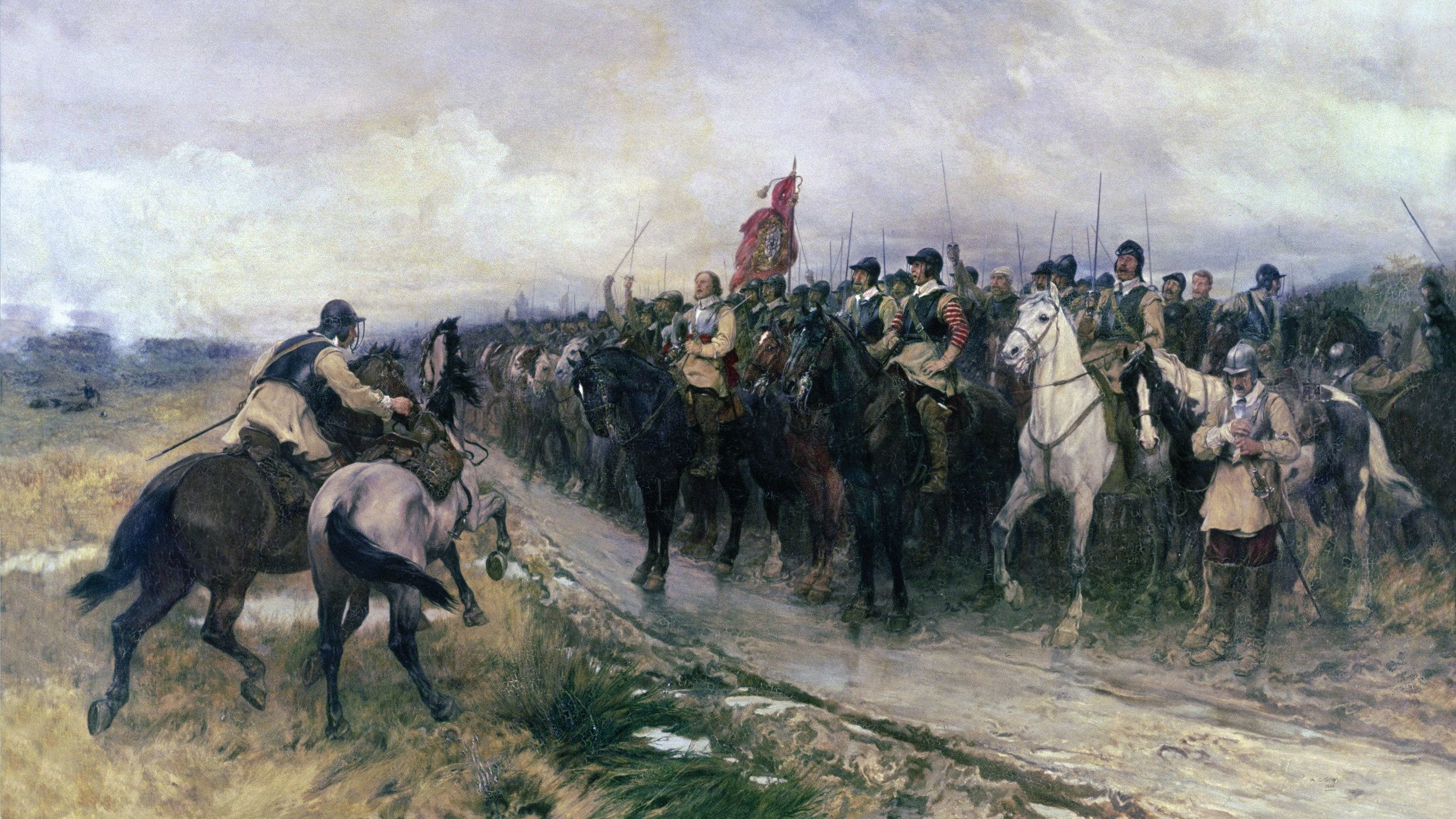
When people think of the English Civil War, they often picture the great battles of Naseby, Marston Moor, or the execution of King Charles I. Yet Dorset experienced its own dramatic upheaval during the conflict and its aftermath, with consequences that transformed society, politics, religion and everyday life across the county.
The war years of the 1640s proved devastating for Dorset. Remarkably, the county lost around 8% of its population during the conflict and the turbulent years that followed. This was a proportionally greater loss than Dorset suffered during the First World War. However, the majority were not killed in battle. Disease proved a far deadlier enemy than swords or muskets.
Typhoid fever swept through many Dorset communities, particularly around Lyme Regis, which endured several sieges during the war. Conditions in military camps, overcrowded towns and makeshift hospitals created ideal breeding grounds for infection. Contemporary records suggest that around half of those wounded during military engagements later died from disease and infection rather than their original injuries.
The conflict also gave rise to one of the most unusual movements in Dorset’s history: the Clubmen. By 1645, thousands of ordinary Dorset residents had become exhausted by years of warfare, looting and military occupation. Rather than siding with either King or Parliament, yeomen farmers, merchants, tradesmen and even women organised themselves into armed groups determined to defend their communities from both sides.
For a brief period, the Dorset Clubmen became a significant political and military force. Some historians argue that they were as influential locally as either the Royalists or Parliamentarians. Their growing power alarmed both armies until it was finally crushed by forces under Oliver Cromwell following the Battle of Hambledon Hill on 4 August 1645.
The war also reshaped Dorset’s political landscape. While the county’s aristocracy was not overthrown, its dominance was weakened considerably. Parliamentary elections increasingly favoured candidates associated with Parliament rather than the Crown. One notable example came in 1646 when the Royalist Sir John Fitzjames was defeated in Shaftesbury by Captain George Star, reflecting a wider shift in political power away from traditional royalist elites.
Religious divisions deepened throughout the decade. Dorset’s Catholic population, estimated at around 1,000 people or roughly 2% of residents, found themselves under growing suspicion. The association between Catholicism and the monarchy became increasingly problematic following the marriage of Charles I to the French Catholic princess Henrietta Maria.
Prominent Dorset families including the Digbys, Welds and Arundells faced increased scrutiny because of their perceived loyalty to the King and sympathy towards Catholicism. New laws and restrictions made life increasingly difficult for Catholics across the county.
At the same time, opposition to the established Church of England gained momentum. Dorset became fertile ground for religious experimentation and dissent. The emerging Quaker movement, founded by George Fox, established early roots in places such as Bridport and Ryme Intrinseca. Other radical groups, including the Ranters, challenged conventional religious and social norms, believing that spiritual freedom placed them beyond traditional laws and moral codes.
Amid these social changes emerged one of Dorset’s most remarkable but often overlooked figures. In Dorchester during the late 1640s and early 1650s, Annie Butler followed her father into the medical profession, becoming one of England’s earliest known female surgeons. At a time when women were largely excluded from professional life, Butler’s work demonstrated how the upheavals of the Civil War period created unexpected opportunities for some individuals to break established barriers.
The English Civil War is often remembered as a struggle between King and Parliament, but in Dorset it became something much broader. Disease devastated communities, ordinary people challenged traditional authority, religious movements flourished, established elites lost influence and pioneering individuals emerged from the chaos.
By the time the monarchy was restored in 1660, Dorset had been profoundly changed. The county that emerged from the turmoil was politically more diverse, religiously more fragmented and socially more dynamic than the one that had entered the conflict two decades earlier. The Civil War may have ended, but its impact on Dorset would be felt for generations.