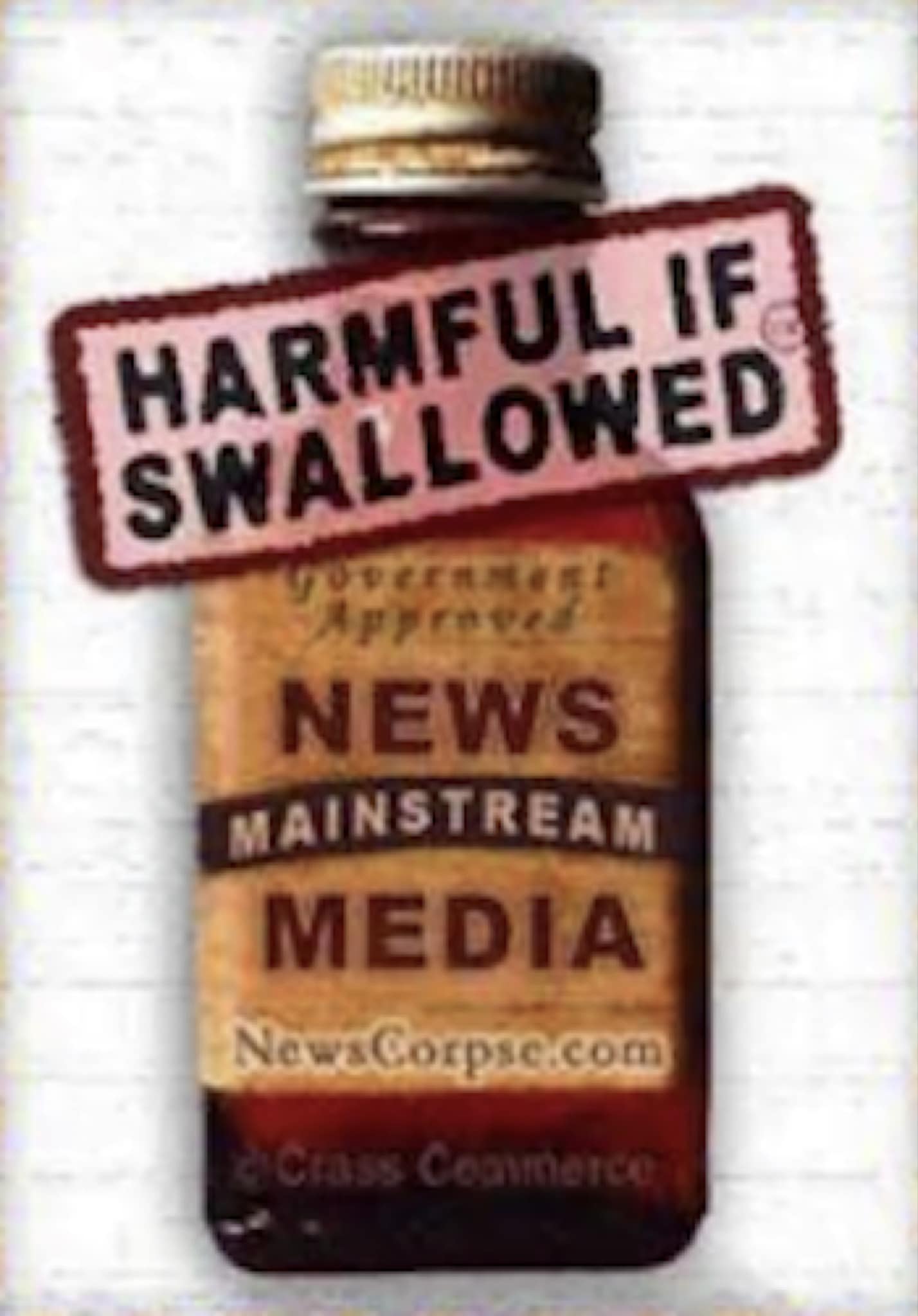
There is a persistent myth in the UK that its major news outlets operate as neutral observers, watchdogs holding power to account. In reality, much of the country’s corporate legacy media behaves less like a guardian of truth and more like a finely tuned production line, shaping narratives that protect wealth, influence political outcomes and maintain the status quo.
At the centre of this system are a handful of powerful organisations. Titles owned by News UK, DMG Media and Reach plc dominate print and online readership. While the BBC is publicly funded, it does not operate in isolation from the same pressures—political, cultural, and institutional—that shape the wider media landscape. Together, these organisations form an ecosystem where certain perspectives are amplified and others quietly erased.
This is not usually about outright fabrication. The “factory” rarely produces crude lies; it manufactures something more effective: selective truth. Stories are framed, prioritised and repeated in ways that guide audiences toward particular conclusions. A policy failure can be downplayed, reframed as a success, or buried entirely beneath culture war distractions. Meanwhile, issues that serve ownership interests—taxation, regulation, labour rights—are often presented through a narrow lens that favours corporate priorities.
Ownership is key. Many major outlets are controlled by billionaires or large corporate groups whose interests are deeply intertwined with politics and finance. Editorial lines rarely stray far from these interests. This influence is not always explicit; it operates through culture, hiring practices and editorial assumptions about what is “reasonable” or “balanced.” Over time, this creates a consensus reality that feels natural but is anything but neutral.
So why does this system face so little effective challenge?
First, scale and repetition. When multiple outlets push similar narratives, dissenting voices struggle to gain traction. A story echoed across newspapers, television and digital platforms gains an aura of truth through sheer familiarity. Readers may not trust any single outlet completely, but the cumulative effect is powerful.
Second, access journalism plays a crucial role. Political reporters rely on relationships with government officials and insiders. Challenging those in power too aggressively can mean losing access, scoops, or career opportunities. (Just look at what Trump is doing in the USA). The result is a subtle but consistent softening of scrutiny, critical enough to appear independent but rarely enough to disrupt the underlying power structures.
Third, regulatory frameworks are often weak or reactive. Bodies such as Ofcom and Independent Press Standards Organisation tend to focus on clear breaches: accuracy, harm, or fairness, rather than systemic bias or agenda-setting. As long as outlets avoid blatant falsehoods, they operate with significant freedom to shape narratives in more nuanced ways.
Then there is the audience itself. Media literacy varies widely and in an age of information overload, many people rely on headlines, summaries, or social media snippets. This makes them more susceptible to framing effects. When outrage-driven or emotionally charged stories dominate, they crowd out complex but important issues such as economic policy, public services, or structural inequality.
Finally, there is the feedback loop with politics. Politicians often respond to media narratives rather than lead them, reinforcing the same frames and priorities. In turn, media outlets report on these political reactions, creating a self-sustaining cycle that marginalises alternative viewpoints.
None of this requires a grand conspiracy. The “factory” operates through incentives, structures and habits built over decades. It rewards conformity, punishes deviation and prioritises engagement over depth.
Breaking this cycle is not straightforward. It would require stronger independent journalism, more robust regulation and a public willing to question not just what they are told, but how and why it is presented. Until then, the production line continues: efficient, influential, and largely unchallenged, turning complex realities into digestible narratives that serve those already at the top.