

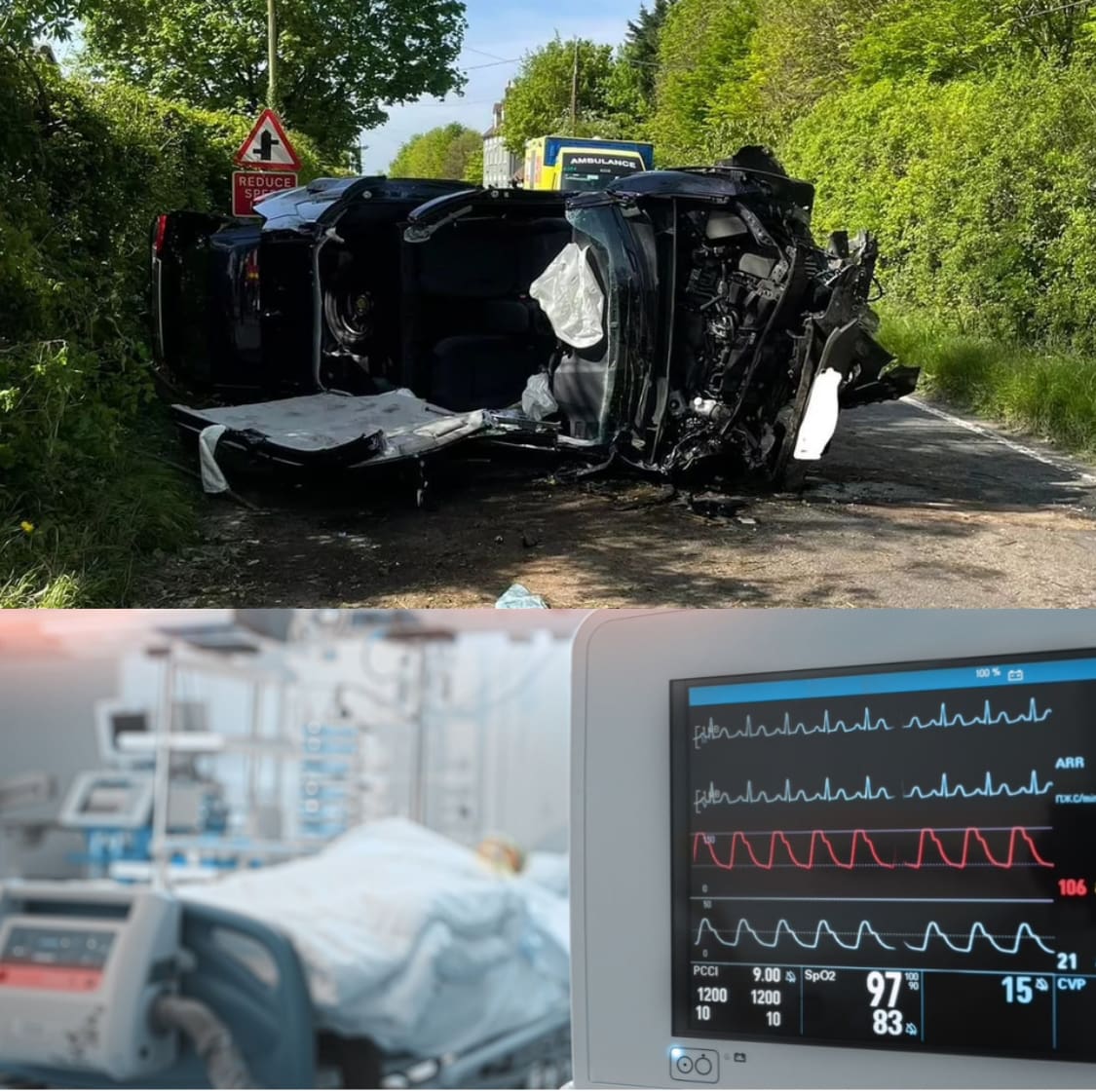
We are standing in a silent, empty room in a cardiac unit. It’s a hollow, sterile space, but it’s the sounds from the other side of the door that tell the real story. This is the backdrop to the largest A&E and major trauma ward in Devon. The constant wail of sirens, the urgent clatter of stretcher wheels, the muffled anxiety of waiting families – this is the soundtrack to broken lives.
Here, Consultant Dr. Anne Hicks, a veteran of over 30 years in emergency care, delivers the news that shatters worlds. When asked about the hardest part of her job, there is a long, heavy pause.
“I don’t think it’s looking after the trauma patients,” she says, her voice steady but laden with a weight accumulated over decades. “The toughest part is talking to the relatives… I can remember the face of every relative I think I’ve ever spoken to.”
She has had to look into the eyes of parents and tell them their teenager, the child they kissed goodbye just hours before, is never coming home. “The tragedy is nothing compared to what that parent feels when you tell them their child has gone. That their child has died.”
This is the stark, human cost that a young driver’s momentary lapse, a single reckless decision, unleashes. It’s a cost that ripples outwards, far beyond the immediate family, and it’s a devastation that a dedicated army of care workers is forced to confront daily.
The First to the Fallen
While families bear the ultimate grief, they are not the first to witness the aftermath. Emergency service workers are. Grant Thompson, a paramedic with the Devon Air Ambulance, recalls a callout last summer.
“It was one of those jobs when you’re not expecting, I suppose, what you’re going to see,” he says, standing in the medical stockroom used to re-arm the helicopter for the next tragedy. “We started realising this was going to be a bad job.”
Three young people died at the scene. “It’s always a shock to the system when you get to those jobs. It can be tricky. It can be tricky.”
Those three young lives were among the more than 1,600 extinguished on Britain’s roads last year. A staggering 22% of all fatalities involved a young person behind the wheel. For male drivers aged 17-24, the statistics are even more chilling: they are four times more likely to be killed or seriously injured than drivers over 25.
The Living Scars of a Single Moment
But death is only one outcome. Inside Derriford’s major trauma unit, life-changing injuries are the daily reality. Ward manager Larissa Heard has seen the “whole scale” of reaction.
“For others it is absolutely life-changing, and they are hysterical,” she explains. “This could be the first time that they’re actually seeing their injuries in full light. It might be the first time that they’re actually aware they’ve had an amputation or are actually paralysed.”
As she speaks, an 18-year-old who lost a leg in a car crash pushes himself past. The staff confirm: victims of road traffic collisions are a permanent fixture on the ward.
The physical wounds are treated with expert skill, but the mental scars run deep, for patients and staff alike. Catie Crisp, a trainee advanced clinical practitioner, admits the emotional toll often comes later. “It’s only afterwards the impact hits you: ‘I can take a deep breath now; that was really hard; that was really emotional.'”
A Preventable Crisis?
These are the people who mop up the blood, who break the news, who hold the hands and who rebuild shattered bodies. They, alongside the grieving families, are the ones pleading for change.
The solution they champion is Graduated Driving Licences (GDLs). These are not about restricting freedom but about safeguarding it. They would place sensible, evidence-based restrictions on new drivers, such as a ban on driving late at night or with a car full of friends – factors repeatedly proven to be lethal.
The evidence is overwhelming. In Canada, which introduced GDLs, deaths among young drivers have plummeted by 83%. Emergency consultant Dr. Tim Nutbeam, who also has a child approaching driving age, states plainly: “I believe GDL saves lives.”
Yet, unbelievably, the Department for Transport is not considering them.
This refusal is a betrayal. It is a betrayal of the parents Dr. Hicks has to face, of the paramedics like Grant Thompson who arrive first to unimaginable scenes, and of the nurses like Larissa Heard who manage the hysterical shock of a life erased in a moment.
To every young driver who gets behind the wheel, this is your warning. That car is not a toy. Your foot on the accelerator carries the weight of potential devastation that will ripple through your family and haunt the professionals who will have to piece together your mistake.
Listen to the words of Paramedic Grant Thompson, who has seen the consequences up close: “I just hope that shapes people’s attitudes to safe driving. You know, these are my mates, my best mates in the world, in my car. I need to adapt my driving to come out safe of this.”
The empty trauma room is waiting. The dedicated staff are braced for the next call. The choice – between a lifetime of memories and a lifetime of regret for those left behind – is, for now, still in your hands. Drive like it is.







