Don’t forget that Nigel Farage wanted to ‘gas them’.
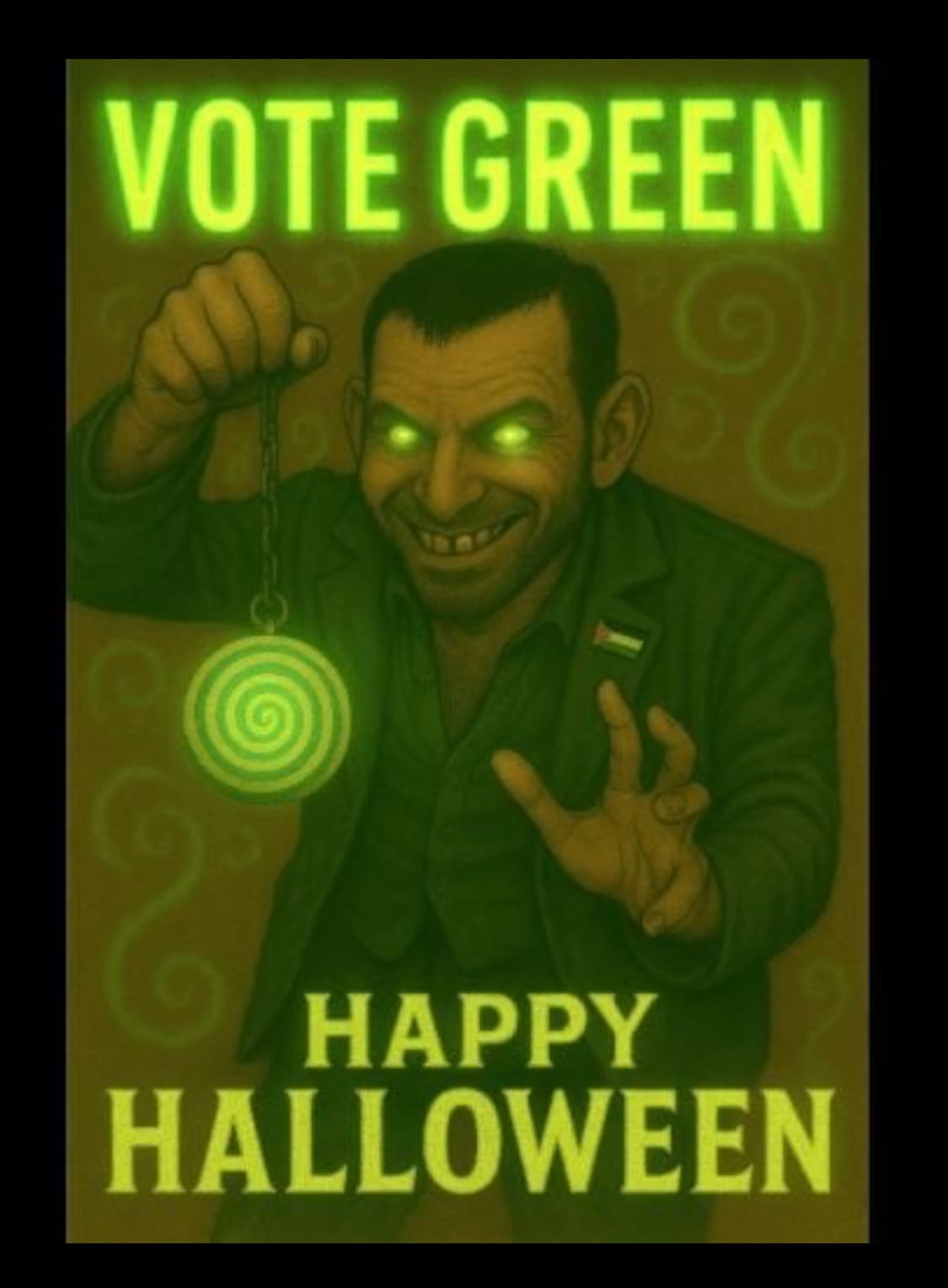
In the turbulent theatre of modern politics, the line between robust debate and outright bigotry is being systematically erased. A recent, stark example emerged from the official Facebook page of ‘Reform UK Brighton & Hove’, which posted an antisemitic graphic depicting Green Party leader Zack Polanski. The image, deliberately crafted with tropes and imagery drawn from the well of Nazi propaganda, was not a mere political misstep; it was a calculated act of hatred. This incident, however, is not an anomaly. It is the logical culmination of a political strategy that has, for years, normalised the rhetoric of division, revealing a frightening trajectory from coded language to overt fascist symbolism.
The Brighton & Hove Green Party was right to condemn the post in the strongest possible terms. As their statement highlighted, Zack Polanski is only the fifth Jewish leader of a UK political party in history. To depict him using antisemitic caricatures is not just an attack on a political opponent but an attack on an entire community, dredging up centuries of persecution that culminated in the Holocaust. The image was, as the Greens stated, “beneath contempt.” But the true terror lies in its predictability. For Reform UK and the political currents it represents, this is not a bug in the system; it is a feature.
This act of antisemitism is part of a broader, well-documented pattern. Nationally, the party and its predecessor have been accused of fostering a climate where racism and xenophobia can flourish. From Nigel Farage’s infamous “breaking point” poster during the Brexit referendum—widely condemned as reminiscent of Nazi propaganda—to repeated instances of candidates and officials expressing bigoted views, the party has positioned itself at the forefront of a rising tide of hatred. The graphic targeting Polanski is not an isolated incident but a continuation of this platform.
Alarmingly, the Brighton & Hove page demonstrated this pattern in microcosm. The antisemitic attack on Polanski was swiftly followed by another racist graphic, this time targeting New York Mayoral candidate Zohran Mamdani, falsely declaring him to be a “terrorist.” The throughline is unmistakable: a strategy of dehumanising political opponents by linking them to deeply ingrained societal fears and prejudices—be it antisemitic conspiracy theories or Islamophobic associations of brown-skinned individuals with terrorism. This is the playbook of fascism, and it is being executed with chilling precision on local social media pages.
This localised bigotry does not exist in a vacuum. The Greens’ statement notes that their own party members were subjected to explicit antisemitic abuse in the public gallery during a council meeting earlier in the same month. This points to a coarsening of public discourse, where the venom once confined to anonymous online forums is now spilling into the physical spaces of democracy. When hate speech is normalised by political parties, it empowers individuals to act upon it, creating a feedback loop of intimidation and fear.
The response from Brighton & Hove, a city with a proud history of anti-fascism and a tragic memory of the 2016 murder of MP Jo Cox, is a testament to the resilience of community values. The city’s identity is fundamentally rooted in being “anti-racist, anti-fascist and standing firm against hatred.” The recent Stand Up to Racism Unity March, which drew over 600 people, including local Greens, is a powerful manifestation of this spirit. It is a conscious, collective reaffirmation that such hatred will not be passively accepted.
However, the battle is not merely one of street protests or strongly-worded statements. It is a battle for the soul of political discourse itself. The danger of incidents like the Reform UK Facebook post is that they seek to desensitise the public. Each act of bigotry, if not met with overwhelming condemnation, makes the next one slightly easier to commit. The dog whistles become sirens, and the boundaries of acceptable speech are pushed ever further into the territory of hate.
The targeting of Zack Polanski and Zohran Mamdani using classic fascist tactics is a stark warning. It demonstrates that the threat is not abstract or historical but present and active within our contemporary political landscape. To dismiss it as mere “trolling” or an overzealous local activist is to misunderstand its nature entirely. This is a coordinated political strategy that preys on division.
In standing against this, the people of Brighton & Hove, and all those who value a pluralistic and tolerant society, are defending more than just a political leader. They are defending the foundational principle that our democracy must be a contest of ideas, not a war of identities. The unmasking is complete; the face of modern fascism is visible on our social media feeds. The only remaining question is whether we have the collective will to look it in the eye and say, unequivocally, “never again.”