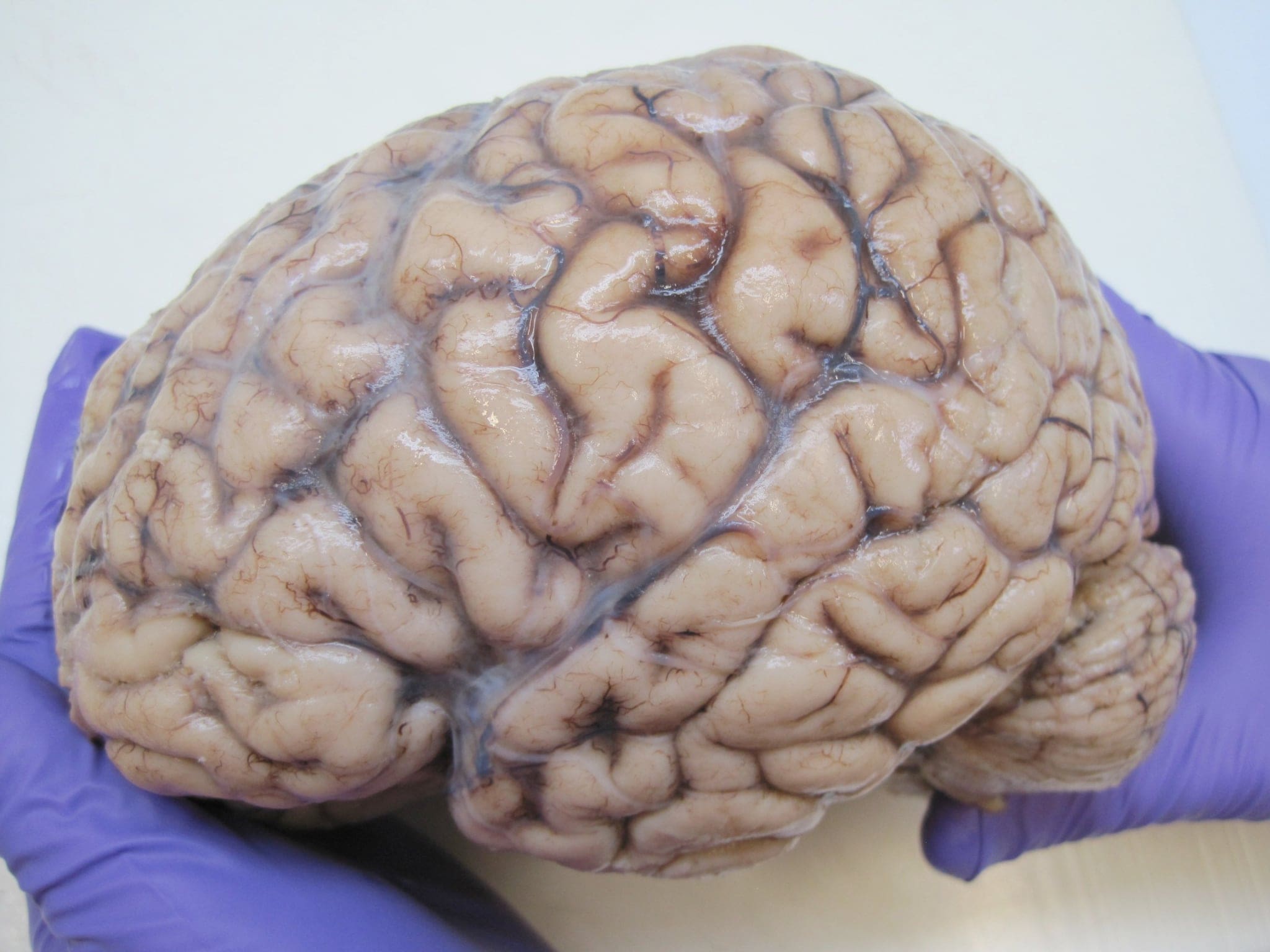
There were differing reasons for people voting to leave the EU, but research has found that those who organised and managed the message during the campaign had a specific demographic in mind. Those behind the scenes used language and imagery that appealed to those with lower cognitive ability and avoided the more complex issues at the heart of the debate.
The Complexity of the Issue:
EU membership is an incredibly complex subject, encompassing trade law, regulatory alignment, foreign policy, and constitutional nuance. Individuals with higher cognitive ability and education have greater cognitive capacity and resources to engage with this complexity. They are better equipped to weigh the probabilistic economic forecasts against the more certain arguments about sovereignty. For those finding the topic overwhelming, a simpler, emotionally resonant narrative was more appealing and easier to process.
Anxiety, Threat Perception and Nationalism:
Research consistently shows that feelings of threat—whether economic or cultural—are a strong predictor of support for populist and nationalist policies. Socio-economically disadvantaged communities, often left behind by globalisation, felt a very real sense of threat. Academics like Prof. Bobby Duffy in his book “The Perils of Perception” argues that cognitive ability interacts with this. Those with lower cognitive skills, often concentrated in these disadvantaged areas, may be more susceptible to simplified, us-versus-them narratives that identify a clear source of their problems (in this case, the EU and immigration) and offer a simple solution (leaving).
Media Literacy and Misinformation:
The referendum campaign was marked by contested claims and misinformation. A higher ability to think critically and analytically is a key component of media literacy. It allows an individual to question the source of information, check its plausibility, and cross-reference it with other data. Studies found that belief in specific, incorrect claims (such as the UK’s immediate ability to stop all immigration or the £350 million NHS figure) was a powerful narrative promoted by the Leave campaign. Those less equipped to critically evaluate these claims were more likely to believe them and base their vote on them.
Lower Intelligence Studies
The Swinging Pendulum of Education: One of the starkest divides was educational. A comprehensive study by the UK in a Changing Europe initiative found that individuals with a university degree were significantly more likely to vote Remain (around 68%) than those with only GCSE-level qualifications or below (approximately 70% of whom voted Leave). This educational gap remained even after controlling for factors like age, income, and ethnicity.
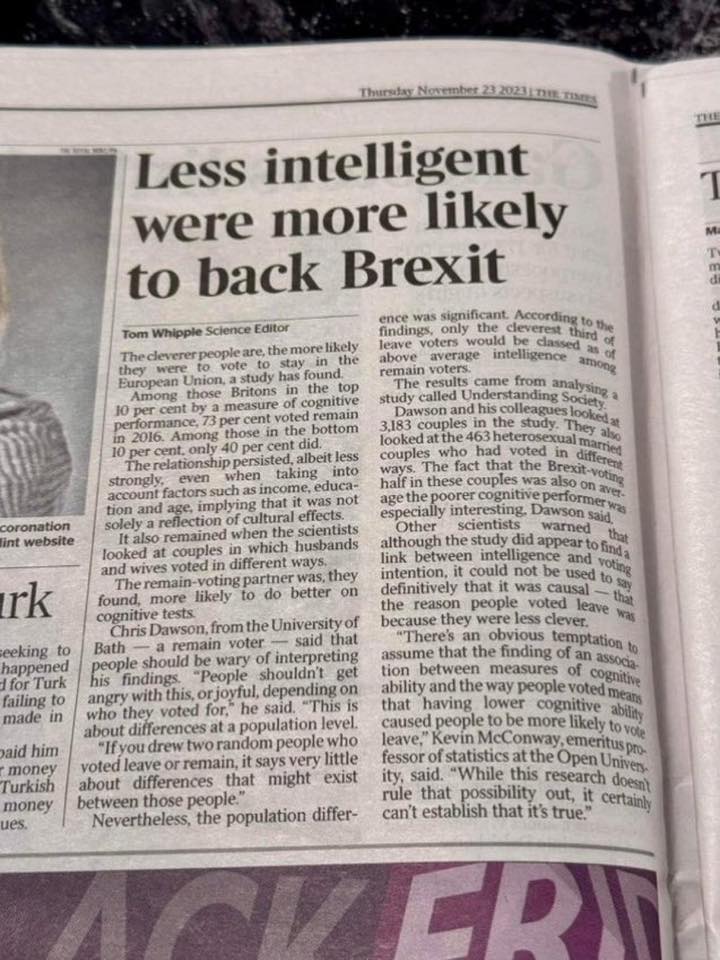
Cognitive Ability and Numeracy: Research published in the Journal of Elections, Public Opinion and Parties by academics from King’s College London and the University of Liverpool analysed data from the British Election Study. They found that individuals who scored lower on a test of numerical ability were substantially more likely to vote Leave, even after accounting for education and other demographic variables. This suggests a link not just with formal schooling, but with specific cognitive skills like processing numerical information.
Cognitive Reflection vs. Gut Instinct: Perhaps the most insightful research comes from studies on “cognitive reflection” – the ability to override an intuitive, gut-response and engage in deliberate, analytical thought. A study by academics from the London School of Economics and the University of Oxford found that individuals who performed poorly on the Cognitive Reflection Test (a simple test designed to have an intuitively appealing but wrong answer) were far more likely to support Brexit. The theory is that the Leave campaign’s powerful, emotionally resonant slogans like “Take Back Control” and warnings about £350 million a week for the NHS were highly effective on those who process information more intuitively.
Reform UK Are At It Again
Having managed to fool so many on the Leave campaign, no matter what one thinks of the EU, Reform UK are chasing the same demographic with similar tactics. However, Reform UK’s political strategy is not merely misguided; it is a calculated and corrosive assault on the very principles of reasoned democratic discourse. The party has perfected the art of demagoguery, constructing a campaign message that is less a political platform and more a masterclass in cynical exploitation. Its tactics rely on a deliberate and malicious simplification of profoundly complex issues, reducing the daunting challenges of a modern economy, globalised trade, and international diplomacy to a series of crude, nativist slogans. This is not an attempt to educate or elevate public understanding but to inflame base instincts and channel legitimate anger towards a pantheon of scapegoats—the immigrant, the establishment elite, and the foreign court—all while offering vacuous, unworkable solutions that collapse under the slightest intellectual scrutiny.
This predatory approach is specifically engineered to target those who feel disenfranchised and left behind, a strategy that is as transparent as it is reprehensible. By preying on the anxieties of voters who may lack the time, resources, or educational background to deconstruct their facile arguments, Reform UK engages in a form of political malpractice. They offer the seductive but poisonous lie that simple solutions exist for complex problems, a message delivered with the bluster of common sense to mask its utter intellectual bankruptcy. This is not about empowering the marginalised; it is about manipulating their frustration, turning despair into a weapon to be wielded against the very fabric of a tolerant, evidence-based society. It is a strategy built not on building trust, but on fostering a deeper, more profitable resentment.
Ultimately, Reform’s project is an exercise in destructive nihilism, dressed in the garb of patriotic renewal. Their tactics reveal a party wholly unconcerned with the practical business of governance or the long-term national interest. Their goal is not to build a coherent programme for government, but to tear down, to sow chaos, and to capitalise on the wreckage. They are political arsonists, setting fire to civic trust and social cohesion for a fleeting chance at relevance. To endorse their methods is not merely to support a different set of policies; it is to sanction the replacement of informed debate with angry polemic, and to celebrate the triumph of reckless grievance over sober responsibility.
The uncomfortable truth is that large swathes of the population are unable to cope with the complexities required for a vibrant democracy to exist. Many are easily duped and help create a society that further exacerbates the issues that destroy many people’s lives.
The most destructive being:
- Precarious Work and Job Insecurity: The drive for flexible, cost-effective labour has led to a rise in zero-hour contracts, the gig economy, and temporary work. This creates chronic financial uncertainty, makes long-term planning (like getting a mortgage) nearly impossible, and erodes workers’ rights and bargaining power.
- Runaway Inequality and Wealth Concentration: There is a tendency for wealth to accumulate at the very top of hierarchies. This creates vast disparities in income and opportunity, leading to a segregated society where social mobility stagnates and the influence of the wealthy can undermine democratic processes.
- The Commodification of Essential Services: Treating fundamental human needs—such as healthcare, housing, education, and water—as commodities to be profited from leads to exclusion and crisis. Soaring house prices, student debt, and the strain on the National Health Service from private contracting are key examples of this destructive effect.
- Systematic Exploitation of Labour: The profit motive inherently encourages businesses to minimise labour costs. This can result in wages that do not reflect the true value created by workers, poor working conditions, and the erosion of benefits, contributing to in-work poverty and burnout.
- The Cult of Consumerism and Overconsumption: A core engine is the constant creation of new wants. This fuels a culture of overconsumption, built-in obsolescence, and immense waste, which has devastating consequences for the planet’s resources and contributes to personal debt and anxiety.
- Chronic Financial Instability and Boom-Bust Cycles: The system is inherently prone to speculative bubbles and economic crises, such as the 2008 financial crash. The consequences—austerity, public service cuts, and unemployment—are disproportionately borne by ordinary people, not the financial institutions that often cause the instability.
- Erosion of Community and Social Bonds: By prioritising competition and individualism, communal values are fractured. The focus on personal financial success often comes at the expense of social connection, community cohesion, and collective wellbeing, leading to increased loneliness and social fragmentation.
- The Profit Motive Over Public and Environmental Health: When the primary goal is shareholder value, corporations have a history of downplaying or ignoring the negative externalities of their actions. This includes environmental degradation, pollution, and the marketing of unhealthy products (like sugary drinks or fast food), which create long-term public health crises.
- The Prioritisation of Growth Above All Else (GDP): Society’s success is narrowly measured by endless economic growth (GDP). This relentless pursuit often ignores crucial metrics like wellbeing, life satisfaction, and environmental sustainability, creating a society that is richer but not necessarily happier or healthier.
- Psychological Distress and Alienation: The pressures of constant competition, financial anxiety, and defining one’s worth by career success and material possessions contribute significantly to mental health issues. Furthermore, many people feel alienated from the fruits of their labour and lack control over their work, leading to a sense of powerlessness and disconnection.
In conclusion we enable something bad to become something much worse.