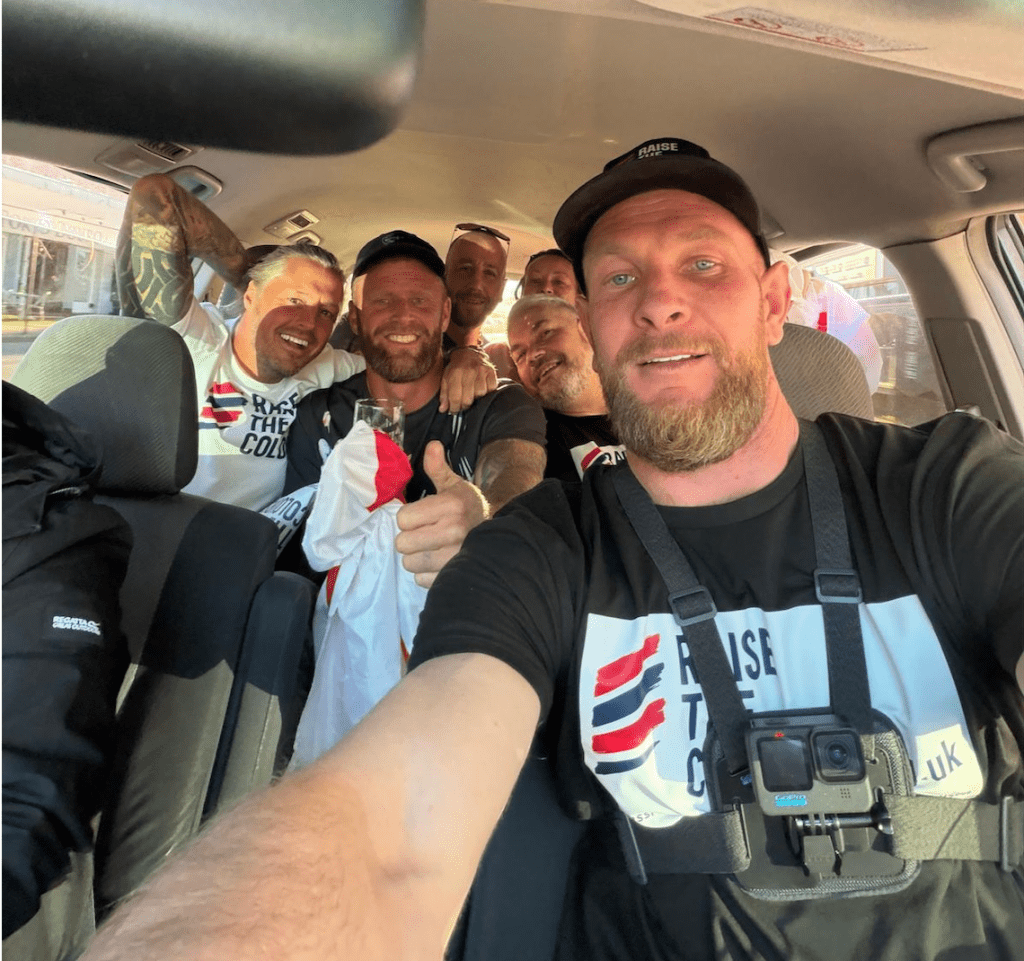
The murder charge brought against 36-year-old Billy Allison has placed renewed scrutiny on the increasingly controversial far-right network surrounding the group “Raise the Colours” and the atmosphere of intimidation critics say it has helped cultivate.
Allison, from Solihull, appeared before magistrates on Wednesday charged with the murder of Matthew O’Gara and causing grievous bodily harm with intent against a second man, Adam Cooper, following the violent incident at the Ricco and Loren bar in Lichfield on Sunday night. O’Gara later died in hospital from his injuries, while Cooper was discharged after treatment. Allison has been remanded into custody and is due before Stafford Crown Court.
Police have not stated any motive for the attack and Allison is legally presumed innocent unless convicted in court. However, the revelation that he has been linked online to Raise the Colours has intensified concern about the extremist ecosystem that has grown around the group’s activities.
Raise the Colours presents itself as a patriotic organisation focused on displaying St George’s flags in towns and cities across England. Yet opponents, community organisations and local authorities have repeatedly accused the movement of fostering intimidation, racial hostility and division under the cover of nationalism.
Campaigners in Birmingham previously described the group’s “Battle of Stirchley” campaign as a deliberate attempt to provoke ethnic tensions in multicultural neighbourhoods. A community statement signed by hundreds of residents accused Raise the Colours activists of verbal abuse, harassment and online intimidation after local people objected to mass flag displays.
The group has also faced growing police attention. Earlier this year, Raise the Colours co-founder Ryan Bridge was arrested on suspicion of racially and religiously aggravated public order offences following incidents in Oxfordshire. Thames Valley Police confirmed the arrest as part of an investigation into allegations of harassment and intimidation.
Oxfordshire County Council went even further, formally condemning the organisation’s activities as acts of “intimidation and division”. Council leader Liz Leffman said residents had reported feeling “distressed, unwelcome and unsafe” as a result of the group’s campaigns.
Critics argue that organisations like Raise the Colours deliberately blur the line between performative patriotism and aggressive far-right activism. While members often insist they are merely celebrating English identity, anti-racism campaigners say the movement’s rhetoric, targets and online networks consistently overlap with extremist politics and anti-immigration agitation.
That context now hangs heavily over the Lichfield tragedy.
Matthew O’Gara has been widely remembered as a popular businessman and valued member of the local community. Tributes have poured in from friends, hospitality venues and Lichfield Rugby Club following his death.
Meanwhile, Staffordshire Police continue to appeal for witnesses and footage connected to the incident.
The case is now likely to fuel further debate over the consequences of increasingly aggressive nationalist movements operating across Britain. While the courts will determine Allison’s guilt or innocence, campaigners say the broader culture surrounding groups like Raise the Colours cannot continue escaping scrutiny simply because it wraps itself in flags and slogans about patriotism.