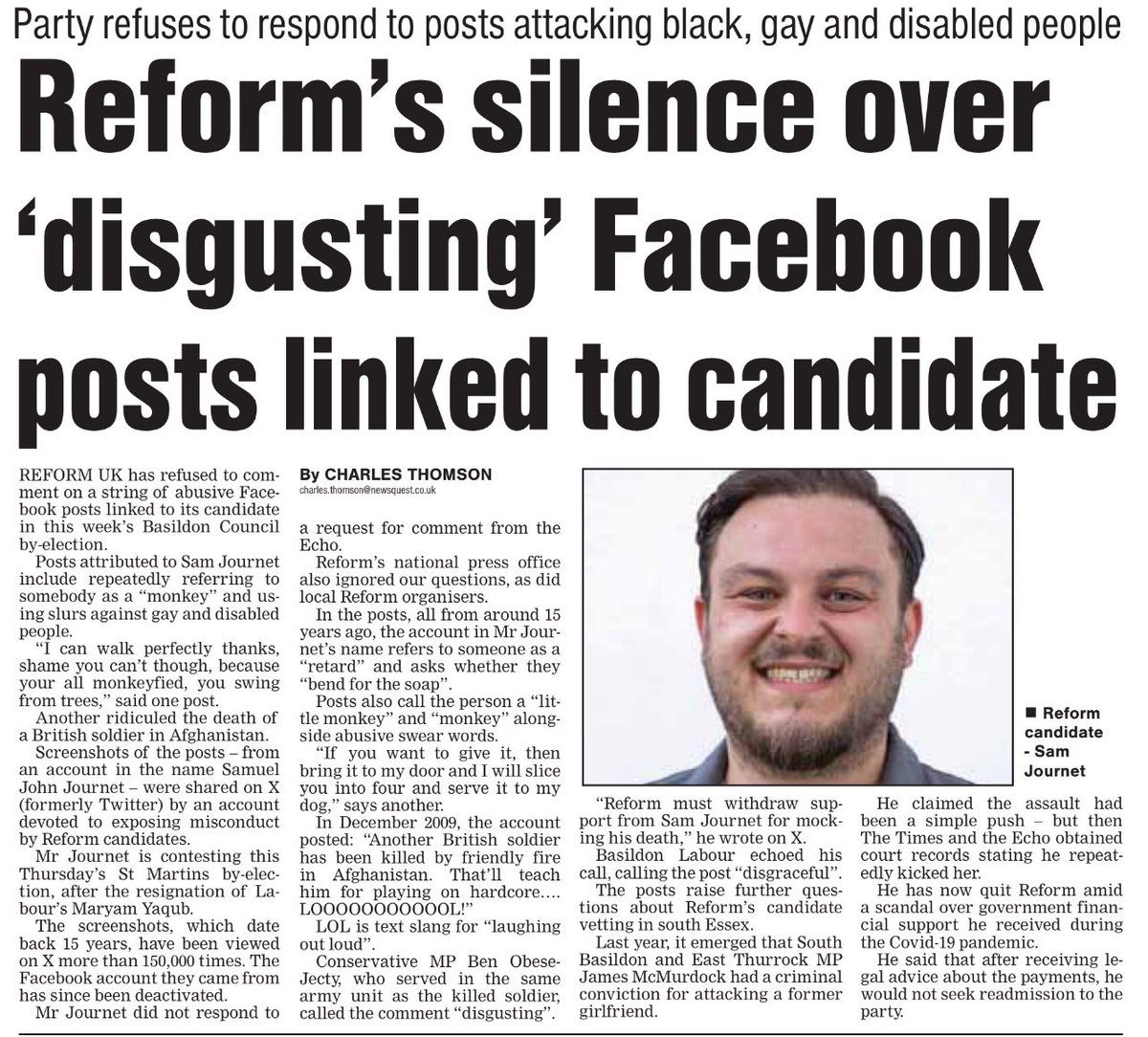
Sam Journet has been elected Mayor of Basildon following a controversial local political arrangement involving Conservative and Reform UK councillors, prompting scrutiny from opposition figures and campaign groups over standards in local governance.
According to reporting and campaign commentary from Reform Watch, Journet was subject to close attention during the run-up to the local elections. Further reporting by Byline Times has previously set out a series of allegations relating to his conduct in public office and within political activity. These include claims of bullying and intimidation behaviour, which he has not been found guilty of in any court of law. In addition, it has been alleged that a former Reform colleague with dyslexia accused him of using the term “thick” towards her. These allegations remain disputed and have been reported in the context of political coverage rather than formal legal findings.
Separately, Byline Times has also reported that Journet was asked to apologise following the online sharing of footage involving a disabled young man, with critics arguing the material may have been used in a way that could be perceived as shaming. Again, these accounts form part of media reporting and have not resulted in criminal convictions.
It has also been reported that Journet was arrested at Basildon Council offices last year following complaints about his conduct, though the outcome of that incident has not been presented in the public domain as a conviction or disciplinary conclusion.
The political backdrop to his election has drawn further criticism. Conservative councillors have been accused by opponents of facilitating his rise to the mayoralty while simultaneously taking control of cabinet positions within the authority. Critics argue this arrangement raises questions about consistency in political judgement and governance priorities, particularly given the profile of concerns that have been raised publicly.
In parallel, Journet has also been linked to a role within Essex County Council, where he has been reported to hold responsibilities connected to education, Special Educational Needs (SEN), and skills. This has intensified debate among political commentators, with some arguing that individuals overseeing sensitive service areas should be held to particularly high standards of conduct and scrutiny.
Supporters of the arrangements have pointed to the democratic outcome of local elections, arguing that councillors are elected to make leadership decisions within councils and that allegations alone should not disqualify individuals from office.
However, critics maintain that the combination of unresolved allegations and senior civic responsibilities raises broader questions about judgment, accountability, and public trust in local government. The controversy continues to circulate in local political discourse as both councils and elected representatives begin their new terms in office.