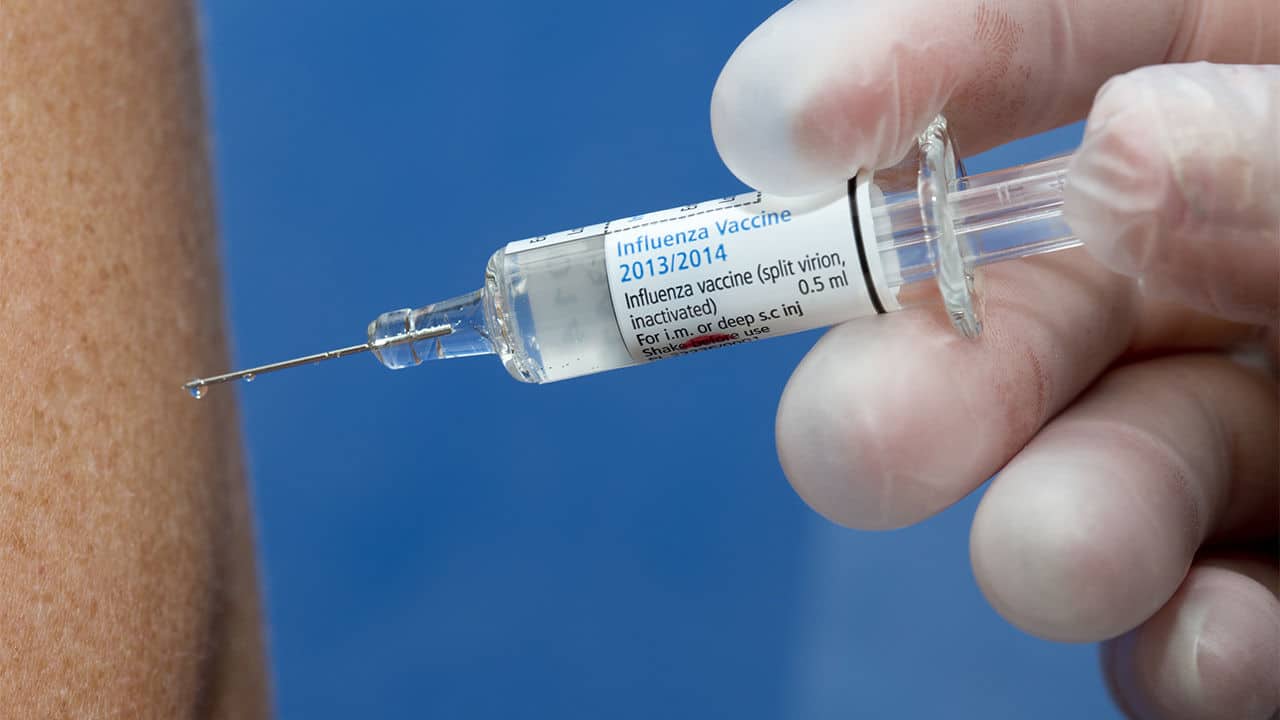
Young people in the Weymouth, Portland and Chickerell areas of Dorset can take up their second vaccination for Meningitis B next month.
Dorset HealthCare is rolling out the programme to more than 6,500 eligible young people after three people locally contracted the disease earlier this year. All three have made a full recovery.
Dorset Council, The Trust and the UK Health Security Agency (UKHSA) are urging local pupils in school years 7 to 13 to attend a clinic from 1 June for their vital second vaccination to give protection against Meningitis B.
Following the infections in Weymouth in April, hundreds of staff from Dorset HealthCare, Dorset Council and other local organisations stood up a rapid vaccination programme, running clinics at schools across the Weymouth/Portland/Chickerell area.
Just under 76% of the young people eligible have received the first dose of the vaccine, but a second dose is required to give full protection.
And from Monday, 1 June, clinics will again be running at All Saints, Wey Valley, Atlantic and Budmouth academies, including evening and Saturday sessions for anyone else in the target age group who lives in Weymouth but doesn’t attend one of these settings, who goes to schools elsewhere or isn’t in full time education. Reminder letters have gone out to parents and young people via the schools, and you can also find the full list of clinics here:
Date – Time – Venue/Location – Who will be vaccinated
Monday 1 June – 9:30am -3pm – All Saints – All Saints Years 7, 8, 9,10, 11
Monday 1 June evening – 4pm – 7:30pm – All Saints venue – Not in Education, Employment or Training (NEET), Home Educated, St Osmunds,
Wednesday 3 June – 9am – 3pm – Wey Valley – Wey Valley years 7,8,9,10,11(year 11 can choose to attend evening session if preferred)
Wednesday 3 June evening- 4pm – 7:30pm – All Saints Venue -Thomas Hardye, Dorchester middle school
Friday 5 June – 9:30 – 3pm – Atlantic – Atlantic years 7,8,9,10,11
Friday 5 June evening – 4pm – 7:30pm – All Saints venue – ANY (but priority to Year 11’s)
Saturday 6 June – 9am – 1pm – Budmouth – Budmouth Years 7,8,9
Saturday 6 June – 1:15pm – 3:45pm – Budmouth – Budmouth Years 11 and 13
Saturday 6 June – 4pm – 7pm – Budmouth – Budmouth Years 10 and 12
Saturday 13 June – 9pm – 1:30pm – Budmouth venue – Coastlands
Saturday 13 June – 2pm – 5pm – Budmouth venue – ANY
Young people are eligible for the vaccine if:
- they are a resident in Weymouth or Portland or Chickerell and in current school years 7 to 13 (or equivalent), or anyone not in full time education who would be in one of these year groups, or
- they attend an educational setting in the Weymouth, Portland or Chickerell area and are in current school years 7 to 13 (or equivalent).
They should attend the clinic in their own school if possible, but if they missed this, did not have an in-school clinic, are not in school, or go to school out of area, they can attend any evening clinic at All Saints Academy or one of the Saturday clinics at Budmouth Academy, bringing their letter and proof of ID. Young people aged under 16 will need to be accompanied by a parent or carer.
If you are eligible and missed the first vaccination, you can have this at one of the upcoming clinics – just let the team know this is your first dose.
Currently there is no evidence of spread of MenB outside of the Weymouth area. The risk to other children living in Dorset is very low. Because of this, children and young people in schools, further education colleges and early years settings outside of the Weymouth area do not need to access the vaccine.
Dr Beth Smout, Interim Deputy Director of Health Protection at UK Health Security Agency (UKHSA) South West, said:
“We are really pleased to have seen such high uptake of the first dose of the vaccine. Thank you to all the young people and their families for coming forward to get the protection they need so far and to healthcare partners for delivering this service to the local community.
“We are now inviting anyone in this cohort to come forward for the second dose when offered by their school or to attend one of the evening clinics if it won’t be offered in school. This is really important to help protect against further cases and give full protection.
“Thankfully we have seen no further cases of meningitis, but it’s still important to recognise the signs and symptoms. Symptoms can include a fever, headache, rapid breathing, drowsiness, shivering, vomiting and cold hands and feet. Septicaemia can also cause a characteristic rash that does not fade when pressed against a glass. If the disease is suspected, you should seek immediate medical attention as the disease can progress rapidly.”
Further information on Meningitis and symptoms to look out for is available on the UKHSA blog – https://ukhsa.blog.gov.uk/2025/10/31/what-is-meningitis-symptoms-risks-and-how-to-protect-yourself/ or the NHS website – https://www.nhs.uk/conditions/meningitis/