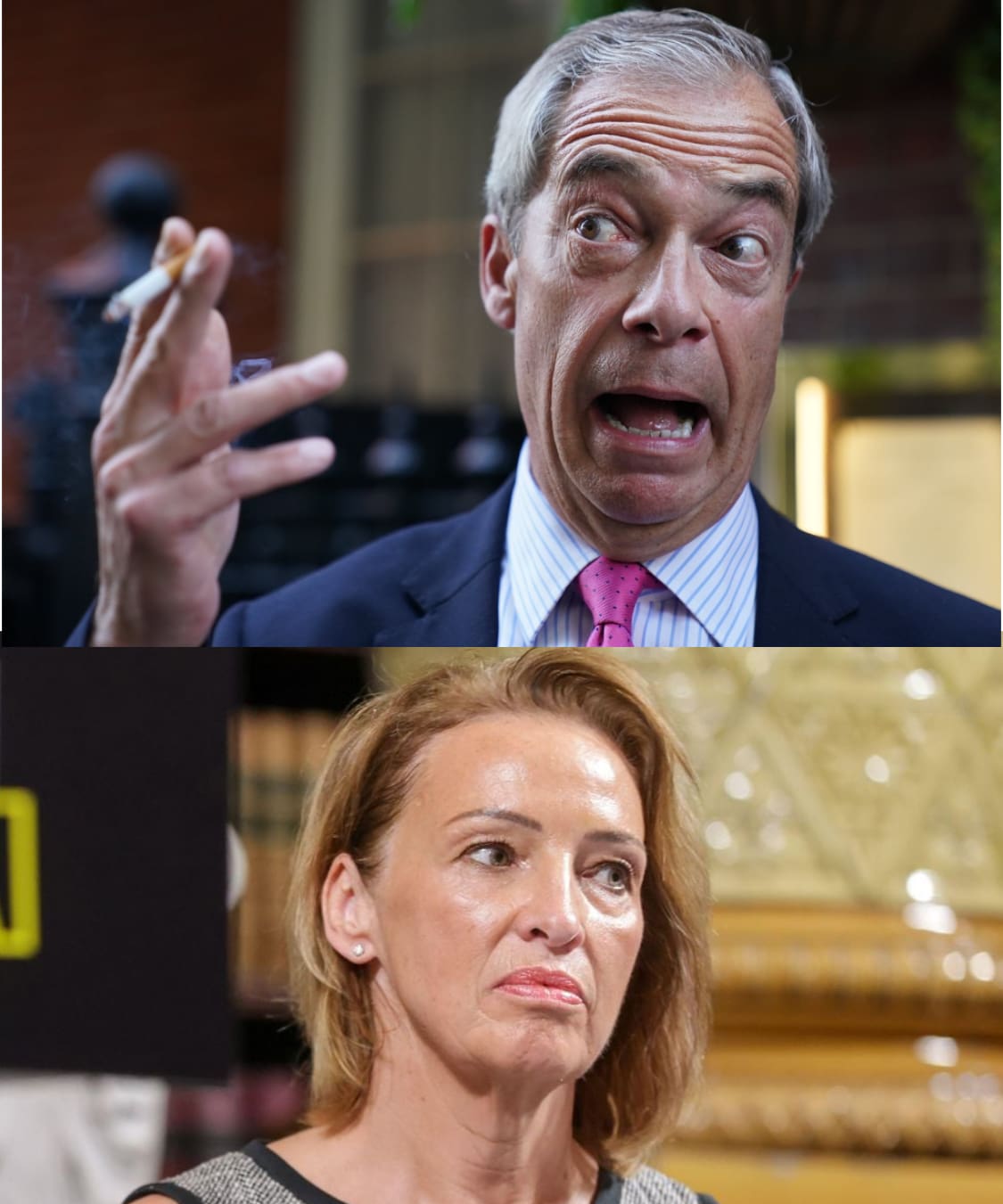
Nigel Farage is a racist and has been a racist for many decades.
Therefore, the spectacle of Nigel Farage defending his MP, Sarah Pochin, after she raged about adverts being “full of Black people, full of Asian people,” was not a surprise. It was a scripted scene in a decades-long production. Farage’s political career is not merely punctuated by racism; it is built upon it. What follows is a damning timeline of a political project dedicated to stoking racial and ethnic division for power.
The UKIP Years (2006-2016): Mainstreaming the Politics of Resentment
Under Farage’s leadership, the UK Independence Party (UKIP) transformed from a single-issue Eurosceptic group into a vehicle for anti-immigration and xenophobic sentiment.
- 2006-2014: The “Legitimate Concerns” Dog Whistle: Farage perfected the tactic of framing prejudice as reasonable grievance. He repeatedly spoke of voters’ “legitimate concerns” about immigration, a phrase that served as a blanket justification for discussions about Romanian neighbours and “border control” that were laden with ethnic anxiety.
- 2014: The “Romanian Men” Slur: In a televised debate, Farage stated, “You know what the difference is between having a Romanian living next door to you and a German? The answer is you’re a lot less likely to have the Romanian pop round and introduce themselves.” This was a clear, ethnic-based smear against an entire nation.
- June 2016: The “Breaking Point” Poster – A Point of No Return: Days before the Brexit referendum, Farage unveiled his most infamous creation: a poster depicting a long line of Syrian refugees under the words “Breaking Point.” The image was immediately condemned as reminiscent of Nazi propaganda. The then-PM David Cameron said it “disgracefully and deliberately” frightened people. Farage was unmoved; he had discovered the electoral power of overt, racialized fear.
The Rebrand: From Brexit Party to Reform UK (2019-Present)
As UKIP became toxic, Farage simply changed the logo, not the lyrics. The Brexit Party, and now Reform UK, continued the same mission with a fresh coat of paint.
- 2019: The “Invasion” Rhetoric: During the 2019 general election campaign, Farage repeatedly described migrants crossing the English Channel as an “invasion.” This dehumanizing language, a favourite of white supremacist groups, paints vulnerable people as a hostile military force, deliberately stoking panic and hatred.
- 2022-Present: Reform UK’s “Contract” with Prejudice: The party’s policy platform is a monument to xenophobia. Its flagship pledge to “Freeze Non-Essential Immigration” is a direct assault on the multi-ethnic, modern British economy. It brands entire categories of people—from care workers to family members—as “non-essential,” signalling a desire to return to a mythically homogeneous past.
The 2024 Election: A Roster of Bigotry Revealed
The 2024 campaign did not create Reform’s culture of racism; it exposed its pervasive nature. The party was revealed not as one with a “few bad apples,” but as an orchard where bigotry flourishes.
- June 2024: The Channel 4 Exposé: Undercover footage captured Reform campaigner Andrew Parker in Clacton using racial slurs, calling for migrants to be used as “target practice,” and describing the Pride flag as “degenerate.” Farage’s initial response was to cry “set-up,” attempting to shoot the messenger rather than confront the message.
- The Purge of Candidates: A cascade of Reform candidates were exposed for their vile views, forcing suspensions and revealing a party that actively attracts the far-right:
- Robert Lomas: Posted about a “final solution” for Muslims.
- Ian Gribbin: Wrote that Britain was “in desperate need of a Winston Churchill,” lamented the country had “imported a new religion” (Islam), and claimed women who suffered domestic violence were “asking for it.”
- Jonathan Kay: Stated that “the Islamification of our country must be stopped.”
- Mick Greenhough: Said migrants from Africa “have HIV and are riddled with disease.”
- Grant StClair-Armstrong: Called for the deportation of “all these bloody Muslims.”
- The Pochin Defence – The Final Nail: In this context, Sarah Pochin’s comments were not an outlier but the party’s official line, merely “poorly phrased.” Her complaint that seeing Black and Asian people in adverts “drives me mad” is the logical conclusion of a politics that treats diversity as a threat. Farage’s defence—that it was “ugly” but not racist because of “DEI madness”—is the core of his strategy: sanitize bigotry by framing it as a brave stand against “wokeness.”
An Indelible Stain
The timeline is unbroken. From smearing Romanians, to deploying Nazi-style propaganda, to dehumanising refugees as “invaders,” to building a party that attracts individuals who speak of “final solutions,” Nigel Farage’s political legacy is one of deliberate, calculated division.
He has never sincerely apologised for the “Breaking Point” poster. He has never purged his movement of its rotten core. Instead, he has created an ecosystem where racial grievance is currency and xenophobia is a valid political stance. To vote for Reform UK is not just to endorse a set of policies; it is to endorse a twenty-year campaign that has deliberately and consistently sought to make Britons fear their neighbours, based on the colour of their skin or their country of origin. It is a damning, and indelible, stain on British politics.