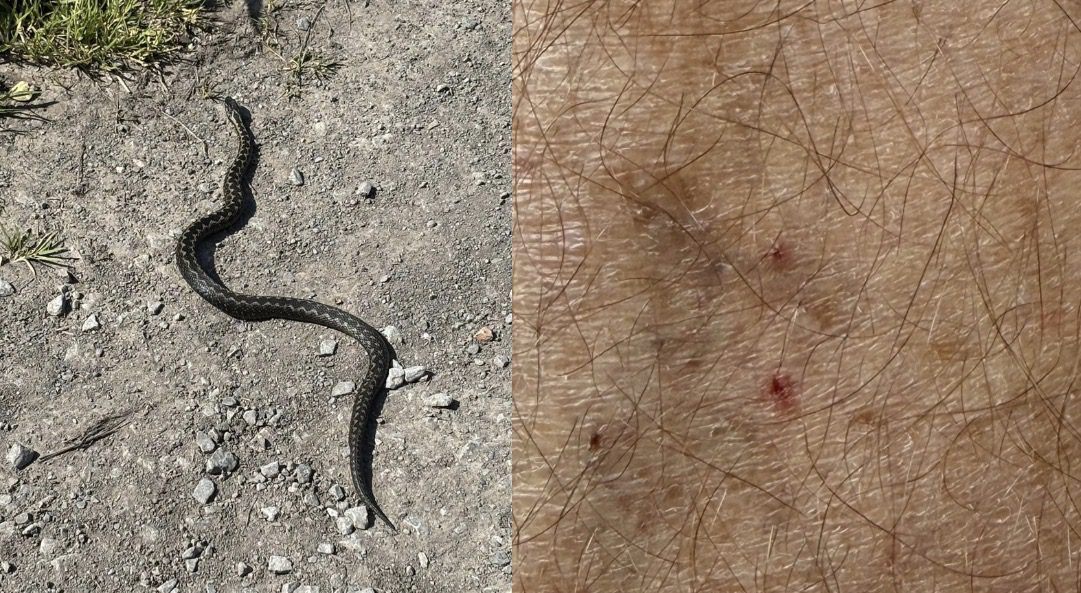
A Weymouth man was extremely fortunate when bitten by an adder at Colmer’s Hill in Bridport. The adder bite was a dry bite in which the snake failed to release venom from its venom sac. Thankfully, the man, who wishes to remain anonymous, only suffered puncture wounds and bruising.

The adder is the UK’s only venomous snake. Though relatively small and typically shy, it is capable of delivering a bite that, while rarely life-threatening, can cause significant pain and distress. Adders are commonly found across Dorset, especially in environments that the country has in abundance: coastal cliffs, grassy dunes, and heathland. As spring turns to summer, these snakes emerge from hibernation and are often seen basking in sunny spots, sometimes directly on footpaths.
For most people, the idea of encountering a snake in the British countryside is unusual. Yet the reality is that adders are a natural and important part of the ecosystem. They are not aggressive animals and will almost always retreat if given the chance. Problems tend to arise when they are accidentally disturbed, something that can easily happen when a dog runs ahead into long grass or undergrowth.
Dog walkers, in particular, should be alert to the risks. Curious dogs are far more likely than humans to investigate a snake, often with their noses, which puts them at greater risk of being bitten. In many cases across the UK, it is dogs, not people, who suffer the majority of adder bites each year. A startled adder will strike defensively if it feels threatened, and a dog bounding through its habitat can trigger that response in seconds.
The symptoms of an adder bite in humans typically include immediate pain, swelling, and bruising around the bite site. Some people may also experience nausea, dizziness, or mild shock. While fatalities are extremely rare, medical attention is always necessary. Anyone bitten should remain as calm and still as possible and seek urgent care, either by calling emergency services or going directly to A&E. Attempting old-fashioned remedies such as sucking out venom or applying a tourniquet can do more harm than good.
For dogs, the situation can escalate more quickly. Swelling, lethargy, and signs of distress can appear rapidly, and veterinary treatment is essential. Without it, complications can become serious, particularly for smaller or older animals. This is why awareness among dog owners is so important at this time of year.
Simple precautions can significantly reduce the risk of an encounter turning into an incident. Keeping dogs on a lead in areas known for wildlife, especially during warm, sunny days, is a sensible first step. Sticking to well-trodden paths, avoiding long grass, and maintaining good recall control all help limit the chances of a dog stumbling across an adder. Owners should also be mindful of where their pets are sniffing or exploring, particularly in quiet, undisturbed patches of land.
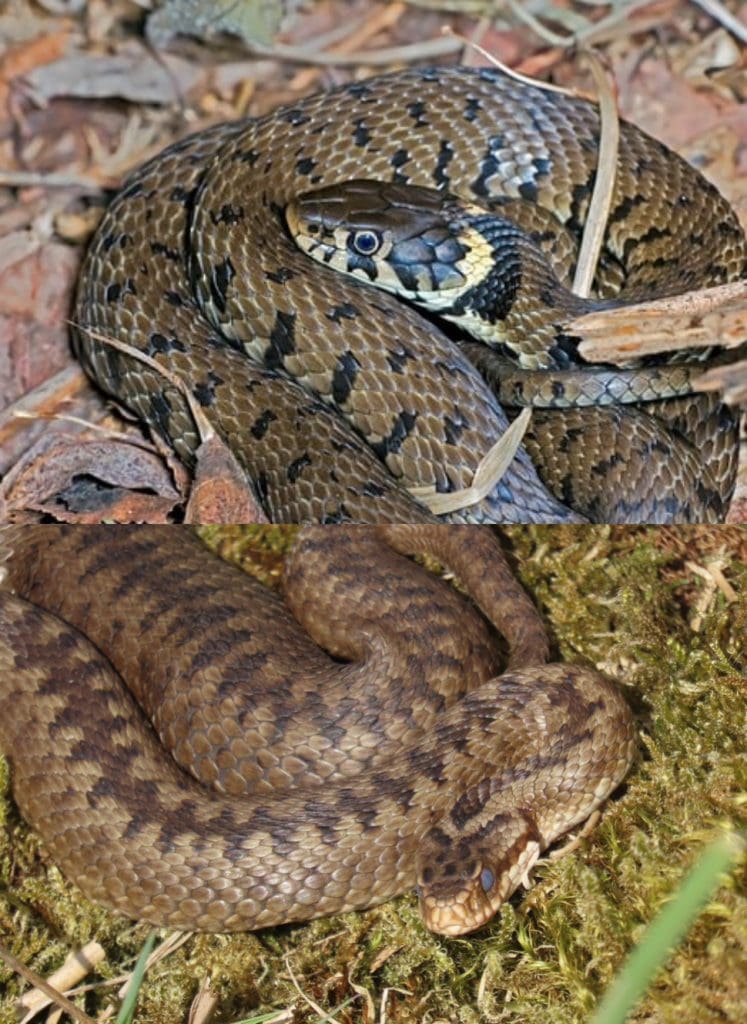
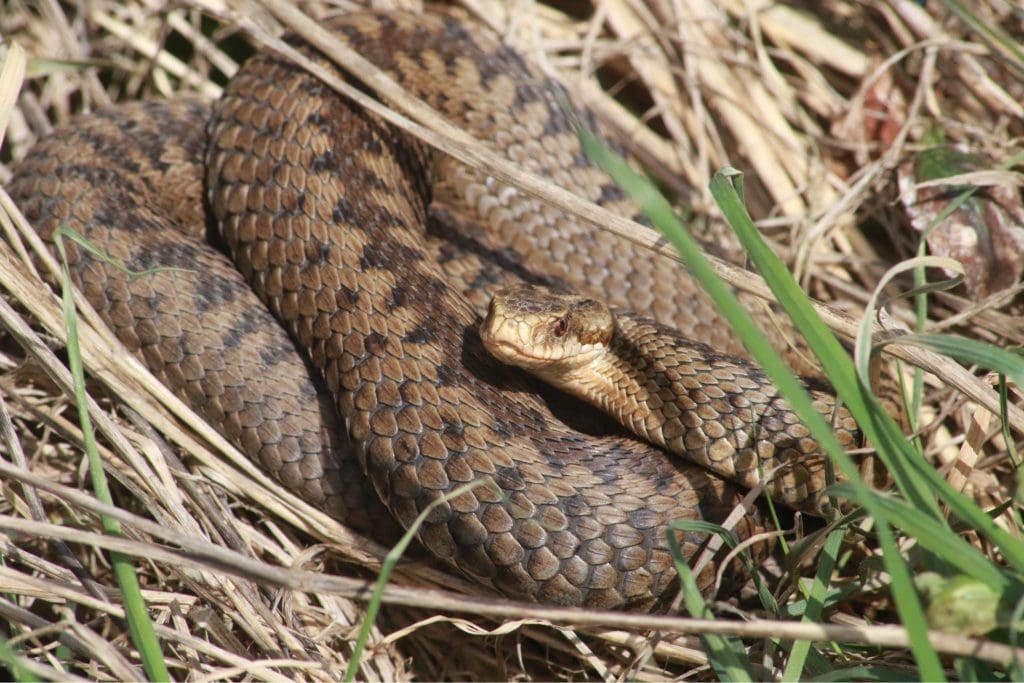
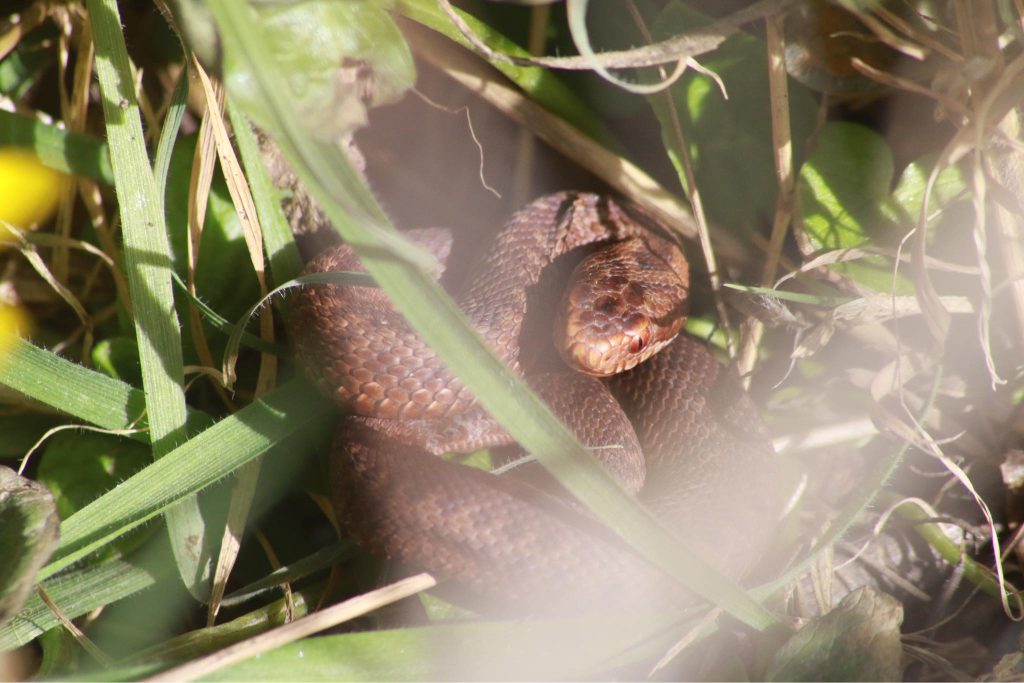
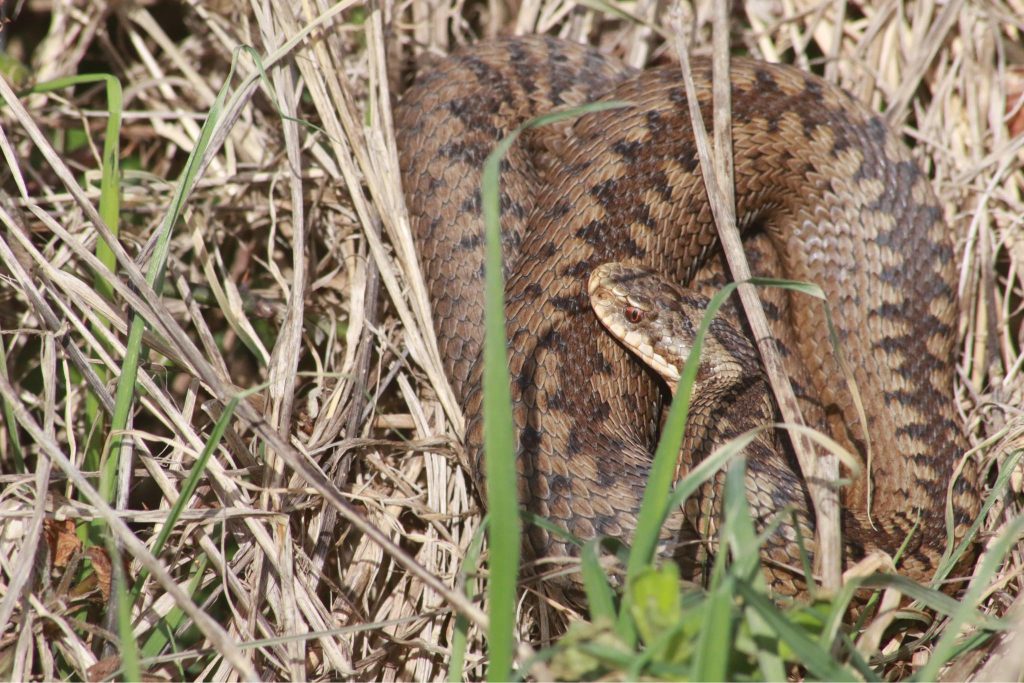
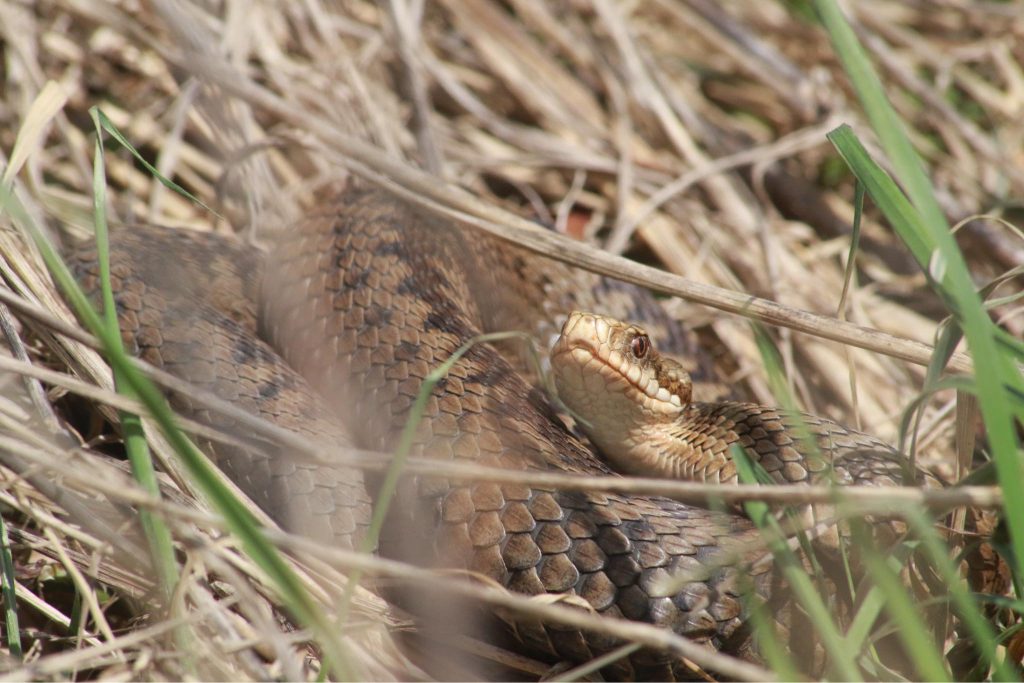
It’s equally important not to vilify the adder itself. These snakes play a valuable ecological role and are protected in the UK. They are not out to harm people or pets; they simply react when they feel cornered or threatened. Respecting their space is the most effective form of prevention.
As Dorset continues to enjoy warmer weather and longer days, the countryside becomes ever more inviting. But with that comes shared use of the landscape, with wildlife that has been there far longer than any of us. Whether or not the reported bite proves to be an isolated case, the message is clear: awareness and caution can make all the difference.
For dog walkers especially, a little extra vigilance now could prevent a painful and entirely avoidable encounter.