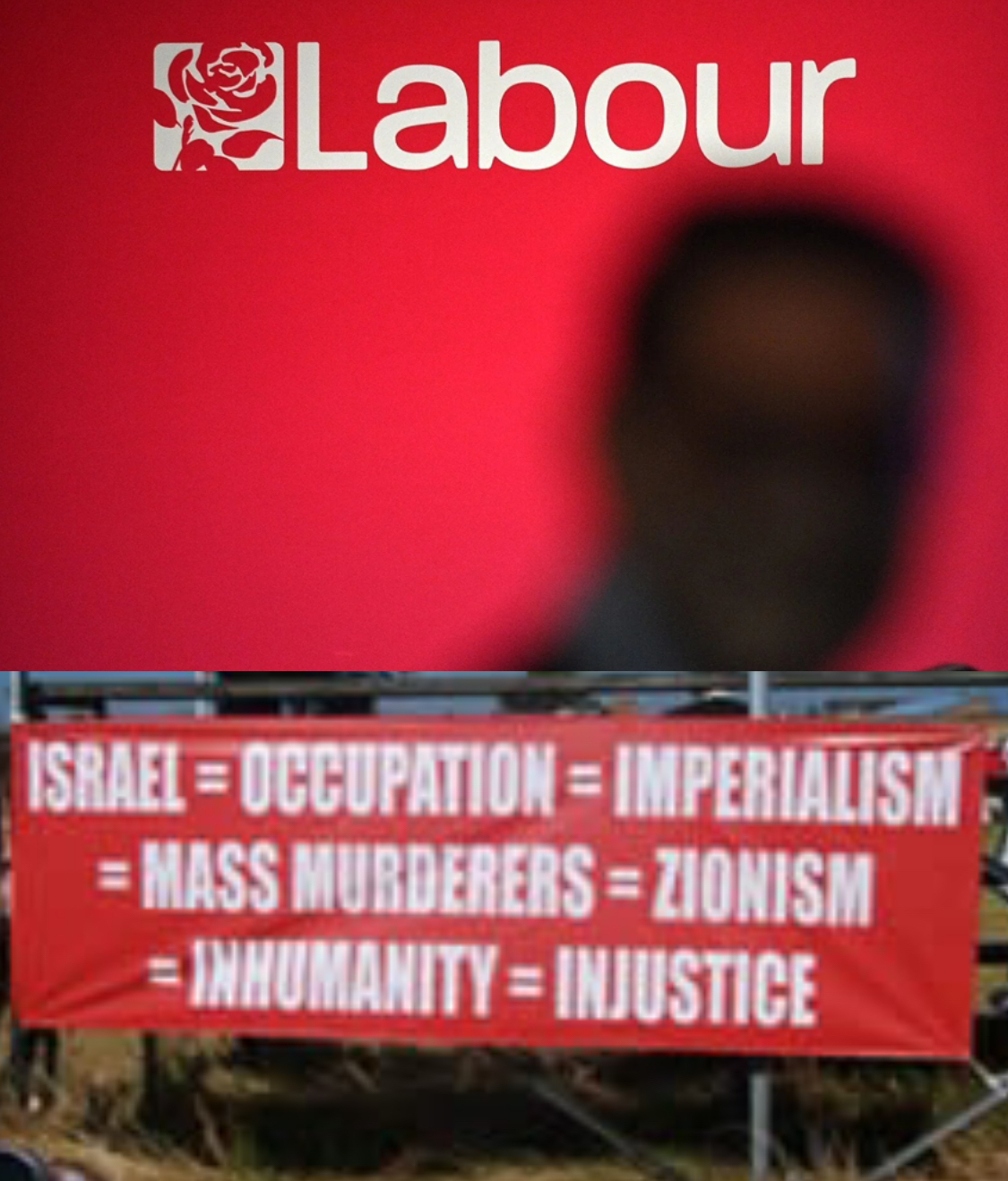
Those of us who describe the current Labour government as “Zionist” are usually pointing to its consistently strong alignment with the state of Israel in rhetoric and policy under Keir Starmer. This includes firm support for Israel’s right to defend itself, reluctance to impose meaningful sanctions over actions in Gaza or the West Bank and a broader effort within Labour to distance the party from the more critical stance it held under previous leadership. The leadership has also taken a hard line against pro-Palestinian voices within the party, which opponents argue reflects an ideological shift toward prioritising pro-Israel positions in both domestic politics and foreign policy.
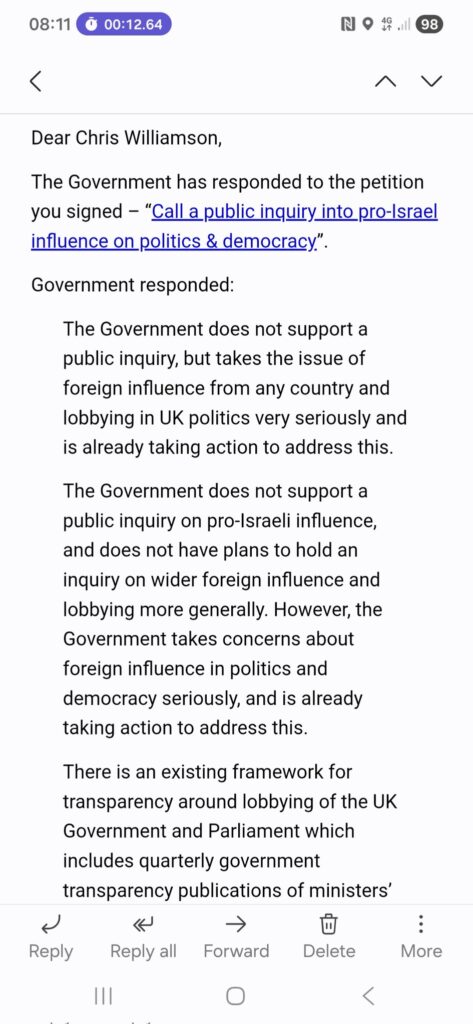
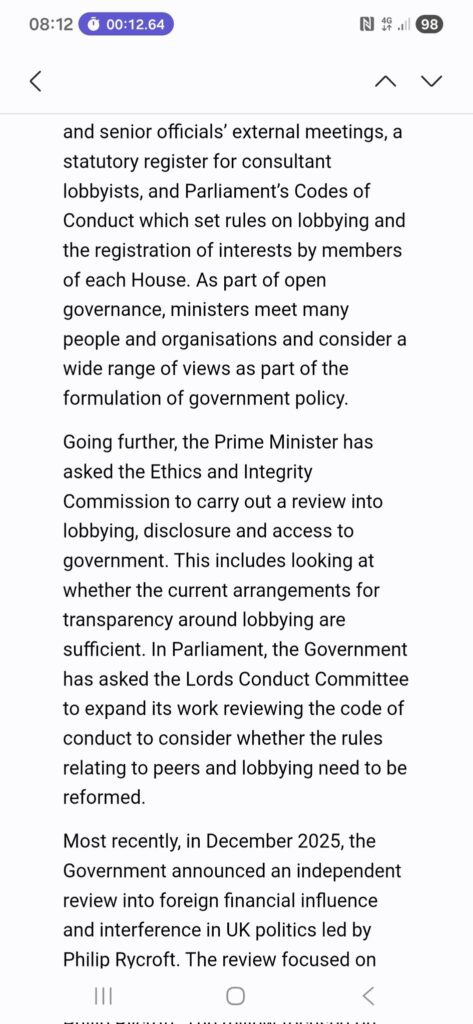
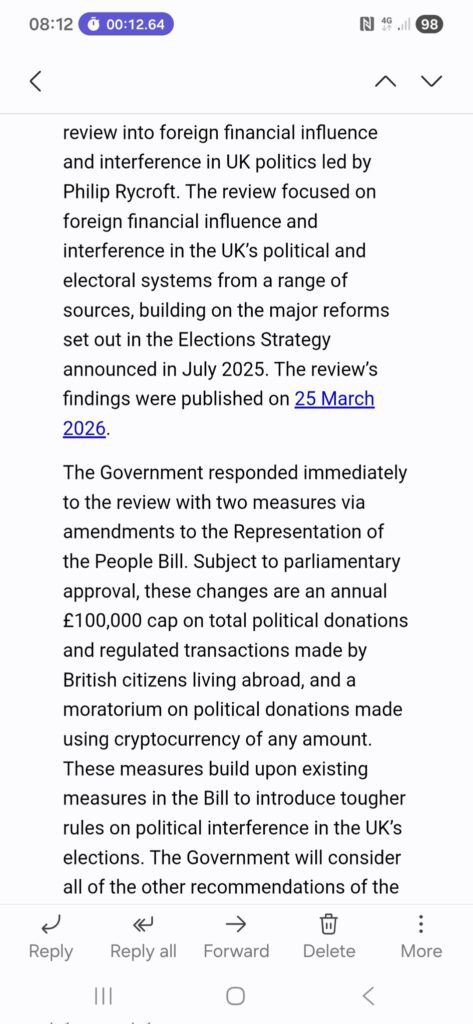
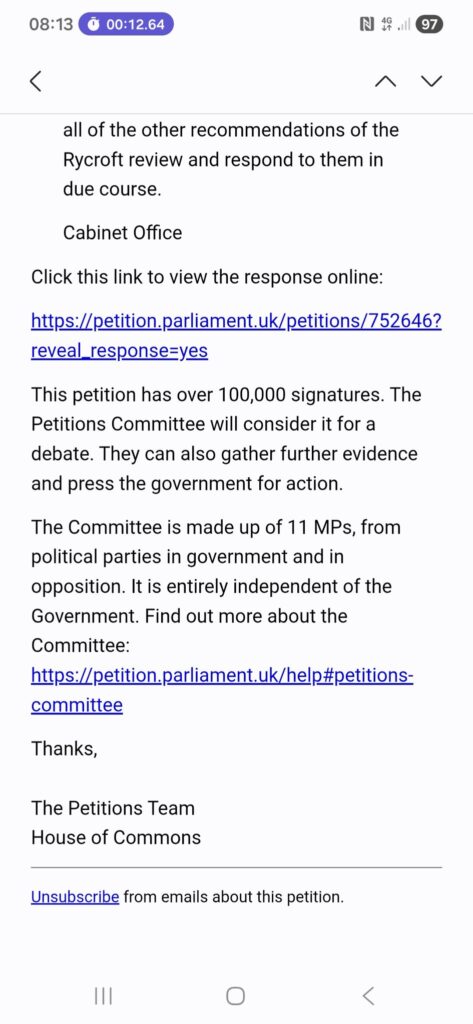
Thus, the refusal by the UK government to launch a public inquiry into alleged foreign-linked influence in British politics is not surprising and increasingly looks less like confidence in existing safeguards and more like an unwillingness to test them. When Andy Kalil launched his petition in January 2026, he pointed to concerns about the role of pro-Israel lobbying and funding networks in shaping UK policy during the ongoing crisis involving Israel, Gaza, and the West Bank. The government’s rejection on April 17, citing transparency rules and reforms such as those stemming from the Rycroft Review, has done little to settle those concerns.
Critics, including former MP Chris Williamson, argue that the real issue is not whether donations are declared but whether their cumulative effect shapes political behaviour. UK electoral law already requires that donations come from permissible UK sources, meaning direct foreign state funding is prohibited. However, this does not prevent UK-based individuals, companies, or advocacy groups with strong political affiliations or foreign policy interests from making significant contributions.
An inquiry, if held, would likely examine several well-documented areas. One is the role of established lobbying and advocacy organisations such as Conservative Friends of Israel and Labour Friends of Israel, both of which maintain close relationships with MPs, organise delegations, and facilitate engagement with Israeli officials. Their activities are not secret, but the scale of their access and influence could come under closer scrutiny in a formal investigation.
It would also likely look at high-profile political donors who have publicly supported pro-Israel causes alongside their contributions to UK parties. Figures such as Trevor Chinn, a longstanding donor to Labour and supporter of pro-Israel initiatives, and Poju Zabludowicz, who has contributed to Conservative causes and Israel-related organisations, are often cited in discussions about the intersection of political funding and foreign policy interests. Any inquiry would not assume wrongdoing but would examine patterns: how frequently such donors contribute, to whom, and whether those contributions correlate with access or policy alignment.
Beyond individuals, scrutiny could extend to think tanks and policy institutes that help shape the intellectual climate around foreign policy. Organisations like the Henry Jackson Society have been influential in debates on security and Middle East policy, and questions have occasionally been raised about funding sources and ideological alignment. Again, these are matters of public record, but not always of public understanding.
Crucially, an inquiry would not be limited to one country or political cause. It would likely place pro-Israel advocacy within a broader ecosystem of foreign policy influence, comparing it with lobbying linked to other states and interests. The key issue would be transparency versus impact: whether the current system, while technically compliant, allows well-connected networks, of all kinds, to exert disproportionate influence over political discourse and decision-making.
The government insists that mechanisms such as donation caps, disclosure requirements and lobbying registers are sufficient. But those tools primarily track what is legal and declared. They are less effective at illuminating how influence actually works in practice, through relationships, access, and sustained engagement over time.
That is the gap an inquiry would attempt to fill. And it is precisely that deeper level of scrutiny, mapping influence not just as a set of transactions but as a system, that makes the government’s refusal so politically charged. The concern is no longer simply about what an inquiry would examine but about whether the current system can withstand that level of examination at all.
The Government’s Response