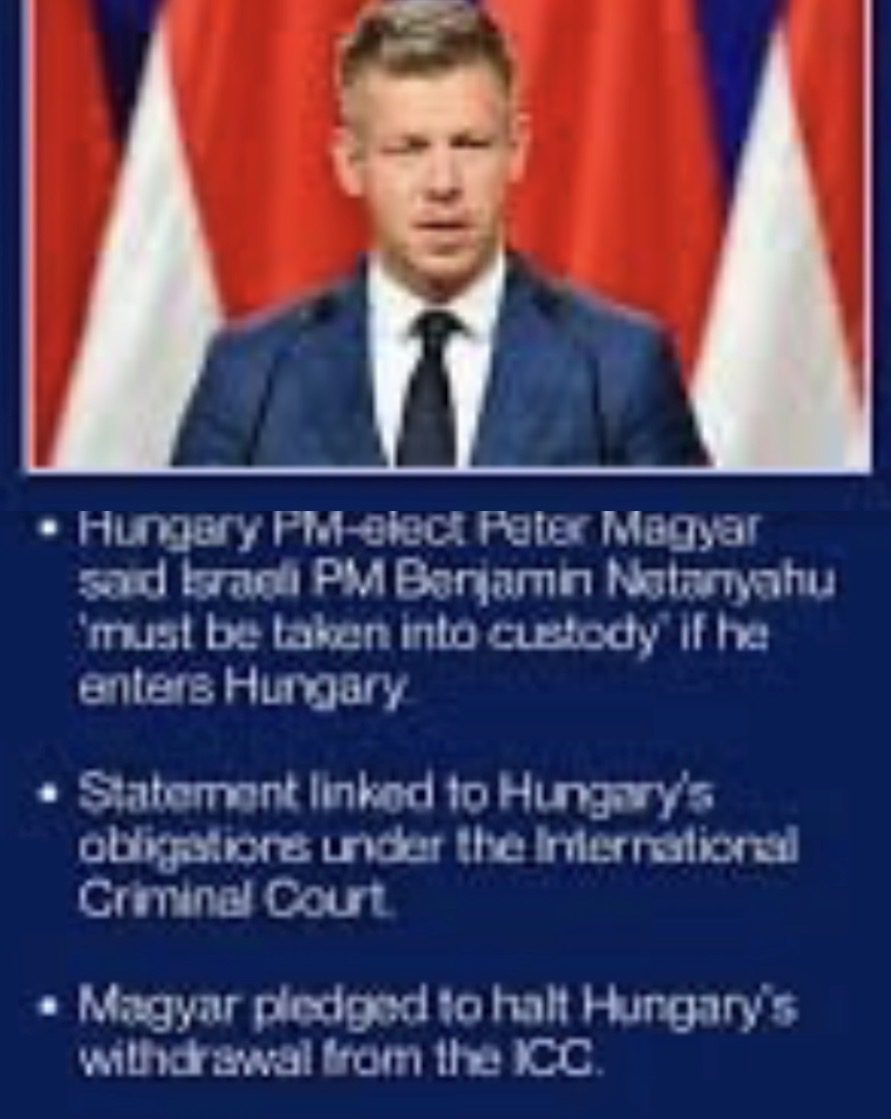
The narrative that this moment represents a clean moral reset in Hungarian politics needs a bit of tempering. What Peter Magyar has said about halting Hungary’s withdrawal from the International Criminal Court is significant, but it’s also a calculated political signal as much as a principled stand.
After years of tension under Viktor Orbán, who sought to distance Hungary from international legal institutions, reversing course sends a clear message: Hungary is repositioning itself within mainstream European norms. The ICC, for all its critics, represents a shared commitment, at least in theory, to accountability for war crimes and crimes against humanity. Staying in it aligns Hungary more closely with the rest of the EU, where membership is the norm rather than the exception.
Magyar’s comments about Benjamin Netanyahu are where the announcement becomes politically charged. By stating that Hungary would be obliged to arrest anyone wanted by the court, he is implicitly acknowledging the legitimacy of the ICC’s warrant related to alleged war crimes in Gaza. That is a stark departure from Orbán’s position, which openly challenged the court’s authority in this case.
Still, calling this a stand for “international decency” risks oversimplifying things. The ICC itself is a deeply contested institution. Major powers like the United States have never joined, and critics argue that enforcement is inconsistent and sometimes shaped by geopolitics. Even within Europe, support for the court can be more pragmatic than ideological.
What Magyar is doing, arguably, is restoring Hungary’s credibility in international diplomacy after years of friction. Under Orbán, the country often positioned itself as a disruptor within the EU, blocking consensus, challenging sanctions, and cultivating close ties with figures like Netanyahu and even Donald Trump. That strategy brought visibility but also isolation.
By contrast, Magyar’s approach suggests a pivot: less confrontation, more alignment. His warning to Netanyahu is less about targeting Israel specifically and more about reaffirming that Hungary will follow international legal obligations, at least on paper. Whether that would actually translate into action if such a situation arose is another question entirely. No country has yet tested that scenario with a sitting leader of Netanyahu’s stature.
There’s also a domestic dimension. Magyar’s election victory, ending 16 years of Orbán’s rule, reflects a public appetite for change. Recommitting to institutions like the ICC is a way of signalling that Hungary is turning a page, not just politically, but in how it presents itself to the world.
So yes, the move carries symbolic weight. It reinforces the idea that international rules should apply universally, even to powerful leaders. But it’s also a pragmatic recalibration, shaped by Hungary’s desire to rebuild alliances and regain influence within Europe.
Whether it ultimately represents a deeper shift toward consistent support for international justice, or simply a more polished version of realpolitik will depend on what Hungary does next, not just what its new leader says.